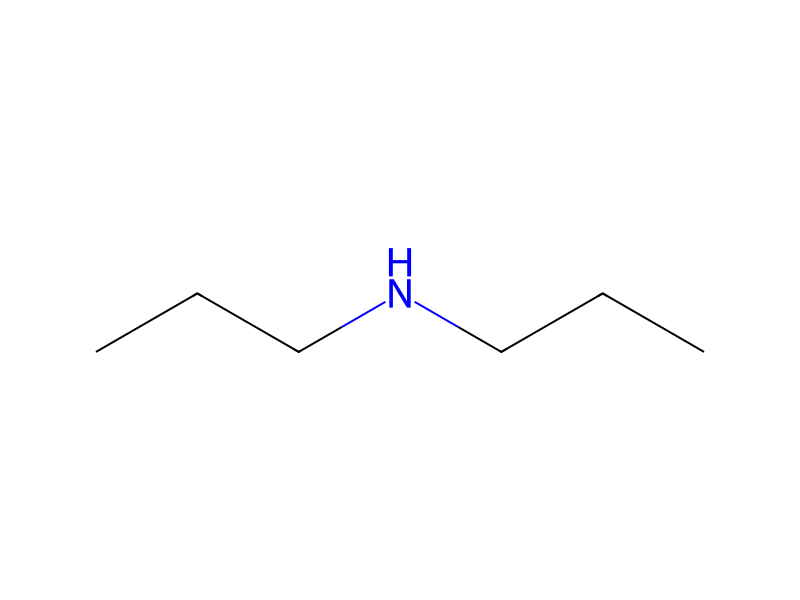
Dipropylamine → 7-(dipropylamino)-5,6,7,8-tetrahydronaphthalene-1-carbonitrile
Reaction equation

[C:1]([C:3]1[CH:4]=[CH:5][CH:6]=[C:7]2[C:12]=1[CH2:11][C:10](=O)[CH2:9][CH2:8]2)#[N:2].[CH2:14]([NH:17][CH2:18][CH2:19][CH3:20])[CH2:15][CH3:16].[BH4-].[Na+]>>[CH2:14]([N:17]([CH2:18][CH2:19][CH3:20])[CH:10]1[CH2:9][CH2:8][C:7]2[C:12](=[C:3]([C:1]#[N:2])[CH:4]=[CH:5][CH:6]=2)[CH2:11]1)[CH2:15][CH3:16]Participants
4



Procedure
8-Cyano-2-tetralone (500 mg, 2.9 mMol) was reacted with dipropylamine (0.8 mL, 5.8 mMol) and sodium borohydride (370 mg) as described in Example 1 to give the title compound as a colorless, viscous oil (260 mg, 35%). The hydrochloride salt was formed and crystallization (ethanol/diethyl ether) gave colorless crystals (m.p.=175°-176° C.).
Sources & evidence
- ORD record
- ord-6a425c85dcc34025aefd111b37534e5a
- Source dataset
- uspto-grants-1995_02
- Patent number
- US05389687
Reaction notes
Loading…