Phosphorus oxybromide → 3-Pyridinecarboxylic acid, 2-bromo-6-(trifluoromethyl)-, methyl ester
Reaction equation

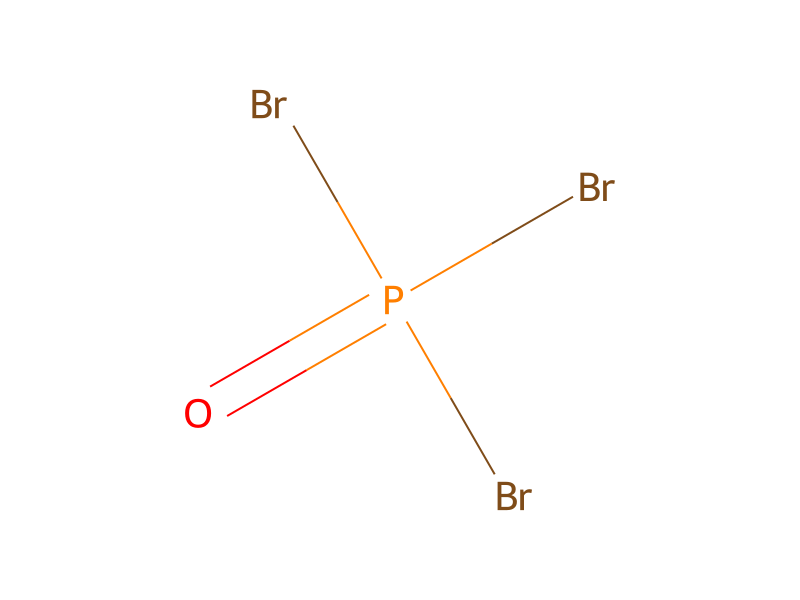
O=[C:2]1[C:7]([C:8]([O:10][CH3:11])=[O:9])=[CH:6][CH:5]=[C:4]([C:12]([F:15])([F:14])[F:13])[NH:3]1.P(Br)(Br)([Br:18])=O>O>[Br:18][C:2]1[C:7]([C:8]([O:10][CH3:11])=[O:9])=[CH:6][CH:5]=[C:4]([C:12]([F:15])([F:14])[F:13])[N:3]=1Participants



Procedure
A suspension of 22.0 g (0.100 mol) of the product from Example 1 and 28.7 g (0.100 mol) of phosphorous oxybromide was heated at 75°-120° C. over 45 minutes utilizing an oil bath as the heat source. The reaction was also connected to a water scrubber to trap the gas by-products. The mixture was then cooled to room temperature, diluted with water and extracted with methylene chloride. The combined organic layers were washed with saturated sodium bicarbonate solution, washed with brine, dried over magnesium sulfate and evaporated to an oil which was purified by flesh chromatography utilizing 20% ethyl acetate/petroleum ether as the eluent to afford 3.8 g (13.3%) of an oil. 1H NMR (CDCl3) δ4.0 (3H, s), 7.72 (1H, d, J=8 Hz), 8.2 (1H, d, J=8 Hz); IR (neat) 1740, 1590, 1455, 1335, 1275, 1140, 1100, 1050 cm-1.
Workup
- temperaturewas heated at 75°-120° C. over 45 minutes
- extractionextracted with methylene chloride
- washThe combined organic layers were washed with saturated sodium bicarbonate solution
- washwashed with brine
- dry with materialdried over magnesium sulfate
- customevaporated to an oil which
- customwas purified by flesh chromatography
Sources & evidence
- ORD record
- ord-d8416baf97a54f5c9b1f95636e6816e0
- Source dataset
- uspto-grants-1995_02
- Patent number
- US05393734
Reaction notes
Loading…