1,4-Dioxane → HCID 22629563, compound
Reaction equation

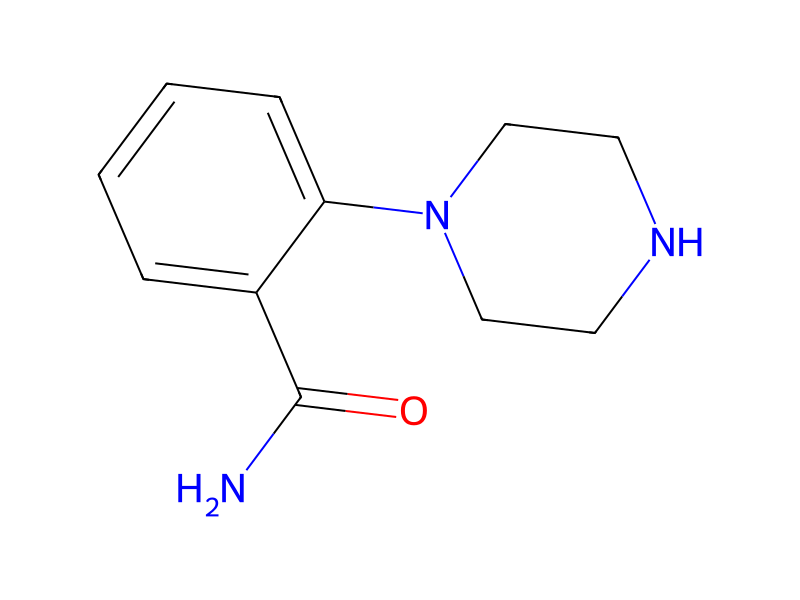
[C:1]([C:4]1[CH:9]=[CH:8][CH:7]=[CH:6][C:5]=1[N:10]1[CH2:15][CH2:14][NH:13][CH2:12][CH2:11]1)(=[O:3])[NH2:2].O1CCOCC1.C(=O)(O)[O-].[Na+].[C:27](=O)([O:33]C(C)(C)C)[O:28][C:29]([CH3:32])([CH3:31])[CH3:30]>O>[C:29]([O:28][C:27]([N:13]1[CH2:14][CH2:15][N:10]([C:5]2[CH:6]=[CH:7][CH:8]=[CH:9][C:4]=2[C:1](=[O:3])[NH2:2])[CH2:11][CH2:12]1)=[O:33])([CH3:32])([CH3:31])[CH3:30]Participants
6





Procedure
1-(2-Carbamoylphenyl)piperazine (300 mg, 1.5 mmol) was dissolved in water (2 ml) and 1,4-dioxane (2 ml) The resulting solution was mixed with sodium bicarbonate (250 mg, 2.9 mmol) and di-t-butyl carbonate (480 mg, 2.2 mmol), and then stirred at a room temperature for 4 hours. The reaction solution was mixed with water (20 ml), and the reaction product was extracted with chloroform (80 ml) and washed with water and saturated brine. Then the solvent was evaporated under a reduced pressure to obtain colorless crystals. Thereafter, the crystals were washed with hexane and then dried to obtain 430 mg of the title compound (1.4 mmol, 96% in yield).
Workup
- extractionthe reaction product was extracted with chloroform (80 ml)
- washwashed with water and saturated brine
- customThen the solvent was evaporated under a reduced pressure
- customto obtain colorless crystals
- washThereafter, the crystals were washed with hexane
- customdried
Sources & evidence
- ORD record
- ord-49dfaafebff9462087c5adc7f22f5ca6
- Source dataset
- uspto-grants-2002_03
- Patent number
- US06355642B1
Reaction notes
Loading…