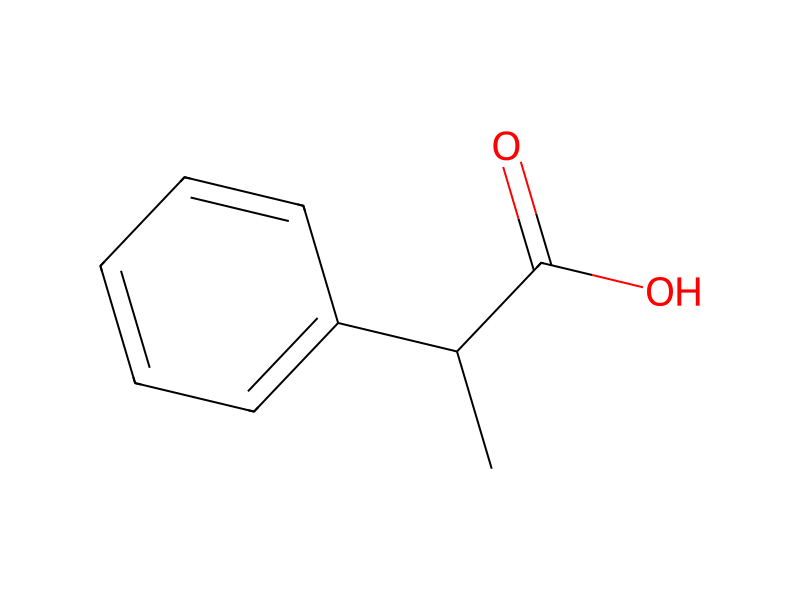
2-Phenylpropionic acid → 1-(4-Hydroxypiperidin-1-yl)-3-phenylpropan-1-one
Reaction equation

[OH:1][CH:2]1[CH2:7][CH2:6][NH:5][CH2:4][CH2:3]1.[C:8]1([CH2:14][CH2:15][C:16](Cl)=[O:17])[CH:13]=[CH:12][CH:11]=[CH:10][CH:9]=1.C1(C(C)C(O)=O)C=CC=CC=1.[OH-].[Na+]>C1(C)C=CC=CC=1>[C:8]1([CH2:14][CH2:15][C:16]([N:5]2[CH2:6][CH2:7][CH:2]([OH:1])[CH2:3][CH2:4]2)=[O:17])[CH:13]=[CH:12][CH:11]=[CH:10][CH:9]=1Participants
6




Procedure
This amine was synthesized in accordance with the method of Scheme 37. To 4 g (40 mmol) of 4-hydroxypiperidine in 20 mL of toluene was added phenylpropionyl chloride (derived from 6 g (40 mmol) of phenylpropionic acid in excess thionyl chloride). To the mixture was added excess 2N aqueous NaOH. After stirring 24 hours, the toluene layer was discarded and the aqueous phase was extracted with CH2Cl2, dried, and evaporated under vacuum to give 3.63 g (39%) of 1-(3-phenylpropionyl)-4-hydroxypiperidine (134). GC/MS indicated 100% purity with a molecular ion of 233.
Workup
- extractionthe aqueous phase was extracted with CH2Cl2
- customdried
- customevaporated under vacuum
Sources & evidence
- ORD record
- ord-20902f74a8974b1e835cf06a9590e6d8
- Source dataset
- uspto-grants-2002_03
- Patent number
- US06355660B1
Reaction notes
Loading…