1,2-Dimethoxyethane → Ethyl 4-(pyridin-4-yl)benzoate
Reaction equation

Br[C:2]1[CH:12]=[CH:11][C:5]([C:6]([O:8][CH2:9][CH3:10])=[O:7])=[CH:4][CH:3]=1.B([O-])([O-])O[C:15]1[CH:20]=[CH:19][N:18]=[CH:17][CH:16]=1.C(=O)([O-])O.[Na+].COCCOC>C1C=CC([P]([Pd]([P](C2C=CC=CC=2)(C2C=CC=CC=2)C2C=CC=CC=2)([P](C2C=CC=CC=2)(C2C=CC=CC=2)C2C=CC=CC=2)[P](C2C=CC=CC=2)(C2C=CC=CC=2)C2C=CC=CC=2)(C2C=CC=CC=2)C2C=CC=CC=2)=CC=1.O>[N:18]1[CH:19]=[CH:20][C:15]([C:2]2[CH:12]=[CH:11][C:5]([C:6]([O:8][CH2:9][CH3:10])=[O:7])=[CH:4][CH:3]=2)=[CH:16][CH:17]=1Participants
7






Procedure
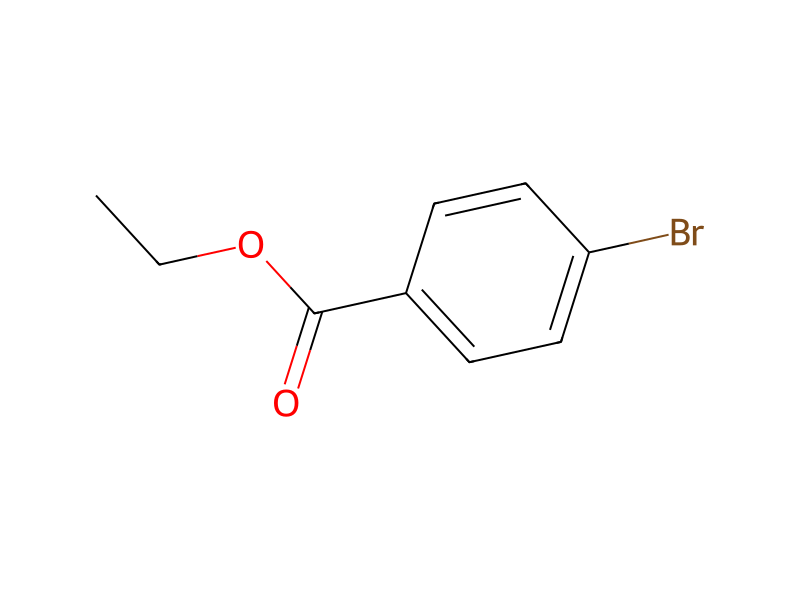
To a mixture of ethyl 4-bromobenzoate (2.29 g), 4-pyridyl borate (1.23 g), 1 M sodium hydrogen carbonate solution (30 ml) and 1,2-dimethoxyethane (40 ml) was added tetrakis(triphenylphosphine)palladium (0.3 g) and the mixture was stirred for 3 hours with reflux under nitrogen atmosphere. To the mixture was added water and the solution was extracted with ethyl acetate. The extract was washed with water, dried (MgSO4) and concentrated. The residue was subjected to silica gel chromatography, and eluted with hexane-ethyl acetate (2:1) to give the title compound as crystals (1.15 g, 50.7%).
Workup
- temperaturewith reflux under nitrogen atmosphere
- extractionthe solution was extracted with ethyl acetate
- washThe extract was washed with water
- dry with materialdried (MgSO4)
- concentrationconcentrated
- washeluted with hexane-ethyl acetate (2:1)
Sources & evidence
- ORD record
- ord-08186b392d05445ba3a70fe0619d71c2
- Source dataset
- uspto-grants-2002_03
- Patent number
- US06359134B1
Reaction notes
Loading…