p-Anisoyl chloride → HCID 13025589, compound
Reaction equation
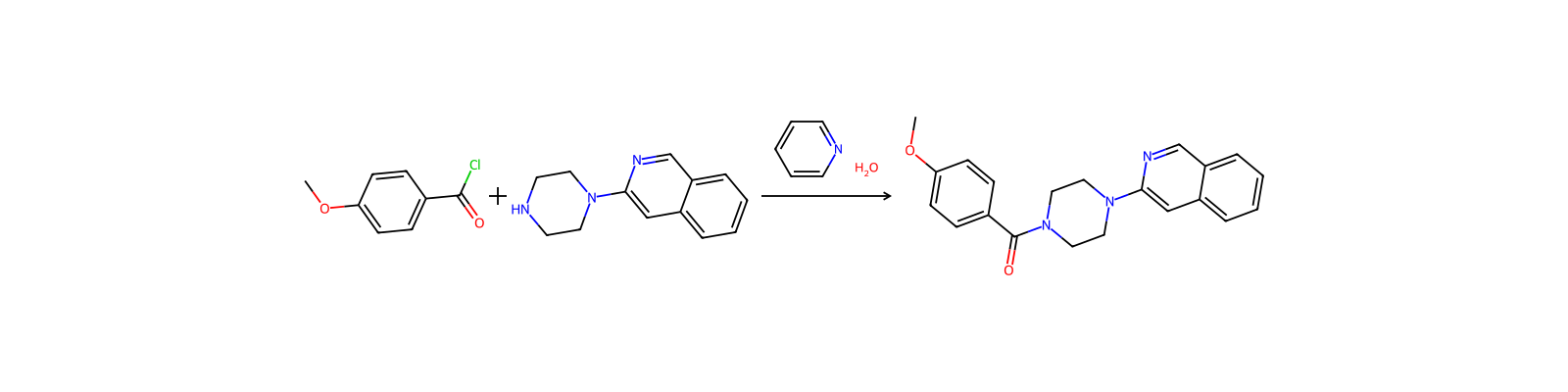
[CH3:1][O:2][C:3]1[CH:11]=[CH:10][C:6]([C:7](Cl)=[O:8])=[CH:5][CH:4]=1.[N:12]1([C:18]2[N:19]=[CH:20][C:21]3[C:26]([CH:27]=2)=[CH:25][CH:24]=[CH:23][CH:22]=3)[CH2:17][CH2:16][NH:15][CH2:14][CH2:13]1>N1C=CC=CC=1.O>[CH3:1][O:2][C:3]1[CH:11]=[CH:10][C:6]([C:7]([N:15]2[CH2:16][CH2:17][N:12]([C:18]3[N:19]=[CH:20][C:21]4[C:26]([CH:27]=3)=[CH:25][CH:24]=[CH:23][CH:22]=4)[CH2:13][CH2:14]2)=[O:8])=[CH:5][CH:4]=1Participants
5
Reactant 2
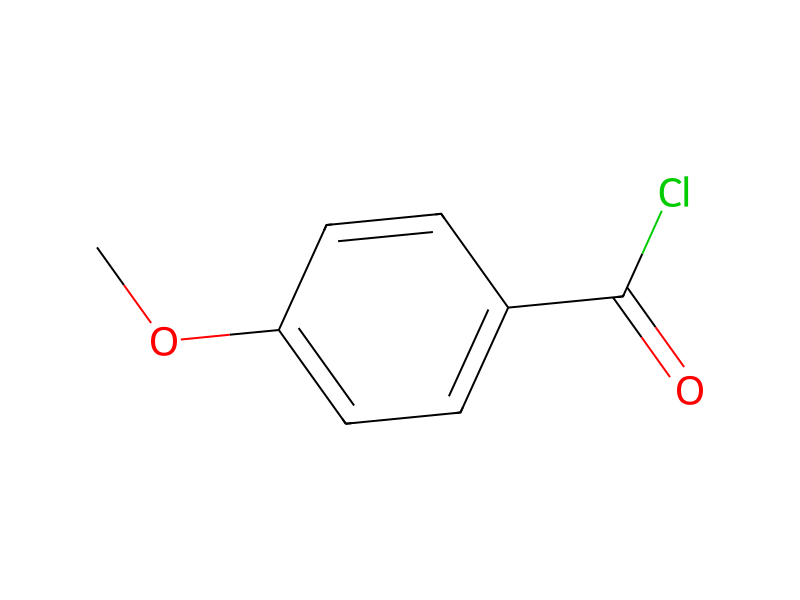

Product 1

Reagents, catalysts & solvents 2


Procedure
9.38 g of 4-methoxybenzoyl chloride are added dropwise to 10 g of 3-(piperazin-1-yl)-isoquinoline, dissolved in 40 ml of pyridine. After stirring for 1 hour at room temperature, the mixture is diluted with water and extracted with ethyl acetate. The ethyl acetate phase is dried and the solvent is removed by evaporation. 5.8 g, melting point 156°-159° C., can be isolated.
Workup
- extractionextracted with ethyl acetate
- dry with materialThe ethyl acetate phase is dried
- customthe solvent is removed by evaporation
- custom5.8 g, melting point 156°-159° C., can be isolated
Sources & evidence
- ORD record
- ord-c532801cfad04e9a940b085c82fe7225
- Source dataset
- uspto-grants-1986_05
- Patent number
- US04590273
Reaction notes
Loading…