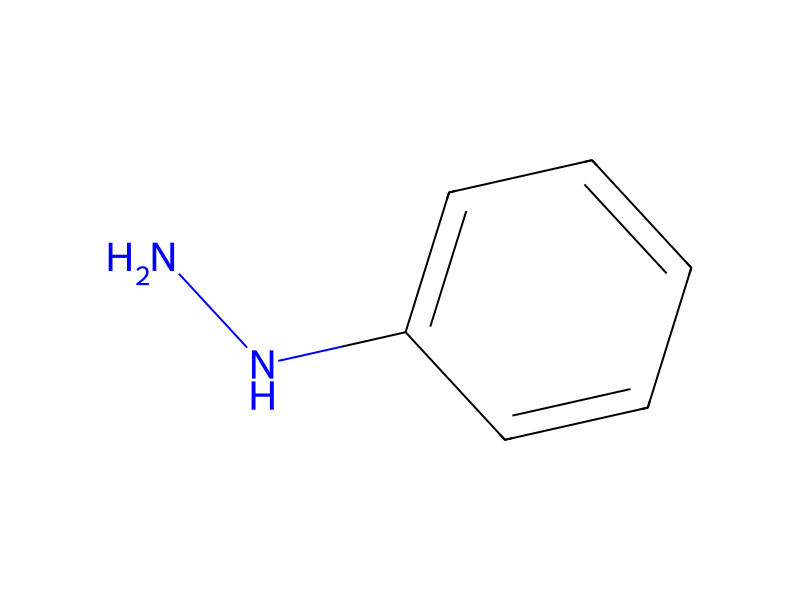
Phenylhydrazine → HCID 178515136, compound
Reaction equation

[N+:1]([C:4]1[CH:5]=[C:6]2[C:11](=[CH:12][CH:13]=1)[N:10]=[C:9]([C:14]([O:16]CC)=O)[C:8]([C:19]([O:21]CC)=O)=[C:7]2[OH:24])([O-:3])=[O:2].[C:25]1([NH:31][NH2:32])[CH:30]=[CH:29][CH:28]=[CH:27][CH:26]=1>C(O)C>[OH:16][C:14]1[C:9]2[NH:10][C:11]3[CH:12]=[CH:13][C:4]([N+:1]([O-:3])=[O:2])=[CH:5][C:6]=3[C:7](=[O:24])[C:8]=2[C:19](=[O:21])[N:31]([C:25]2[CH:30]=[CH:29][CH:28]=[CH:27][CH:26]=2)[N:32]=1Participants
4
Reactant 2

Product 1

Reagents, catalysts & solvents 1

Procedure
To a stirred suspension of diethyl 6-nitro-4-hydroxy-quinoline-2,3-dicarboxylate (1.670 g, 5.00 mM) in ethanol (30 mL) was added phenylhydrazine (3.44 mL, 35.00 mM) to give a deep red solution. The solution was heated to reflux for 1 hour and concentrated to about 15 mL. Continued heating gave a thick suspension which was diluted with ethanol (5 mL) and refluxed for 16 additional hours. The mixture was cooled to room temperature and filtered to give the phenylhydrazine salt of the title compound as a tan solid. This material was refluxed in glacial acetic acid (25 mL) for 2 hours and cooled to room temperature. Filtration gave the title compound (1.01 g, 58%) as a tan powder, mp 368° C. (decomp.); MS(CI): 351 (M+H).
Workup
- customto give a deep red solution
- temperatureThe solution was heated
- temperatureto reflux for 1 hour
- concentrationconcentrated to about 15 mL
- temperatureContinued heating
- customgave a thick suspension which
- temperaturerefluxed for 16 additional hours
- filtrationfiltered
Sources & evidence
- ORD record
- ord-bbc0adddd12a41bf808701a383eb2480
- Source dataset
- uspto-grants-2001_04
- Patent number
- US06214826B1
Reaction notes
Loading…