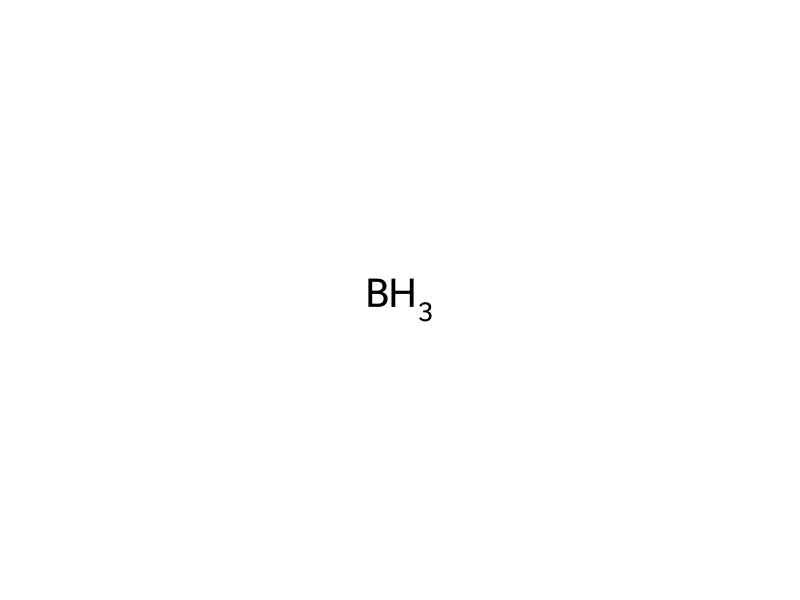
Borane → HCID 14821719, compound
Reaction equation

[C:1]([O:5][C:6]([N:8]1[CH2:15][C@H:14]([O:16][CH2:17][C:18]2[CH:23]=[CH:22][CH:21]=[CH:20][CH:19]=2)[CH2:13][C@H:9]1[C:10](O)=[O:11])=[O:7])([CH3:4])([CH3:3])[CH3:2].B>C1COCC1>[C:1]([O:5][C:6]([N:8]1[CH2:15][C@H:14]([O:16][CH2:17][C:18]2[CH:19]=[CH:20][CH:21]=[CH:22][CH:23]=2)[CH2:13][C@H:9]1[CH2:10][OH:11])=[O:7])([CH3:4])([CH3:3])[CH3:2]Participants
Reactant 2

Product 1

Reagents, catalysts & solvents 1

Procedure
A solution of trans-N-t-butoxycarbonyl-4-benzyloxy-L-proline (3.32 g, 10.3 mmol) in 20 mL of THF was cooled in an ice/acetone bath and a solution of borane in THF (1M, 20.6 mL, 20.6 mrnmol) was added dropwise. The solution was stirred for 2 hours then the cooling bath was removed and the mixture stirred overnight. The reaction was quenched by the careful addition of water followed by the addition of 20 mL of 1N aqueous HCl and then poured into ethyl acetate. The layers were separated and the aqueous layer extracted with 2 portions of ethyl acetate. The combined organic extracts were 2M aqueous sodium carbonate, water and brine, dried, filtered and concentrated to provide 3.19 g (100%) of the title compound. MS (DCI, NH3): 308 (MH+).
Workup
- customthe cooling bath was removed
- stirringthe mixture stirred overnight
- customThe reaction was quenched by the careful addition of water
- additionfollowed by the addition of 20 mL of 1N aqueous HCl
- additionpoured into ethyl acetate
- customThe layers were separated
- extractionthe aqueous layer extracted with 2 portions of ethyl acetate
- customdried
- filtrationfiltered
- concentrationconcentrated
Sources & evidence
- ORD record
- ord-76e30c9d64dc4ce09797782144fc8da9
- Source dataset
- uspto-grants-2001_04
- Patent number
- US06221865B1
Reaction notes
Loading…