Lithium Chloride → HCID 20463835, compound
Reaction equation

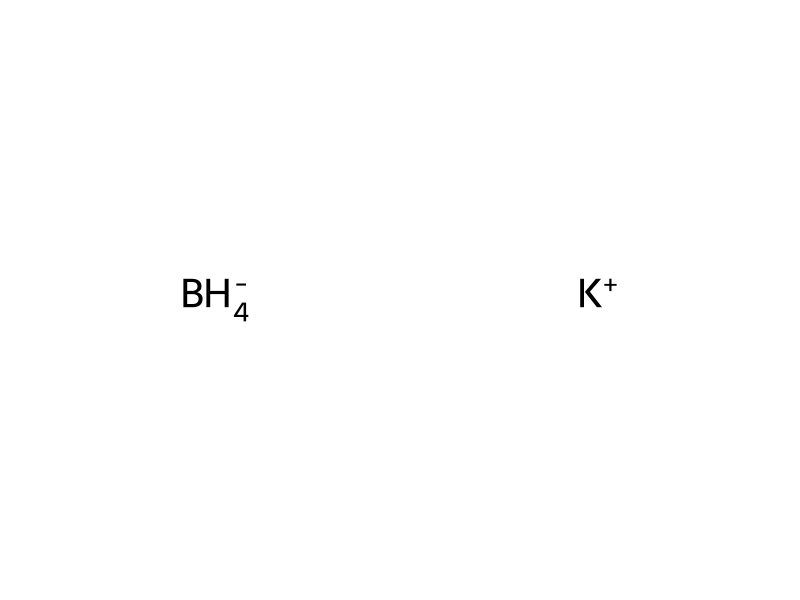
[Cl:1][C:2]1[N:3]=[C:4]([C:15](OC)=[O:16])[C:5]([NH:9][CH2:10][C:11](OC)=[O:12])=[N:6][C:7]=1[Cl:8].[BH4-].[K+].[Cl-].[Li+].P([O-])(O)(O)=O.[K+]>O1CCCC1.ClCCl.O>[Cl:1][C:2]1[N:3]=[C:4]([CH2:15][OH:16])[C:5]([NH:9][CH2:10][CH2:11][OH:12])=[N:6][C:7]=1[Cl:8]Participants
Reactant 4



Product 1

Reagents, catalysts & solvents 3



Procedure
In 2.5 ml of tetrahydrofuran there was dissolved methyl [(5,6-dichloro-3-(methoxycarbonyl)pyrazinyl)amino]acetate (50 mg), prepared as in Step B above, after which potassium borohydride (22 mg; 0.0012 Mol) and lithium chloride (18 mg) were added. The reaction mixture was stirred overnight at room temperature. An additional 44 mg of potassium borohydride and 36 mg of lithium chloride were then added, and the reaction mixture was stirred at room temperature for 6 hours. Water (1 ml) was added, and the reaction mixture was cooled and stirred for 15 minutes, after which potassium dihydrogen phosphate (653 mg; 0.0048 Mol) was added. The solvent was blown off under nitrogen, and the residue was taken up in dichloromethane and filtered. The precipitate was washed twice with dichloromethane and once with ethyl acetate. The combined filtrates were concentrated under vacuum to give the title compound (32 mg).
Workup
- additionwere added
- stirringthe reaction mixture was stirred at room temperature for 6 hours
- temperaturethe reaction mixture was cooled
- stirringstirred for 15 minutes
- filtrationfiltered
- washThe precipitate was washed twice with dichloromethane and once with ethyl acetate
- concentrationThe combined filtrates were concentrated under vacuum
Sources & evidence
- ORD record
- ord-3a2efedd27fa4a5ea8d0a21dcc362807
- Source dataset
- uspto-grants-1984_04
- Patent number
- US04442097
Reaction notes
Loading…