1-Bromooctane → 5-Ethoxy-2-(4-octyloxyphenyl)pyrimidine
Reaction equation

[CH2:1]([O:3][C:4]1[CH:5]=[N:6][C:7]([C:10]2[CH:15]=[CH:14][C:13]([OH:16])=[CH:12][CH:11]=2)=[N:8][CH:9]=1)[CH3:2].[OH-].[K+].[CH2:19](Br)[CH2:20][CH2:21][CH2:22][CH2:23][CH2:24][CH2:25][CH3:26]>C(O)C>[CH2:1]([O:3][C:4]1[CH:9]=[N:8][C:7]([C:10]2[CH:15]=[CH:14][C:13]([O:16][CH2:19][CH2:20][CH2:21][CH2:22][CH2:23][CH2:24][CH2:25][CH3:26])=[CH:12][CH:11]=2)=[N:6][CH:5]=1)[CH3:2]Participants
5
Reactant 3
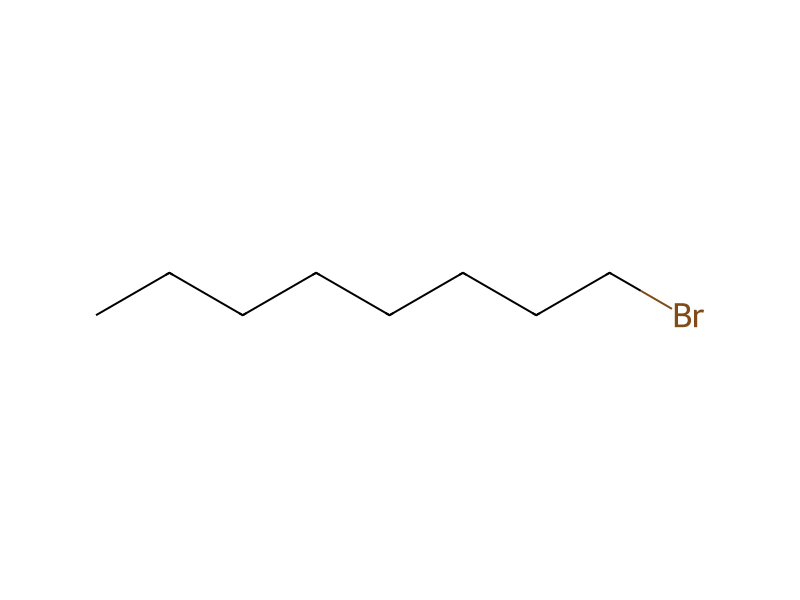


Product 1

Reagents, catalysts & solvents 1

Procedure
To a solution of 5-ethoxy-2-(4-hydroxyphenyl)pyrimidine (40 g) dissolved in ethanol (340 ml) were added potassium hydroxide (11.2 g) and octyl bromide (35.8 g), followed by keeping the mixture under reflux for 3 hours, distilling off ethanol (about 300 ml), extracting the residue with toluene (500 ml), washing the resulting organic layer with 2N--NaOH aqueous solution, further washing with water until the washing water became neutral, distilling off low boiling substances in the organic layer and recrystallizing the residue from ethanol to obtain 5-ethoxy-2-(4-octyloxyphenyl)pyrimidine (46.9 g). This product exhibited a phase transition of ##STR11##
Workup
- temperatureunder reflux for 3 hours
- distillationdistilling off ethanol (about 300 ml)
- extractionextracting the residue with toluene (500 ml)
- washwashing the resulting organic layer with 2N
- washNaOH aqueous solution, further washing with water until the washing water
- distillationdistilling off low boiling substances in the organic layer
- customrecrystallizing the residue from ethanol
Sources & evidence
- ORD record
- ord-d205f5953700432aa0beba22110c4900
- Source dataset
- uspto-grants-1990_01
- Patent number
- US04895671
Reaction notes
Loading…