1,2-Dimethoxyethane → Pyridine-2,3-dicarboxamide
Reaction equation

[NH2:1][CH2:2][C:3]1[CH:8]=[CH:7][CH:6]=[CH:5][N:4]=1.ClC[C:11]([N:13](CC)CC)=[O:12].C(N(C(C)C)CC)(C)C.C(COC)[O:28]C>C(Cl)Cl>[N:4]1[CH:5]=[CH:6][CH:7]=[C:8]([C:11]([NH2:13])=[O:12])[C:3]=1[C:2]([NH2:1])=[O:28]Participants
6
Reactant 4

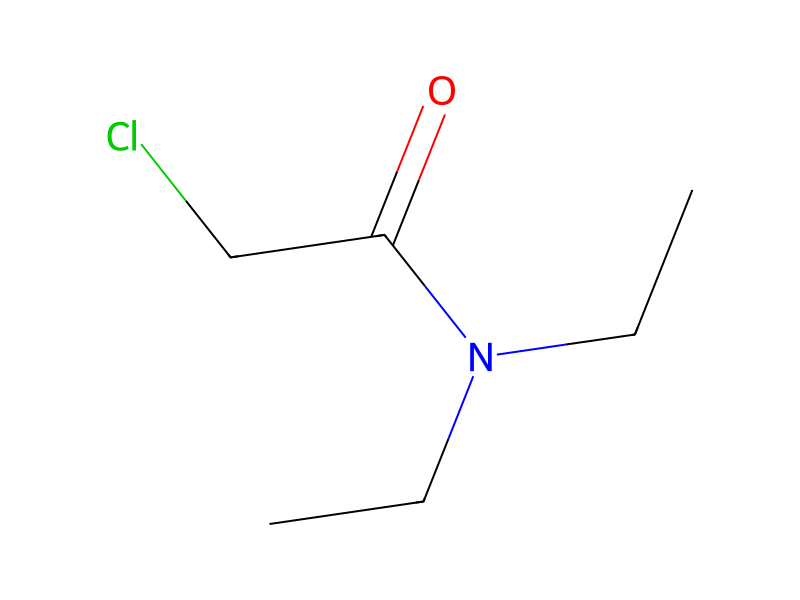


Product 1

Reagents, catalysts & solvents 1

Procedure
Pyridine diamide 2 was prepared according to the general procedure described in Example 8 using 2-(aminomethyl)pyridine (0.015 mol), 2-chloro-N,N-diethylacetamide (0.045 mol), diisopropylethylamine (0.060 mol) and dimethoxyethane (25 mL). The product was isolated from the methylene chloride extraction of the basic aqueous layer. The residue was distilled (140° C., 0.10 mm) to afford 3.7 g of pure product.
Workup
- distillationThe residue was distilled (140° C., 0.10 mm)
Sources & evidence
- ORD record
- ord-2feade2e254b4888b75c86a856b753be
- Source dataset
- uspto-grants-1990_01
- Patent number
- US04895951
Reaction notes
Loading…