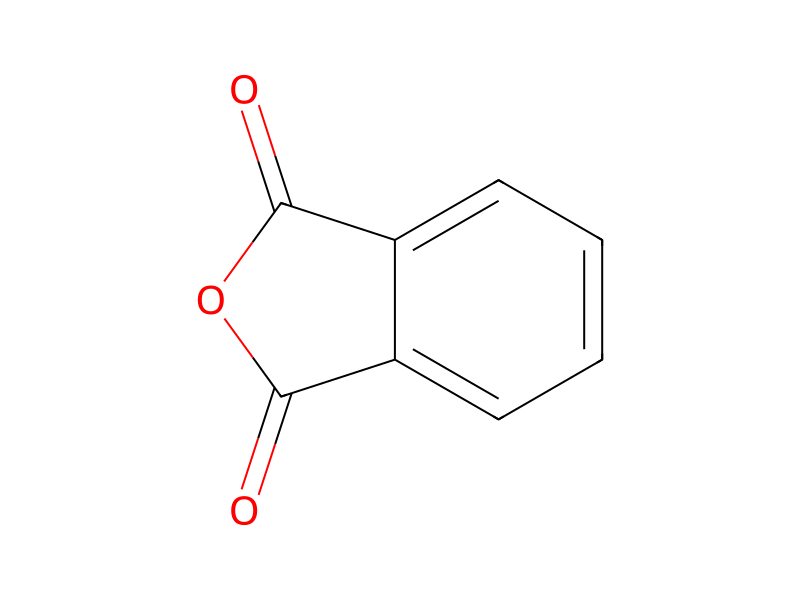
Phthalic Anhydride → Benzoic acid, 2-[4-(1,1-dimethylpropyl)benzoyl]-
Reaction equation

[C:1]1(=[O:11])[O:6][C:4](=[O:5])[C:3]2=[CH:7][CH:8]=[CH:9][CH:10]=[C:2]12.[Al+3].[Cl-].[Cl-].[Cl-].C([Zn]CC)C.[C:21]([C:26]1[CH:31]=[CH:30][CH:29]=[CH:28][CH:27]=1)([CH2:24][CH3:25])([CH3:23])[CH3:22]>>[C:21]([C:26]1[CH:27]=[CH:28][C:29]([C:4]([C:3]2[CH:7]=[CH:8][CH:9]=[CH:10][C:2]=2[C:1]([OH:6])=[O:11])=[O:5])=[CH:30][CH:31]=1)([CH2:24][CH3:25])([CH3:22])[CH3:23]Participants
5




Procedure
74 g (0.5 mole) of phthalic anhydride were reacted with 128 g (1.05 moles) of AlCl3 and 25 g (0.2 mole) of diethylzinc in 74 g of tert-amylbenzene, similarly to Example 1. After the mixture had been worked up, 118 g (80% of theory) of pure 2-(4'-tert-amylbenzoyl)-benzoic acid were obtained.
Sources & evidence
- ORD record
- ord-b98a8a59792a4626bfb371f71908a457
- Source dataset
- uspto-grants-1990_01
- Patent number
- US04895984
Reaction notes
Loading…