Quinoline → HCID 933997, compound
Reaction equation

[Br:1][C:2]1[CH:10]=[C:9]2[C:5]([C:6](C(O)=O)=[C:7]([CH3:12])[N:8]2[CH3:11])=[CH:4][C:3]=1[O:16][CH3:17].N1C2C(=CC=CC=2)C=CC=1>>[Br:1][C:2]1[CH:10]=[C:9]2[C:5]([CH:6]=[C:7]([CH3:12])[N:8]2[CH3:11])=[CH:4][C:3]=1[O:16][CH3:17]Participants
3
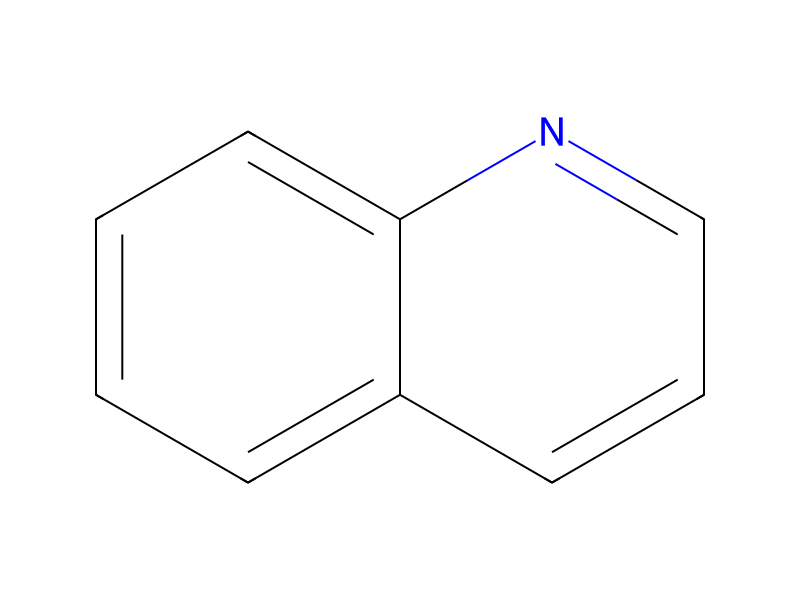


Conditions
- Temperature
- 200 °C
Procedure
6-Bromo-5-methoxy-1,2-dimethyl-1H-indole-3-carboxylic acid (1.02 g, 3.42 mmol) was separated into two round bottom flasks (each with 500 mg of material), followed by the addition of quinoline (2 mL) in each flask. The reaction mixture was heated at 200° C. for 4 hours and was cooled to RT. The two reaction mixture was combined and loaded directly on a silica gel column, eluting with a gradient of 0-20% ethyl acetate in cyclohexane, to give title compound (435 mg). LCMS (A): m/z (M+H)+ 254/256, C11H12BrNO requires 253/255 (acidic).
Workup
- temperaturewas cooled to RT
- customThe two reaction mixture
- washeluting with a gradient of 0-20% ethyl acetate in cyclohexane
Sources & evidence
- ORD record
- ord-bd131619a43548cb8d8b484213d10d27
- Source dataset
- uspto-grants-2014_11
- Patent number
- US08877742B2
Reaction notes
Loading…