(Pyrimidin-5-yl)boronic acid → (R)-6,6-difluoro-5-(2-fluoro-5-(pyrimidin-5-yl)phenyl)-5,7,7-trimethyl-1,4-oxazepan-3-one
Reaction equation

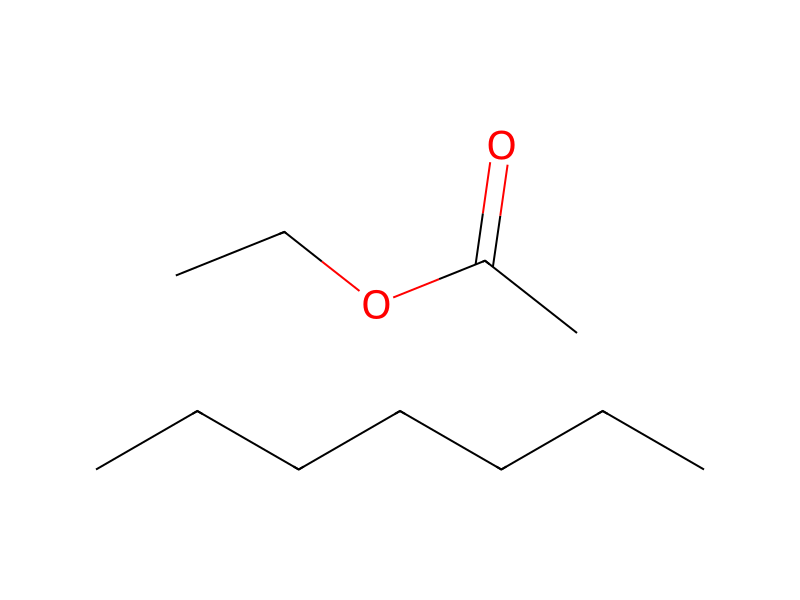
Br[C:2]1[CH:3]=[CH:4][C:5]([F:21])=[C:6]([C@:8]2([CH3:20])[C:14]([F:16])([F:15])[C:13]([CH3:18])([CH3:17])[O:12][CH2:11][C:10](=[O:19])[NH:9]2)[CH:7]=1.[N:22]1[CH:27]=[C:26](B(O)O)[CH:25]=[N:24][CH:23]=1.CCCCCCC.C(OCC)(=O)C>O1CCCC1.O>[F:15][C:14]1([F:16])[C:13]([CH3:18])([CH3:17])[O:12][CH2:11][C:10](=[O:19])[NH:9][C@@:8]1([C:6]1[CH:7]=[C:2]([C:26]2[CH:27]=[N:22][CH:23]=[N:24][CH:25]=2)[CH:3]=[CH:4][C:5]=1[F:21])[CH3:20]Participants
6
Reactant 3


Product 1

Reagents, catalysts & solvents 2


Procedure
In analogy to the procedure described in Example 1 (method A), the reaction of (R)-5-(5-bromo-2-fluorophenyl)-6,6-difluoro-5,7,7-trimethyl-1,4-oxazepan-3-one (intermediate B6.1) (311 mg, 849 μmol) and pyrimidin-5-boronic acid (116 mg, 934 μmol) in tetrahydrofuran (8 ml) and water (4 ml) with [1,1′-bis(diphenylphosphino) ferrocene]dichloropalladium(II) dichloromethane complex (34.7 mg, 42.5 μmol) as the catalyst yielded, after chromatography on silica gel using a gradient of heptane/ethyl acetate=100:0 to 10:90 as the eluent, the (R)-6,6-difluoro-5-(2-fluoro-5-(pyrimidin-5-yl)phenyl)-5,7,7-trimethyl-1,4-oxazepan-3-one (263 mg, 85% yield) as a white foam. MS (ISP): m/z=366.1 [M+H]+.
Workup
- customyielded
Sources & evidence
- ORD record
- ord-1d69076802654caea90429f4e72bf4c3
- Source dataset
- uspto-grants-2014_11
- Patent number
- US08877744B2
Reaction notes
Loading…