Cesium fluoride → Methyl 4-amino-3-chloro-6-(4-chloro-2-fluoro-3-(1-fluoroethyl)phenyl)-5-fluoropicolinate
Reaction equation

[NH2:1][C:2]1[C:7]([F:8])=[C:6]([C:9]2[CH:14]=[CH:13][C:12]([Cl:15])=[C:11]([CH:16]([F:18])[CH3:17])[C:10]=2[F:19])[N:5]=[C:4]([C:20]([O:22][CH3:23])=[O:21])[C:3]=1[Cl:24].Cl[C:26]1[CH:31]=[CH:30][C:29](B2OC(C)(C)C(C)(C)O2)=[C:28](F)[C:27]=1C(F)C.NC1C(F)=C(Cl)N=C(C(OC)=O)C=1Cl.[F-].[Cs+].P(C1C=C(S([O-])(=O)=O)C=CC=1)(C1C=C(S([O-])(=O)=O)C=CC=1)C1C=C(S([O-])(=O)=O)C=CC=1.[Na+].[Na+].[Na+]>O.C([O-])(=O)C.[Pd+2].C([O-])(=O)C.O.C(#N)C>[NH2:1][C:2]1[C:7]([F:8])=[C:6]([C:9]2[CH:14]=[CH:13][C:12]([Cl:15])=[C:11]([CH:16]([F:18])[CH3:17])[C:10]=2[F:19])[N:5]=[C:4]([C:20]([O:22][CH2:23][C:26]2[CH:31]=[CH:30][CH:29]=[CH:28][CH:27]=2)=[O:21])[C:3]=1[Cl:24].[NH2:1][C:2]1[C:7]([F:8])=[C:6]([C:9]2[CH:14]=[CH:13][C:12]([Cl:15])=[C:11]([CH:16]([F:18])[CH3:17])[C:10]=2[F:19])[N:5]=[C:4]([C:20]([O:22][CH3:23])=[O:21])[C:3]=1[Cl:24]Participants
Reactant 5
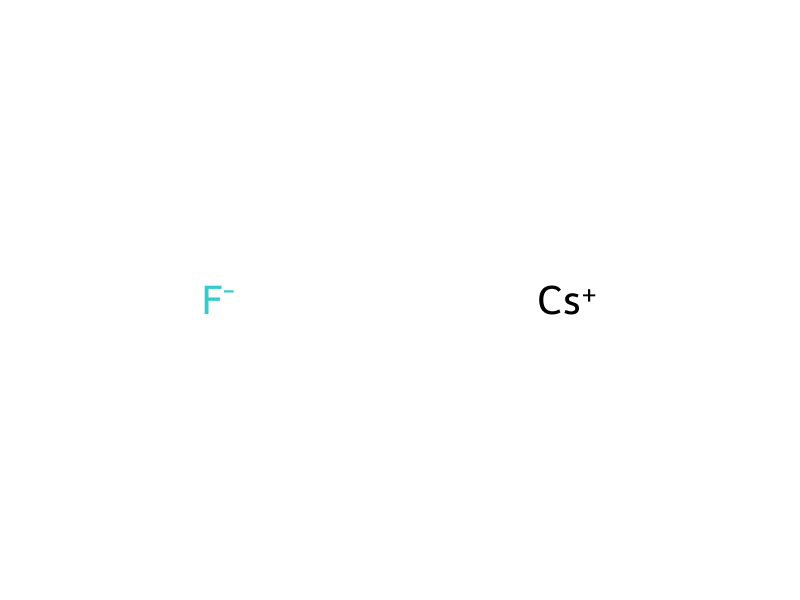 HCID 25953Cesium fluoride
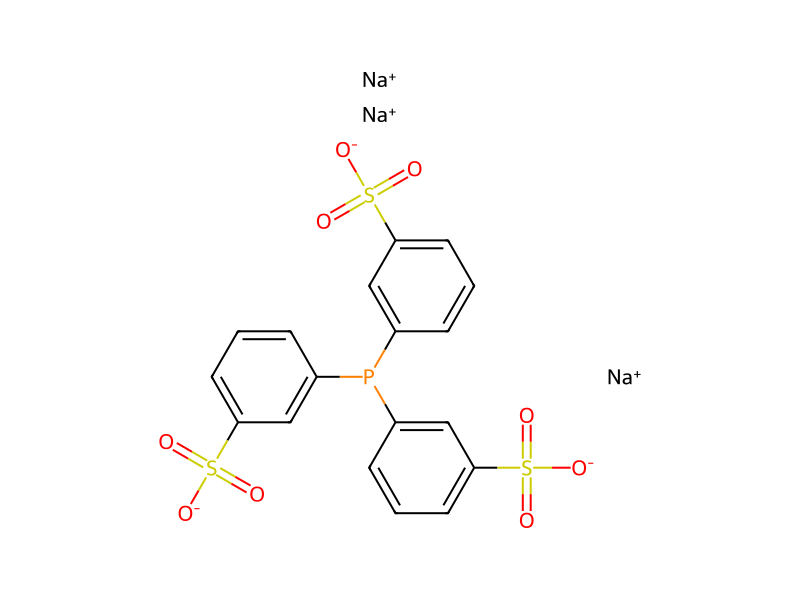 HCID 6099338Trisodium 3,3',3''-phosphinetriyltris(benzene-1-sulphonate)
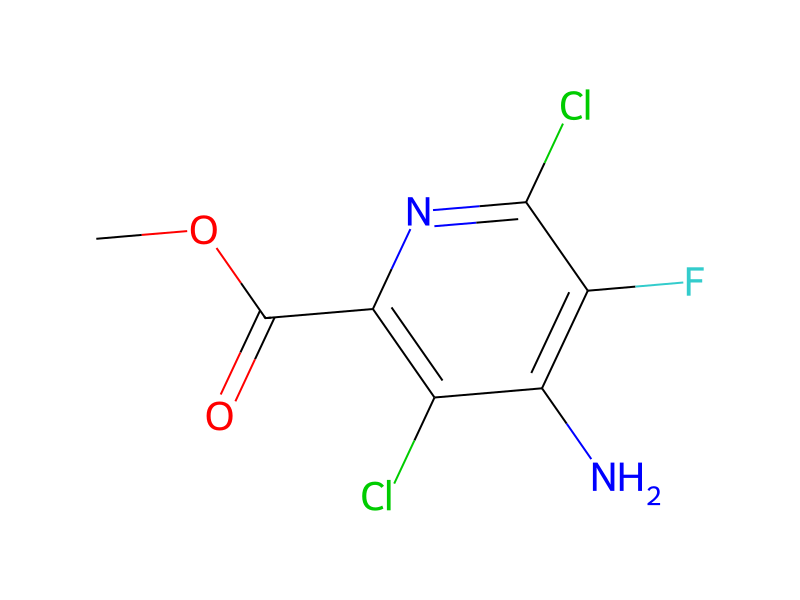 HCID 22677265Methyl 4-amino-3,6-dichloro-5-fluoropicolinate
 HCID 591269062-(4-Chloro-2-fluoro-3-(1-fluoroethyl)phenyl)-4,4,5,5-tetramethyl-1,3,2-dioxaborolane
 HCID 70497684Methyl 4-amino-3-chloro-6-(4-chloro-2-fluoro-3-(1-fluoroethyl)phenyl)-5-fluoropicolinate2×
Product 2

Reagents, catalysts & solvents 3
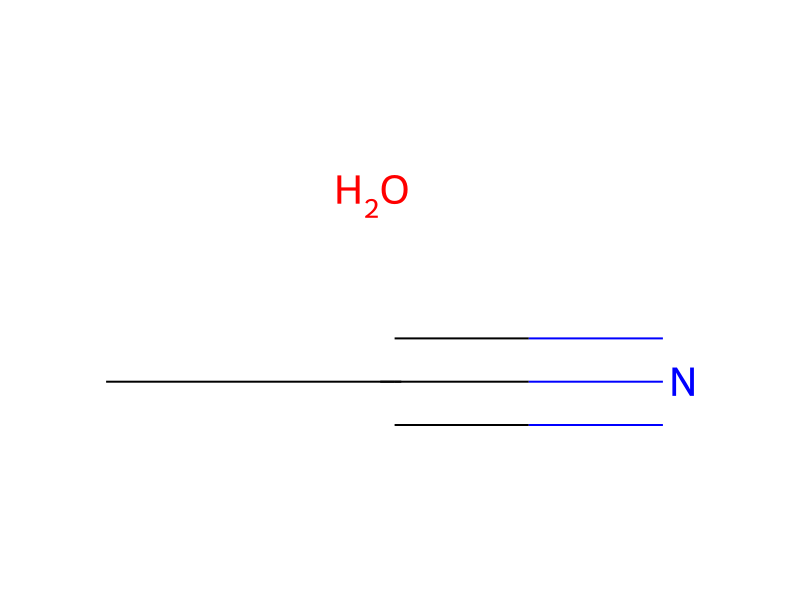
Conditions
- Temperature
- 150 °C
Procedure
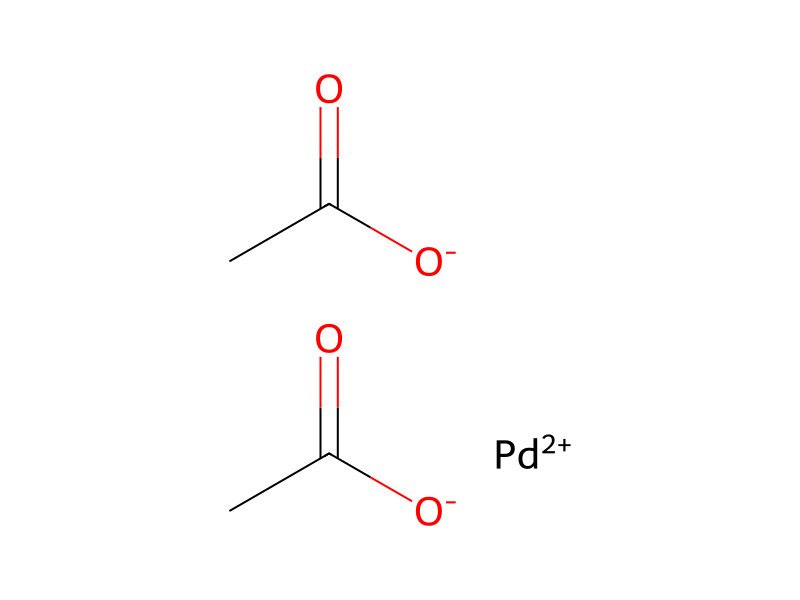
Methyl 4-amino-3-chloro-6-(4-chloro-2-fluoro-3-(1-fluoroethyl)phenyl)-5-fluoropicolinate (Compound H). 2-(4-Chloro-2-fluoro-3-(1-fluoroethyl)phenyl)-4,4,5,5-tetramethyl-1,3,2-dioxaborolane (510 mg, 1.7 mmol, 1.0 equivalent (equiv)) and methyl 4-amino-3,6-dichloro-5-fluoropicolinate (prepared by the methods described in U.S. Pat. No. 6,784,137 B2; 400 mg, 1.7 mmol, 1.0 equiv) were sequentially added to a 5 mL Biotage microwave vessel, followed by cesium fluoride (CsF; 510 mg, 3.3 mmol, 2.0 equiv), palladium(II) acetate (19 mg, 0.084 mmol, 0.05 equiv), and sodium 3,3′,3″-phosphinetriyltribenzenesulfonate (95 mg, 0.17 mmol, 0.10 equiv). A 3:1 mixture of water-acetonitrile (3.2 mL) was added and the resulting brown mixture was heated in a benchtop microwave at 150° C. for 5 min. The cooled reaction mixture was diluted with water (150 mL) and extracted with CH2Cl2 (4×50 mL). The combined organic extracts were dried with magnesium sulfate (MgSO4), gravity filtered, and concentrated by rotary evaporation. The residue was purified by reverse phase column chromatography (eluting with a 5% acetonitrile to 100% acetonitrile gradient) to afford the desired product, methyl 4-amino-3-chloro-6-(4-chloro-2-fluoro-3-(1-fluoroethyl)phenyl)-5-fluoropicolinate as a tan semisolid (220 mg, 35%): IR (thin film) 3475 (w), 3353 (m), 3204 (w), 3001 (w), 2955 (w), 1738 (s), 1711 (s), 1624 (s) cm−1; 1H NMR (300 MHz, CDCl3) δ 7.50 (m, 1H), 7.30 (m, 1H), 7.21 (d, J=2 Hz, 1H), 6.16 (dq, J=46, 7 Hz, 1H), 4.96 (br s, 2H), 3.97 (s, 3H), 1.75 (dd, J=23, 7 Hz, 3H); ESIMS m/z 379 ([M+H]+).
Workup
- addition400 mg, 1.7 mmol, 1.0 equiv) were sequentially added to a 5 mL Biotage microwave vessel
- additionwas added
- customThe cooled reaction mixture
- extractionextracted with CH2Cl2 (4×50 mL)
- dry with materialThe combined organic extracts were dried with magnesium sulfate (MgSO4), gravity
- filtrationfiltered
- concentrationconcentrated by rotary evaporation
- customThe residue was purified by reverse phase column chromatography (
- washeluting with a 5% acetonitrile to 100% acetonitrile gradient)
Sources & evidence
- ORD record
- ord-b797f2a2938a45829072c3a21141265c
- Source dataset
- uspto-grants-2014_11
- Patent number
- US08883688B2
Reaction notes
Loading…