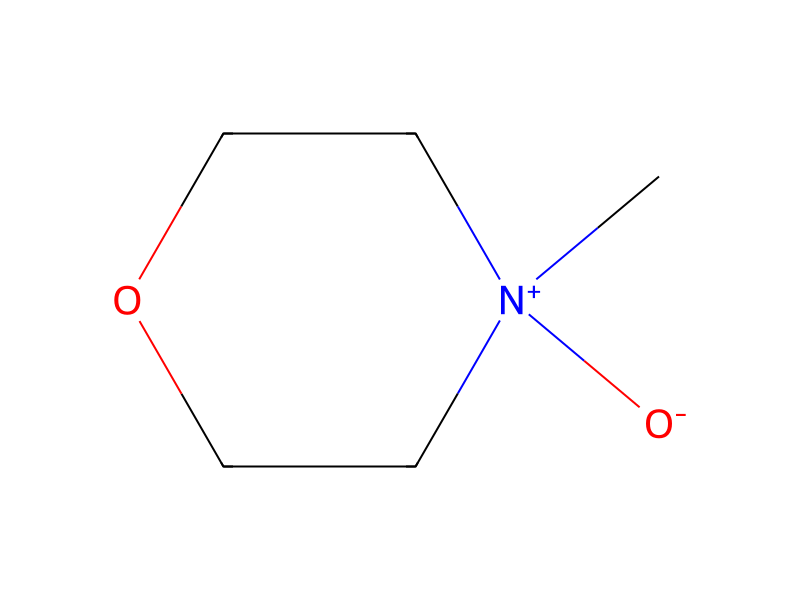
Methyl morpholine oxide → 2-(2-Chloro-5-methoxy-phenyl)-1-(2-chloro-pyridin-4-yl)-propan-1-one
Reaction equation

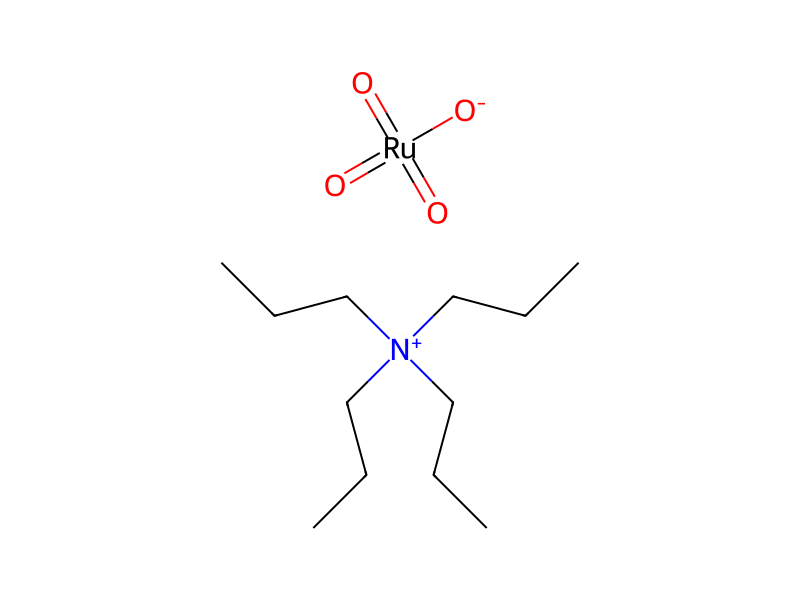
[Cl:1][C:2]1[CH:7]=[CH:6][C:5]([O:8][CH3:9])=[CH:4][C:3]=1[CH:10]([CH3:20])[CH:11]([C:13]1[CH:18]=[CH:17][N:16]=[C:15]([Cl:19])[CH:14]=1)[OH:12].C[N+]1([O-])CCOCC1>C(Cl)Cl.[Ru]([O-])(=O)(=O)=O.C([N+](CCC)(CCC)CCC)CC>[Cl:1][C:2]1[CH:7]=[CH:6][C:5]([O:8][CH3:9])=[CH:4][C:3]=1[CH:10]([CH3:20])[C:11]([C:13]1[CH:18]=[CH:17][N:16]=[C:15]([Cl:19])[CH:14]=1)=[O:12]Participants
5
Reactant 2

Product 1

Reagents, catalysts & solvents 2

Procedure
2-(2-Chloro-5-methoxy-phenyl)-1-(2-chloro-pyridin-4-yl)-propan-1-ol (140 mg) was dissolved in CH2Cl2 (20 mL). To this solution was added 3 Å molecular sieves (140 mg) and then tetrapropylammonium perruthenate (15.8 mg) and 4-methyl-morpholine-4-oxide (121 mg). The mixture was allowed to stir for 2 hours. The reaction mixture was applied directly to a silica gel column and the column was eluted with ethyl acetate:heptane 3:7. The appropriate fractions were combined and evaporated to give the title compound as a colorless gum (113 mg). MS (neg. ion, m/e)=308.4 ((M−H)−).
Workup
- additionTo this solution was added 3 Å molecular sieves (140 mg)
- washthe column was eluted with ethyl acetate:heptane 3:7
- customevaporated
Sources & evidence
- ORD record
- ord-ed3d3d7761bb4c54b7033b377cf23ed9
- Source dataset
- uspto-grants-2014_11
- Patent number
- US08883786B2
Reaction notes
Loading…