Potassium Bromide → CID 71271091
Reaction equation

C(NC1S[C@H]2[O:12][C@H](CN3C=C(C4C=CC=CN=4)N=N3)[C@@H](O)[C@H](O)[C@H]2N=1)C.[CH2:27]([NH:29][C:30]1[S:31][C@H:32]2[O:38][C@H:37]([CH2:39][OH:40])[C@@H:36]([OH:41])[C@H:35]([OH:42])[C@H:33]2[N:34]=1)[CH3:28].CC1(C)N([O])C(C)(C)CCC1.[Br-].[K+].Cl[O-].[Na+]>C1COCC1>[CH2:27]([NH:29][C:30]1[S:31][C@H:32]2[O:38][C@H:37]([C:39]([OH:12])=[O:40])[C@@H:36]([OH:41])[C@H:35]([OH:42])[C@H:33]2[N:34]=1)[CH3:28]Participants
Reactant 5



Product 1

Reagents, catalysts & solvents 1

Conditions
- Temperature
- 0 °C
Procedure
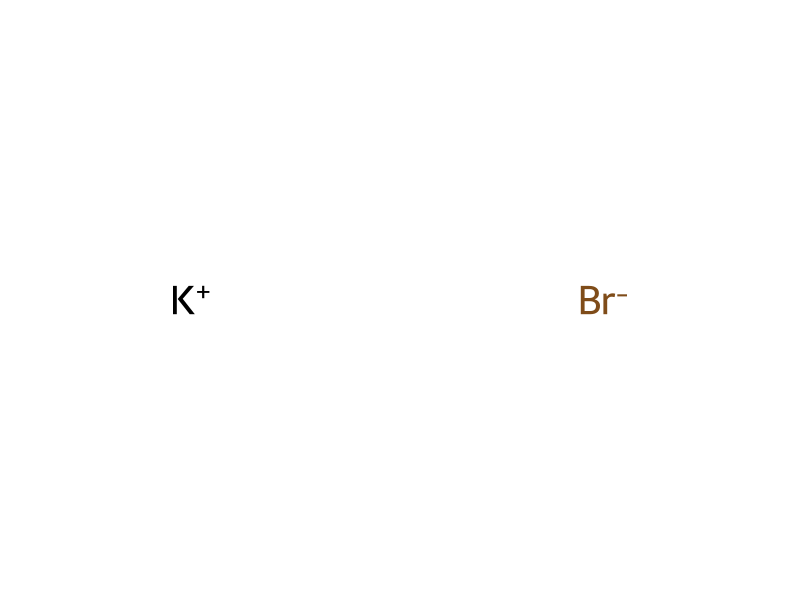
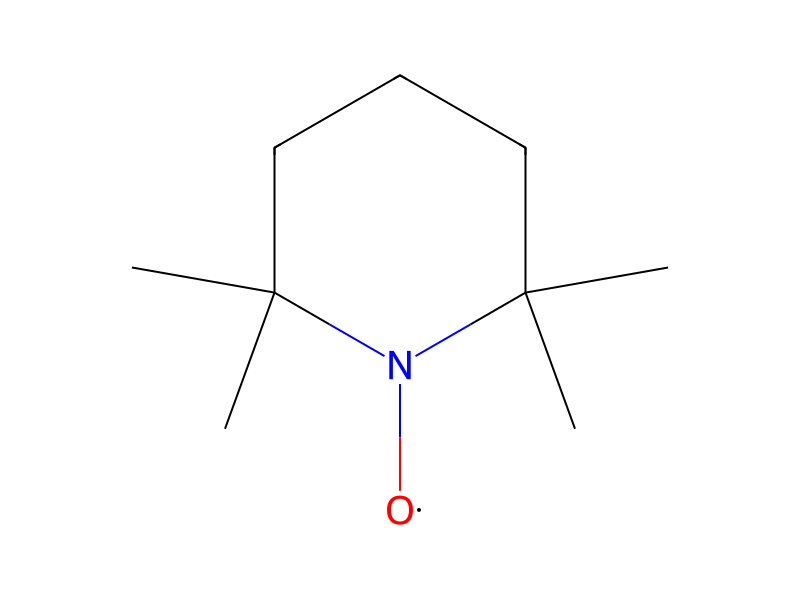
The carboxylic acid intermediate of Schemes 1 to 3 was synthesized as follows: To a suspension of (3aR,5R,6S,7R,7aR)-2-(ethylamino)-5-(hydroxymethyl)-5,6,7,7a-tetrahydro-3aH-pyrano[3,2-d]thiazole-6,7-diol (23 g, 93 mmol) in 1:1 THF/aqueous NaHCO3 (1200 mL) was added TEMPO (3.2 g, 20 mmol) and potassium bromide (3.5 g, 30 mmol). The mixture was then cooled to 0° C. and a solution of sodium hypochlorite (190 mL, 9% active chlorine basis) was added, dropwise. After 1 h, additional amounts of sodium hypochlorite solution (95 mL) and TEMPO (1.6 g, 10 mmol) were added. After TLC analysis indicated the reaction was complete, the reaction solution was extracted with diethyl ether (2×250 mL). The aqueous layer was acidified with 5N HCl to pH 5-6, and then concentrated under reduced pressure. The residue was purified by flash chromatography on silica gel using a gradient of methanol/dichloromethane (1% to 50%) to afford the title compound (23 g).
Workup
- extractionthe reaction solution was extracted with diethyl ether (2×250 mL)
- concentrationconcentrated under reduced pressure
- customThe residue was purified by flash chromatography on silica gel using a gradient of methanol/dichloromethane (1% to 50%)
Sources & evidence
- ORD record
- ord-6e20622b4a4e4d16abdaafa7ac6de133
- Source dataset
- uspto-grants-2014_11
- Patent number
- US08884023B2
Reaction notes
Loading…