Dichloromethane → Ammonia dichloromethane
Reaction equation

[N:1]1([CH2:6][CH2:7][CH2:8][O:9][C:10]2[CH:17]=[CH:16][C:13]([CH:14]=O)=[CH:12][CH:11]=2)[CH2:5][CH2:4][CH2:3][CH2:2]1.[NH2:18][C:19]1[CH:24]=[CH:23][CH:22]=[CH:21][N:20]=1.C(O[BH-](OC(=O)C)OC(=O)C)(=O)C.[Na+].[OH-].[Na+].[CH2:41]([Cl:43])[Cl:42]>C(O)(=O)C>[NH3:1].[CH2:41]([Cl:43])[Cl:42].[N:20]1[CH:21]=[CH:22][CH:23]=[CH:24][C:19]=1[NH:18][CH2:14][C:13]1[CH:16]=[CH:17][C:10]([O:9][CH2:8][CH2:7][CH2:6][N:1]2[CH2:5][CH2:4][CH2:3][CH2:2]2)=[CH:11][CH:12]=1Participants
Reactant 5

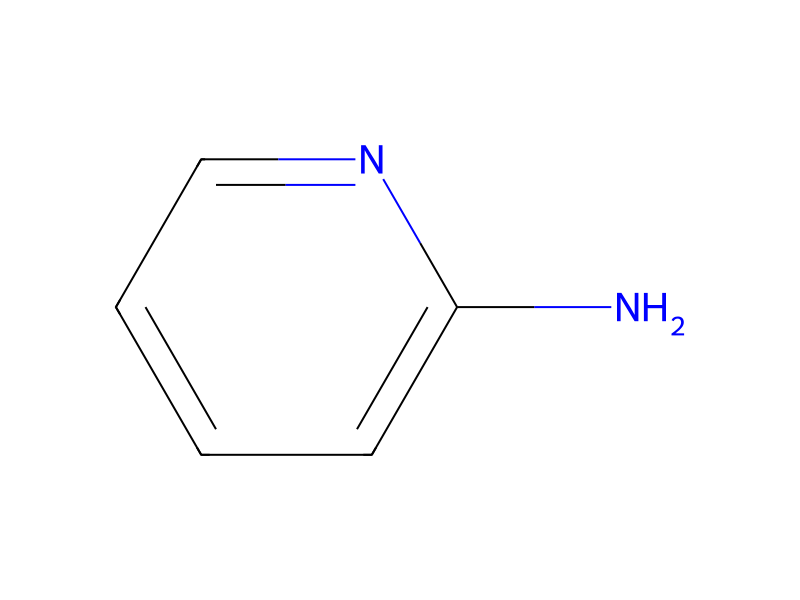



Product 2


Reagents, catalysts & solvents 1

Procedure
A solution of 4-(3-Pyrrolidin-1-yl-propoxy)-benzaldehyde (0.51 g), 2-aminopyridine (0.24 g), and acetic acid (0.13 mL) in DCM (7 mL) was treated with sodium triacetoxyborohydride (650 mg). After 16 h, the resulting mixture was treated with 10% sodium hydroxide (10 mL) and extracted with DCM (3×10 mL). The combined organic phases were dried (sodium sulfate) and evaporated. Chromatography of the residue (1-4% 2 M methanolic ammonia/DCM) gave the title compound as an off white solid (500 mg). 1H NMR (400 MHz, CDCl3): 8.09 (m, 1H), 7.39 (m, 1H), 7.26 (d, J=8.8 Hz, 2H), 6.86 (d, J=8.8 Hz, 2H), 6.58 (m, 1H), 6.36 (m, 1H), 4.79 (m, 1H), 4.41 (d, J=5.5, 2H), 4.01 (t, J=6.3 Hz, 2H), 2.63 (t, J=7.6 Hz, 2H), 2.54 (m, 4H), 2.04-1.96 (m, 2H), 1.79 (m, 4H).
Workup
- extractionextracted with DCM (3×10 mL)
- dry with materialThe combined organic phases were dried (sodium sulfate)
- customevaporated
Sources & evidence
- ORD record
- ord-83b8cf619dae443aadc4d711addd74c2
- Source dataset
- uspto-grants-2008_09
- Patent number
- US07429586B2
Reaction notes
Loading…