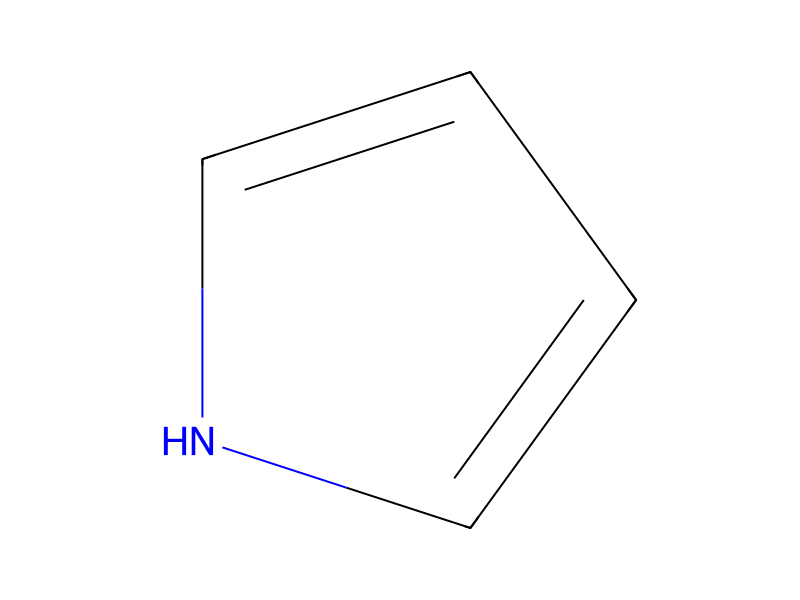
Pyrrole → HCID 18694739, compound
Reaction equation

[OH2:1].[F:2][C:3]([F:13])([F:12])[C:4]([F:11])([F:10])[C:5]([F:9])([F:8])[CH:6]=[O:7].[NH:14]1[CH:18]=[CH:17][CH:16]=[CH:15]1.[OH-].[Na+]>O>[F:8][C:5]([F:9])([C:4]([F:10])([F:11])[C:3]([F:2])([F:13])[F:12])[CH:6]([C:15]1[NH:14][C:18]([CH:6]([OH:7])[C:5]([F:8])([F:9])[C:4]([F:10])([F:11])[C:3]([F:12])([F:13])[F:2])=[CH:17][CH:16]=1)[OH:1]Participants
5
Reactant 3


Product 1

Reagents, catalysts & solvents 1

Procedure
Heptafluorobutyraldehyde hydrate (5.0 g, 23 mmol) was placed in a 100 mL Schlenk flask. This was frozen with liquid nitrogen and an inert atmosphere was established. Against an outflow of nitrogen, dried pyrrole (0.694 mL, 10 mmol) and sodium hydroxide (2.25 g, 56 mmol) were added. The flask was wrapped in foil and the mixture was stirred for 2 days. The volatiles were removed by vacuum, leaving a light brown, oily solid. The solid was dissolved in 40 mL of water and the solution was extracted (4×50 ml) with methylene chloride. The organic layers were dried over sodium sulfate and then evaporated to dryness under vacuum to an oily brown solid (38%), which proved to be a diastereomeric mixture of the desired products.
Workup
- temperatureThis was frozen with liquid nitrogen
- customThe volatiles were removed by vacuum
- customleaving a light brown, oily solid
- extractionthe solution was extracted (4×50 ml) with methylene chloride
- dry with materialThe organic layers were dried over sodium sulfate
- customevaporated to dryness under vacuum to an oily brown solid (38%), which
- additiona diastereomeric mixture of the desired products
Sources & evidence
- ORD record
- ord-9268818e04114a0b848598cd7cf95910
- Source dataset
- uspto-grants-1999_01
- Patent number
- US05856515
Reaction notes
Loading…