Propylene → HCID 22386386, compound
Reaction equation

[CH2:1]=[CH:2][CH2:3][CH2:4][CH2:5][CH3:6].[CH2:7]=[CH:8][CH3:9]>CCCCCC>[CH2:1]=[CH:2][CH2:3][CH2:4][CH2:5][CH3:6].[CH2:7]=[CH:8][CH3:9]Participants
Reactant 2
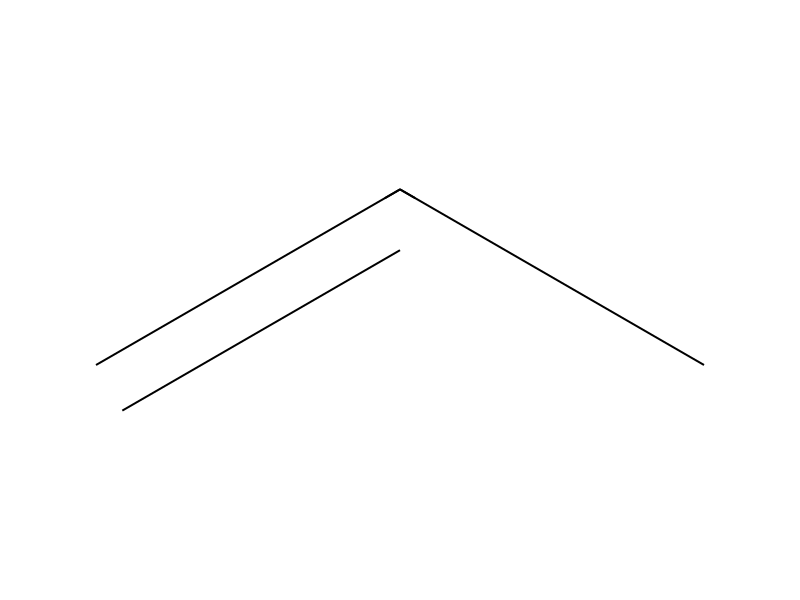

Product 1

Reagents, catalysts & solvents 1

Procedure
A reaction vessel equipped with a mechanical stirrer, reflux condenser, and temperature control was dried and filled with nitrogen. The vessel was charged with 400 g of 1-hexene (from Ethyl Corp.), the temperature was adjusted to 25° C., and hydrogen (Oxygen Services ultra high purity) bubbled in at a rate of about 60 mL/min. 2.2 nL of a 1.8M solution of diethylaluminum chloride (from Aldrich Chemical Co.) was added followed by the addition of 0.4 g AATiCl3 and immediately propylene was bubbled into the reaction mixture at about 60 mL/min for 30 minutes. Methanol (20 mL) was added to terminate the polymerization and the polymer precipitated in excess methanol to extract the catalyst residues. A tacky amorphous polymer was obtained in 72% conversion having an inherent viscosity of 5.7 dL/g in n-hexane and a Tg of -32° C. 3C NMR analysis indicated that the polymer contained 87 mole percent of 1-hexene and 13 mole percent of propylene.
Workup
- customA reaction vessel equipped with a mechanical stirrer
- temperaturereflux condenser
- customtemperature control was dried
- additionfilled with nitrogen
- additionThe vessel was charged with 400 g of 1-hexene (from Ethyl Corp.)
- customwas adjusted to 25° C.
- customhydrogen (Oxygen Services ultra high purity) bubbled in at a rate of about 60 mL/min
- addition2.2 nL of a 1.8M solution of diethylaluminum chloride (from Aldrich Chemical Co.) was added
- additionfollowed by the addition of 0.4 g AATiCl3
- customimmediately propylene was bubbled into the reaction mixture at about 60 mL/min for 30 minutes
- additionMethanol (20 mL) was added
- customto terminate
- customthe polymerization
- customthe polymer precipitated in excess methanol
- extractionto extract the catalyst residues
- customA tacky amorphous polymer was obtained in 72% conversion
Sources & evidence
- ORD record
- ord-fefb83c532d34ebf8baa8b98eee21627
- Source dataset
- uspto-grants-1999_01
- Patent number
- US05859088
Reaction notes
Loading…