Ammonium Hydroxide → HCID 86753582, compound
Reaction equation

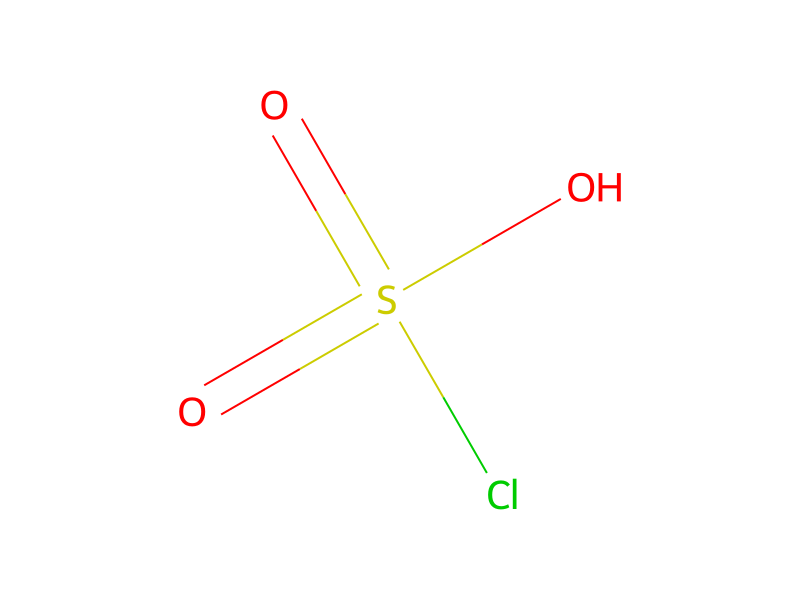
Cl[S:2]([OH:5])(=O)=[O:3].[CH3:6][S:7][C:8]1[O:12][N:11]=[C:10]([C:13]2[CH:18]=[CH:17][CH:16]=[CH:15][CH:14]=2)[C:9]=1[C:19]1[CH:24]=[CH:23][CH:22]=[CH:21][CH:20]=1.[OH-].[NH4+:26]>ClCCl>[CH3:6][S:7][C:8]1[O:12][N:11]=[C:10]([C:13]2[CH:18]=[CH:17][CH:16]=[CH:15][CH:14]=2)[C:9]=1[C:19]1[CH:24]=[CH:23][C:22]([S:2]([NH2:26])(=[O:5])=[O:3])=[CH:21][CH:20]=1Participants
Reactant 3


Product 1

Reagents, catalysts & solvents 1

Procedure
To stirred chlorosulfonic acid (3.0 mL, 45.06 mmol) at room temperature was carefully added solid 5-methylthio-3,4-diphenylisoxazole (Step 2) (0.915 g, 3.42 mmol). After 3 hours at room temperature, the reaction was poured over crushed ice. The resulting suspension was layered with dichloromethane and excess concentrated ammonium hydroxide and was stirred vigorously for 3 hours. The layers were separated and the aqueous layer extracted with ethyl acetate. The organic phases were combined, washed with aqueous KHSO4 solution (0.25N), aqueous NaHCO3 solution, and brine, dried over MgSO4, filtered and concentrated in vacuo yielding an oil. The oil was crystallized by dissolution in dichloromethane followed by the addition of isooctane until slight turbidity was seen. The resulting suspension was vacuum filtered yielding 4-[5-methylthio-3-phenylisoxazol-4-yl]benzenesulfonamide (0.355 g, 30%) as fine needles: mp 135°-137° C. 1H NMR (CDCl3 /300 MHz) 7.90 (d, 2H, J=8.5 Hz), 7.47-7.31 (m, 7 H), 4.81 (s, 2H), 2.69 (s, 3H). FABLRMS m/z 347 (M+H). FABHRMS m/z 347.0497(M+H, C16H15N2O3S2 requires 347.0524). Anal. Calc'd for C16H14N2O3S2.1.69 wt % H2O: C, 54.54; H, 4.19; N, 7.95. Found: C, 54.53; H, 4.04; N, 7.87.
Workup
- additionthe reaction was poured
- customover crushed ice
- customThe layers were separated
- extractionthe aqueous layer extracted with ethyl acetate
- washwashed with aqueous KHSO4 solution (0.25N), aqueous NaHCO3 solution, and brine
- dry with materialdried over MgSO4
- filtrationfiltered
- concentrationconcentrated in vacuo
- customyielding an oil
- customThe oil was crystallized by dissolution in dichloromethane
- additionfollowed by the addition of isooctane until slight turbidity
- filtrationfiltered
Sources & evidence
- ORD record
- ord-6df3cd65edbf430a87394cdf0a1321bd
- Source dataset
- uspto-grants-1999_01
- Patent number
- US05859257
Reaction notes
Loading…