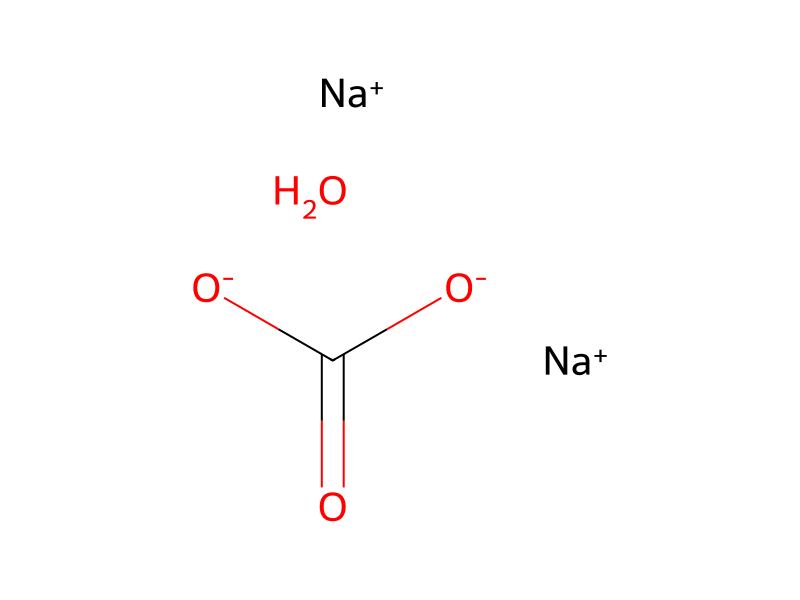
Sodium Carbonate Monohydrate → Alpha Bromolauroyl-lactosamine
Reaction equation

[Br:1][CH:2]([CH2:6][CH2:7][CH2:8][CH2:9][CH2:10][CH2:11][CH2:12][CH2:13][CH2:14][CH3:15])[C:3](Cl)=[O:4].[OH:16][CH:17]1[O:36][C@H:35]([CH2:37][OH:38])[C@@H:22]([O:23][C@@H:24]2[O:32][C@H:31]([CH2:33][OH:34])[C@H:29]([OH:30])[C@H:27]([OH:28])[C@H:25]2[OH:26])[C@H:20]([OH:21])[C@H:18]1[NH2:19].O.C(=O)([O-])[O-].[Na+].[Na+]>C(O)CCC>[Br:1][CH:2]([CH2:6][CH2:7][CH2:8][CH2:9][CH2:10][CH2:11][CH2:12][CH2:13][CH2:14][CH3:15])[C:3]([C:17]1([O:36][C@H:35]([CH2:37][OH:38])[C@@H:22]([O:23][C@@H:24]2[O:32][C@H:31]([CH2:33][OH:34])[C@H:29]([OH:30])[C@H:27]([OH:28])[C@H:25]2[OH:26])[C@H:20]([OH:21])[C@H:18]1[NH2:19])[OH:16])=[O:4]Participants
5



Procedure
Alpha-bromolauroyl chloride (0.50 g) was added drop-wise to a 30% aqueous solution of lactosamine (0.7 g) at zero degrees centigrade. The pH of the solution was kept above 9.0 by adding saturated sodium carbonate water solution. The reaction was stirred overnight at room temperature. It was then heated to 36° C. for an additional hour. The final product was obtained by extraction two times with n-butanol. After evaporating butanol, the remaining solid material was washed with cold ethanol. The final product was collected by filtration. The NMR spectra showed that the solid material is the expected product. The yield of the reaction was 75%.
Workup
- temperatureIt was then heated to 36° C. for an additional hour
Sources & evidence
- ORD record
- ord-5c4cb051124d42eabf3f2ce1312b2ed5
- Source dataset
- uspto-grants-1999_01
- Patent number
- US05863886
Reaction notes
Loading…