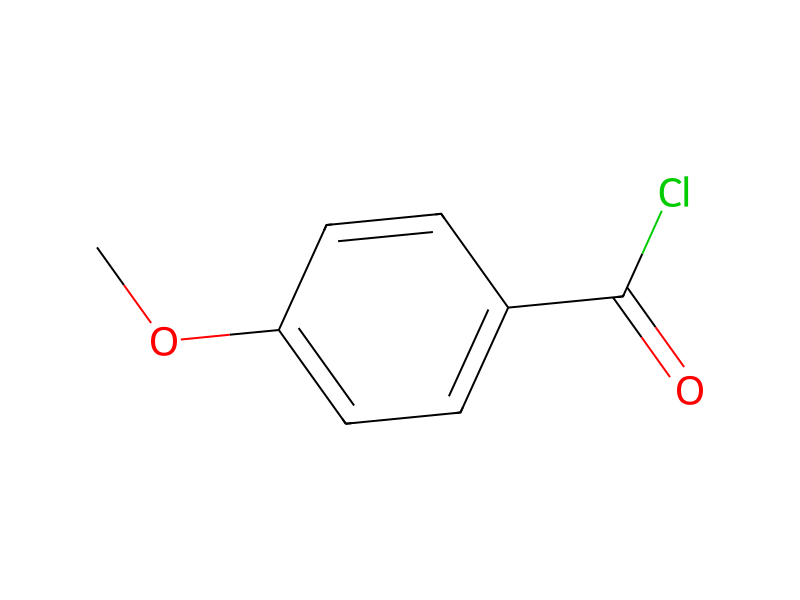
p-Anisoyl chloride → HCID 21084206, compound
Reaction equation

[CH:1]12[CH2:7][CH:4]([CH2:5][CH2:6]1)[CH:3]([C:8]([O:10][CH2:11][CH3:12])=[O:9])[NH:2]2.C(N(CC)CC)C.[CH3:20][O:21][C:22]1[CH:30]=[CH:29][C:25]([C:26](Cl)=[O:27])=[CH:24][CH:23]=1>C(Cl)(Cl)Cl>[CH3:20][O:21][C:22]1[CH:30]=[CH:29][C:25]([C:26]([N:2]2[CH:3]([C:8]([O:10][CH2:11][CH3:12])=[O:9])[CH:4]3[CH2:7][CH:1]2[CH2:6][CH2:5]3)=[O:27])=[CH:24][CH:23]=1Participants
5
Reactant 3


Product 1

Reagents, catalysts & solvents 1

Procedure
To a solution of ethyl 2-azabicyclo[2.2.1]heptane-3-carboxylate (181 mg, 1.07 mmol) obtained in Example 1 (b) in chloroform (2 ml) were added triethylamine (0.16 ml, 1.18 mmol) and 4-methoxybenzoyl chloride (201 mg, 1.18 mmol) while being cooled with ice. After a reaction at room temperature for 1 hour, the reaction mixture was washed with 1N hydrochloric acid, saturated sodium bicarbonate water and saturated brine successively, and dried over magnesium sulfate. The solvent was evaporated and the residue was purified by silica gel column chromatography (25%–40% ethyl acetate/hexane), to give ethyl 2-(4-methoxybenzoyl)-2-azabicyclo[2.2.1]heptane-3-carboxylate (239 mg, 74%).
Workup
- temperaturewhile being cooled with ice
- customAfter a reaction at room temperature for 1 hour
- washthe reaction mixture was washed with 1N hydrochloric acid, saturated sodium bicarbonate water and saturated brine successively
- dry with materialdried over magnesium sulfate
- customThe solvent was evaporated
- customthe residue was purified by silica gel column chromatography (25%–40% ethyl acetate/hexane)
Sources & evidence
- ORD record
- ord-584d4e11e55b4d63b9352f93bec07687
- Source dataset
- uspto-grants-2007_02
- Patent number
- US07176217B2
Reaction notes
Loading…