Hydrochloric Acid → epsilon-CAPROLACTONE
Reaction equation

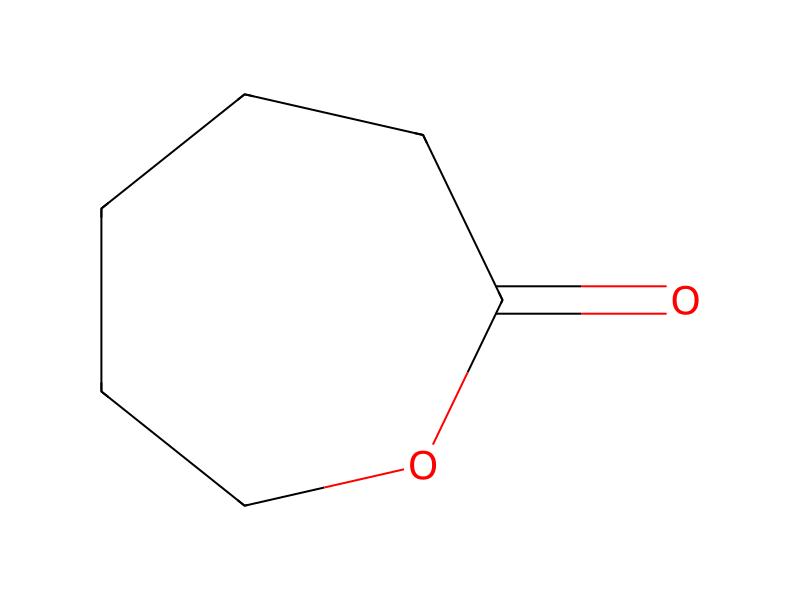
[C:1]1(=[O:8])[O:7][CH2:6][CH2:5][CH2:4][CH2:3][CH2:2]1.[Cl-:9].C[N+]1(C)CCCCC1.C(Cl)(Cl)=O.[ClH:22]>>[Cl:9][CH2:1][CH2:2][CH2:3][CH2:4][CH2:5][C:6]([Cl:22])=[O:7].[C:1]1(=[O:8])[O:7][CH2:6][CH2:5][CH2:4][CH2:3][CH2:2]1Participants
6




Procedure
456 parts of 6-caprolactone and 9 parts of N,N-dimethylpiperidinium chloride are initially taken in the stirred reactor described in Example 1. 380 parts of phosgene and 70 parts of hydrogen chloride are passed in at 170°-175° C. in the course of 7 hours. The reaction mixture is then kept at this temperature for a further hour. Any phosgene and hydrogen chloride still present are blown out with nitrogen, and the reaction mixture is then worked up by distillation under reduced pressure. 424 parts of 6-chlorohexanoyl chloride and 86 parts of caprolactone are obtained. The conversion is 81% and the yield is 77.3%, based on lactone used.
Workup
- customare passed in at 170°-175° C. in the course of 7 hours
- waitThe reaction mixture is then kept at this temperature for a further hour
- distillationthe reaction mixture is then worked up by distillation under reduced pressure
Sources & evidence
- ORD record
- ord-5acd77535c4a4c6691f2c1b53feccebc
- Source dataset
- uspto-grants-1988_08
- Patent number
- US04764309
Reaction notes
Loading…