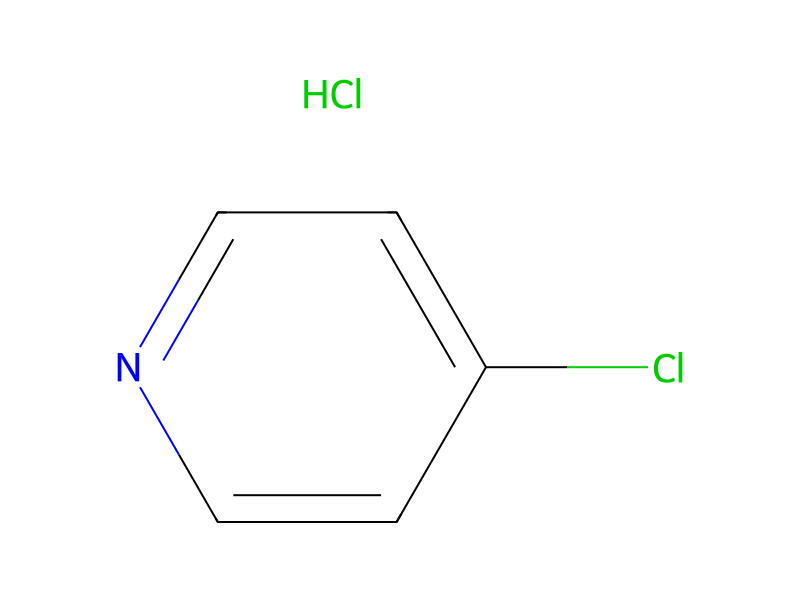
4-Chloropyridine hydrochloride → HCID 22027790, compound
Reaction equation

[C:1]([O:5][C:6]([O:8][NH:9][CH2:10][CH2:11][CH:12]1[CH2:17][CH2:16][NH:15][CH2:14][CH2:13]1)=[O:7])([CH3:4])([CH3:3])[CH3:2].Cl.Cl[C:20]1[CH:25]=[CH:24][N:23]=[CH:22][CH:21]=1>C(O)C>[C:1]([O:5][C:6]([O:8][NH:9][CH2:10][CH2:11][CH:12]1[CH2:17][CH2:16][N:15]([C:20]2[CH:25]=[CH:24][N:23]=[CH:22][CH:21]=2)[CH2:14][CH2:13]1)=[O:7])([CH3:4])([CH3:2])[CH3:3]Participants
4
Reactant 2

Product 1

Reagents, catalysts & solvents 1

Procedure
N-t-butoxycarbonyloxy 2-(piperidin-4-yl)-ethylamine (prepared per Method K′ above) (14.4 g, 50 mmol), 4-chloropyridine HCl (1.0 eq., 8.0 g), TEA (2.2 eq.) were mixed in ethanol, and maintained under reflux overnight. The desired compound, N-t-butoxycarbonyloxy 2-[1-(pyrid-4-yl)piperidin-4-yl]-ethylamine, was isolated by column chromato-graphy, (silica gel) eluted with EtOAc and carried in the next step.
Workup
- temperaturemaintained
- temperatureunder reflux overnight
Sources & evidence
- ORD record
- ord-3cda89a9ebdf4ba99cac5eb1844aed4e
- Source dataset
- uspto-grants-2007_02
- Patent number
- US07183281B2
Reaction notes
Loading…