p-Aminoacetophenone → HCID 406534, compound
Reaction equation

[Cl:1][C:2]1[C:14]2[C:5](=[N:6][C:7]3[C:12]([C:13]=2Cl)=[CH:11][CH:10]=[CH:9][CH:8]=3)[O:4][CH:3]=1.[CH3:16][C:17]([C:19]1[CH:24]=[CH:23][C:22]([NH2:25])=[CH:21][CH:20]=1)=[O:18].[OH-].[Na+]>CCO.Cl>[Cl:1][C:2]1[C:14]2[C:5](=[N:6][C:7]3[C:12]([C:13]=2[NH:25][C:22]2[CH:23]=[CH:24][C:19]([C:17](=[O:18])[CH3:16])=[CH:20][CH:21]=2)=[CH:11][CH:10]=[CH:9][CH:8]=3)[O:4][CH:3]=1Participants
6
Reactant 3
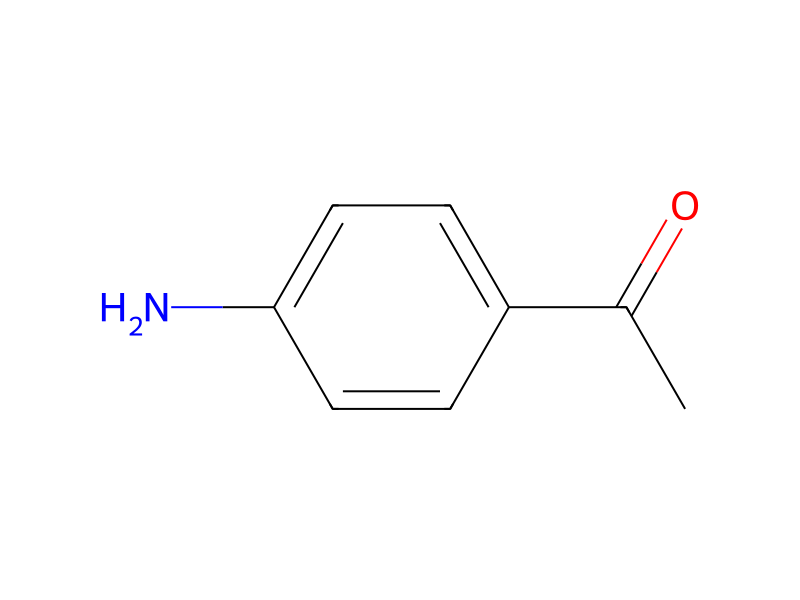


Product 1

Reagents, catalysts & solvents 2


Procedure
To a solution of 3,4-dichlorofuro[2,3-b]quinoline (compound 12, 0.92 g, 3.86 mmol) and 4-aminoacetophenone (0.88 g, 6.52 mmol) in EtOH (40 mL), concentrated HCl was added until a pH of 6 was reached. The mixture was refluxed for 16 h and the solvent evaporated in vacuo to yield a residual solid, which was suspended in ice-water (80 mL) and neutralized with a 1N NaOH solution. The resultant precipitate was collected by filtration, washed with H2O, and then chromatographed on a column of silica gel using CH2Cl2—MeOH=10/1 to obtain the title compound 13 (0.99 g, 75% yield).
Workup
- temperatureThe mixture was refluxed for 16 h
- customthe solvent evaporated in vacuo
- customto yield a residual solid, which
- filtrationThe resultant precipitate was collected by filtration
- washwashed with H2O
- customchromatographed on a column of silica gel
Sources & evidence
- ORD record
- ord-c3947b4ce7aa49eb9b5f7efeb37e4c28
- Source dataset
- uspto-grants-2004_06
- Patent number
- US06750223B2
Reaction notes
Loading…