Benzene → 6-Chloro-cyclopropyl-carbonyl-3-dimethylaminomethylene-4-oxo-1,2,3,4-tetrahydroquinoline
Reaction equation

[Cl:1][C:2]1[CH:3]=[C:4]2C(=[CH:10][CH:11]=1)N(C1CC1)C(=C=O)C[C:5]2=[O:17].CO[CH:20]([O:24]C)[N:21]([CH3:23])[CH3:22].[CH2:26]([N:28]([CH2:31][CH3:32])[CH2:29]C)C.[CH:33]1[CH:38]=[CH:37]C=CC=1>>[Cl:1][C:2]1[CH:3]=[C:4]2[C:22](=[CH:10][CH:11]=1)[N:21]([C:20]([CH:37]1[CH2:38][CH2:33]1)=[O:24])[CH2:23][C:32](=[CH:31][N:28]([CH3:26])[CH3:29])[C:5]2=[O:17]Participants
5




Procedure
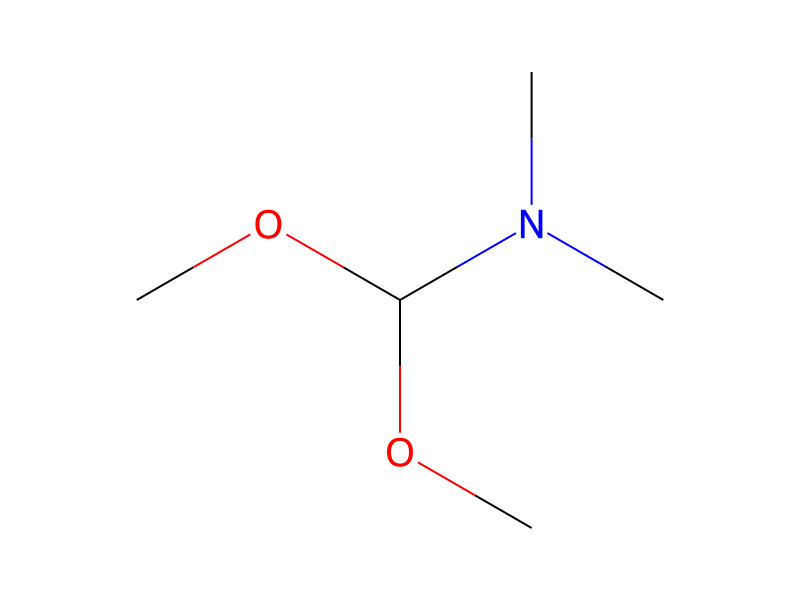
A solution of 6-chloro-1-cycloprop yl-carbonyl-4-oxo-1,2,3,4-tetrahydroquinoline (1.996 g), N,N-dimethylformamide dimethyl acetal (3.808 g), and triethylamine (1.212 g) in benzene (16 ml) was refluxed with stirring for 30 minutes and then about three-fourths of the solvent was distilled slowly at atmospheric pressure over a period of approximately 30 minutes. To the residue was added benzene (16 ml) and the solvent was distilled again. The residue was dissolved in ethyl acetate, treated with activated charcoal, and evaporated in vacuo. The residual sold was washed with diethyl ether to give 6-chloro-cyclopropyl-carbonyl-3-dimethylaminomethylene-4-oxo-1,2,3,4-tetrahydroquinoline (2.43 g).
Workup
- distillationabout three-fourths of the solvent was distilled slowly at atmospheric pressure over a period of approximately 30 minutes
- additionTo the residue was added benzene (16 ml)
- distillationthe solvent was distilled again
- dissolutionThe residue was dissolved in ethyl acetate
- additiontreated with activated charcoal
- customevaporated in vacuo
- washThe residual sold was washed with diethyl ether
Sources & evidence
- ORD record
- ord-f6c894724b454afea2847361e9d2d620
- Source dataset
- uspto-grants-1988_08
- Patent number
- US04767780
Reaction notes
Loading…