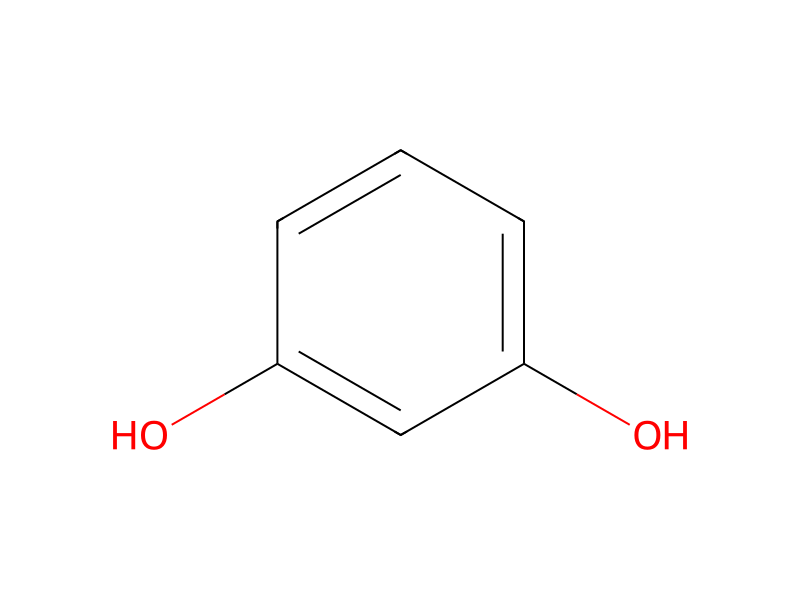
Resorcinol → Bis(2-chloro-4-trifluoromethylphenoxy)benzene
Reaction equation

[Cl:1][C:2]1[CH:3]=[C:4]([C:9]([F:12])([F:11])[F:10])[CH:5]=[CH:6][C:7]=1Cl.[C:13]1([CH:20]=[CH:19][CH:18]=[C:16]([OH:17])[CH:15]=1)O.[OH-:21].[K+]>CS(C)=O.O>[Cl:1][C:2]1[CH:3]=[C:4]([C:9]([F:12])([F:11])[F:10])[CH:5]=[CH:6][C:7]=1[O:21][C:15]1[CH:13]=[CH:20][CH:19]=[CH:18][C:16]=1[O:17][C:7]1[CH:6]=[CH:5][C:4]([C:9]([F:12])([F:11])[F:10])=[CH:3][C:2]=1[Cl:1]Participants
Reactant 3

Product 1

Reagents, catalysts & solvents 2
Procedure
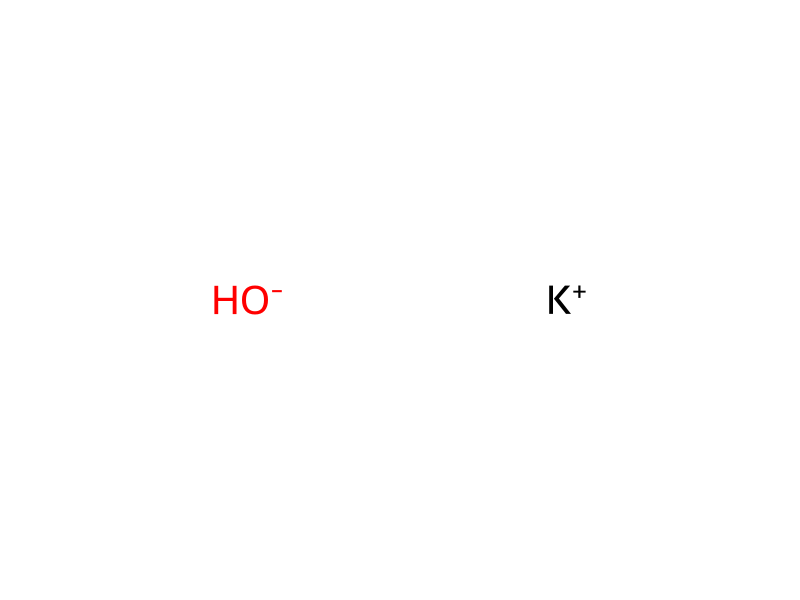
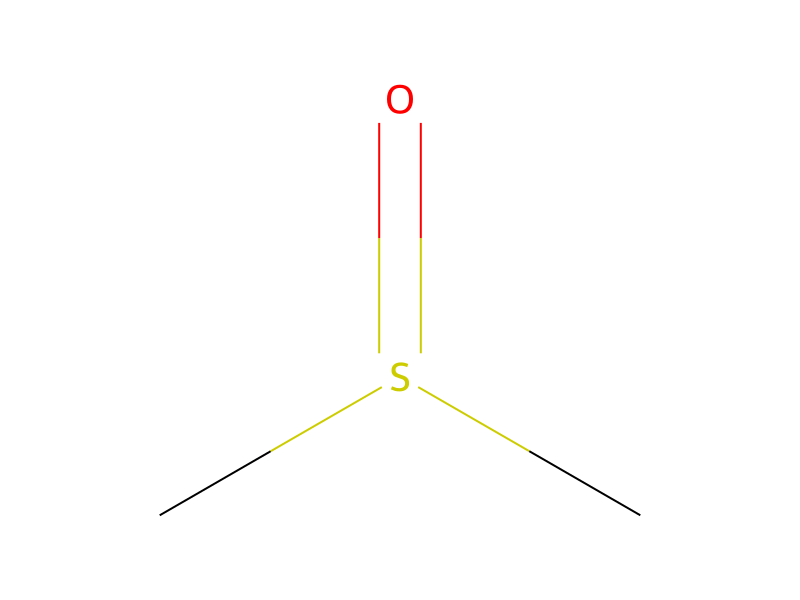
In 100 ml of dimethyl sulfoxide, there were dissolved 129 g. (0.60 mole) of 3,4-dichlorobenzotrifluoride and 27.5 g. (0.25 mole) of resorcin. Then, a solution of 34 g. (0.60 mole) of potassium hydroxide dissolved in 15 ml of water was added to the resultant solution and the mixture was heated with stirring at 150° to 160° C. for 50 hours. After the reaction mixture was left to cool, water was added thereto and the oily product precipitated was subjected to extraction with benzene. The extract was washed with a dilute aqueous sodium hydroxide and with water to remove unaltered resorcin, followed by drying over sodium sulfate and evaporation of benzene under reduced pressure, to give crude bis(2-chloro-4-trifluoromethylphenoxy)benzene. Subsequently, said crude bis(2-chloro-4-trifluoromethylphenoxy)benzene was added dropwise into a mixed acid comprising 60 ml of conc. nitric acid (d=1.38) and 60 ml of conc. sulfuric acid under stirring at 10° to 15° C. After completion of the dropwise addition, the mixture was further stirred at 20° to 27° C. for additional one hour to complete the reaction. Then, ice-water was added to the reaction mixture and the resultant precipitate of an oily product was extracted with benzene. The extract was washed with a dilute aqueous sodium hydroxide, and then with water, followed by drying over sodium sulfate and evaporation of benzene. Recrystallization of the residue from isopropyl alcohol gave 2,4-bis(2-chloro-4-trifluoromethylphenoxy)nitrobenzene as pale yellow powders, melting at 111° to 113° C. (yield: 47%).
Workup
- temperaturethe mixture was heated
- waitAfter the reaction mixture was left
- temperatureto cool
- customthe oily product precipitated
- extractionwas subjected to extraction with benzene
- washThe extract was washed with a dilute aqueous sodium hydroxide and with water
- customto remove unaltered resorcin
- dry with materialby drying over sodium sulfate and evaporation of benzene under reduced pressure
Sources & evidence
- ORD record
- ord-63b7ecbe921a4fffb2aaee5d97882115
- Source dataset
- uspto-grants-1984_08
- Patent number
- US04465503
Reaction notes
Loading…