Hydrochloric Acid → HCID 23128113, compound
Reaction equation

C([O:4][C:5]1[C:14](=[O:15])[C:13]2[C:8](=[CH:9][C:10]([C:16]#[N:17])=[CH:11][CH:12]=2)[N:7]([CH3:18])[CH:6]=1)C=C.Cl>C1C=CC(P(C2C=CC=CC=2)C2C=CC=CC=2)=CC=1.C1C=CC(P(C2C=CC=CC=2)C2C=CC=CC=2)=CC=1.C1C=CC(P(C2C=CC=CC=2)C2C=CC=CC=2)=CC=1.[Cl-].[Rh].C(O)C>[C:16]([C:10]1[CH:9]=[C:8]2[C:13]([C:14](=[O:15])[C:5]([OH:4])=[CH:6][N:7]2[CH3:18])=[CH:12][CH:11]=1)#[N:17]Participants
5
Reactant 2


Product 1

Reagents, catalysts & solvents 2

Procedure
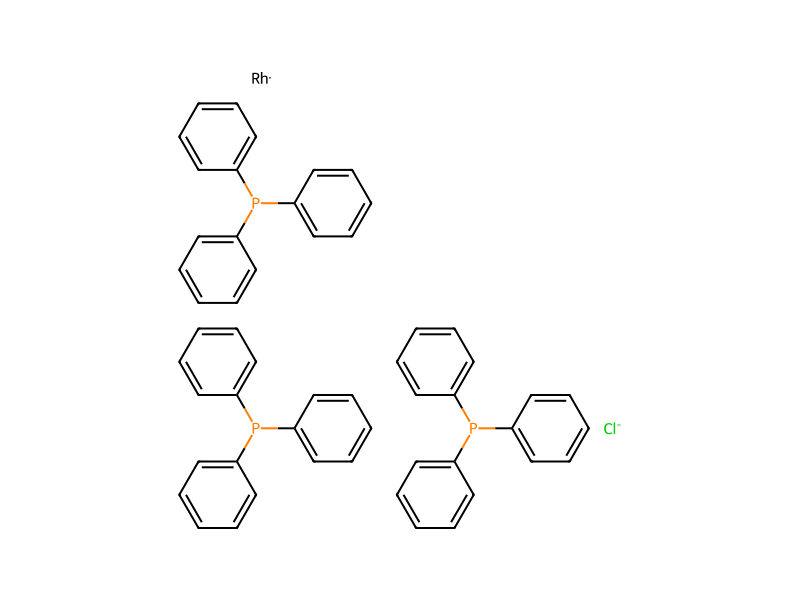
A mixture of the crude 3-allyloxy-7-cyano-1-methyl-4-quinolone (1.2 g), tris(triphenylphosphine)rhodium chloride (0.1 g) and ethanol (200 ml) was heated under reflux for 2 days. Hydrochloric acid (1M, 10 ml) was added, the mixture heated under reflux for 2 hours and then the solvent was evaporated under reduced pressure at 50°. The residue was extracted with aqueous sodium hydroxide (1M, 50 ml) and the extract neutralised with hydrochloric acid (12M, 4 ml). The resultant solid was collected by filtration and washed with water (10 ml) t give the novel compound 7-cyano-3-hydroxy-1-methyl-4-quinolone, m.p. 305°.
Workup
- temperaturewas heated
- temperatureunder reflux for 2 days
- temperaturethe mixture heated
- temperatureunder reflux for 2 hours
- customthe solvent was evaporated under reduced pressure at 50°
- extractionThe residue was extracted with aqueous sodium hydroxide (1M, 50 ml)
- filtrationThe resultant solid was collected by filtration
- washwashed with water (10 ml) t
Sources & evidence
- ORD record
- ord-adc45341d9d84a3d98a2e98045c43f8d
- Source dataset
- uspto-grants-1991_03
- Patent number
- US04997840
Reaction notes
Loading…