HCID 86744649, compound → HCID 86744648, compound
Reaction equation

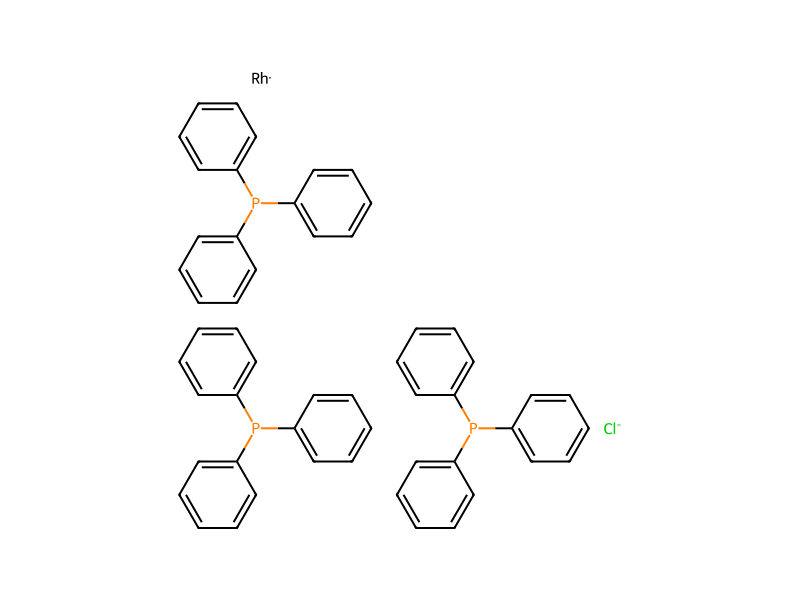
C([O:4][C:5]1[C:14](=[S:15])[C:13]2[C:8](=[CH:9][C:10]([CH3:16])=[CH:11][CH:12]=2)[N:7]([CH3:17])[CH:6]=1)C=C>C1C=CC(P(C2C=CC=CC=2)C2C=CC=CC=2)=CC=1.C1C=CC(P(C2C=CC=CC=2)C2C=CC=CC=2)=CC=1.C1C=CC(P(C2C=CC=CC=2)C2C=CC=CC=2)=CC=1.[Cl-].[Rh].Cl>[OH:4][C:5]1[C:14](=[S:15])[C:13]2[C:8](=[CH:9][C:10]([CH3:16])=[CH:11][CH:12]=2)[N:7]([CH3:17])[CH:6]=1Participants
4
Reactant 1

Product 1

Reagents, catalysts & solvents 2

Procedure
Tris(triphenylphosphine)rhodium chloride (0.1 g) was added to the solution of 3-allyloxy-1-methyl-7-methylthio-4-quinolone and the mixture heated under reflux for 2 days. Hydrochloric acid (5M, 20 ml) was added dropwise and the mixture heated under reflux for 2 hours. The solvent was evaporated under reduced pressure at 50° and the resultant residue extracted with aqueous sodium hydroxide (1M, 100 ml). The extract was neutralised with hydrochloric acid (5M, 20 ml) and the solid was collected by filtration. The solid was washed with water (50 ml) and dried to give the novel compound 3-hydroxy-1-methyl-7-methylthio-4quinolone, m.p. 237°.
Workup
- temperaturethe mixture heated
- temperatureunder reflux for 2 days
- temperaturethe mixture heated
- temperatureunder reflux for 2 hours
- customThe solvent was evaporated under reduced pressure at 50°
- extractionthe resultant residue extracted with aqueous sodium hydroxide (1M, 100 ml)
- filtrationthe solid was collected by filtration
- washThe solid was washed with water (50 ml)
- customdried
Sources & evidence
- ORD record
- ord-9a3e0ead380f49478bb2f881bd987e5d
- Source dataset
- uspto-grants-1991_03
- Patent number
- US04997840
Reaction notes
Loading…