2,4-Difluoroaniline → phenyl N-(2,4-difluorophenyl)carbamate
Reaction equation

[F:1][C:2]1[CH:8]=[C:7]([F:9])[CH:6]=[CH:5][C:3]=1[NH2:4].Cl[C:11]([O:13][C:14]1[CH:19]=[CH:18][CH:17]=[CH:16][CH:15]=1)=[O:12]>C1(C)C=CC=CC=1>[F:1][C:2]1[CH:8]=[C:7]([F:9])[CH:6]=[CH:5][C:3]=1[NH:4][C:11](=[O:12])[O:13][C:14]1[CH:19]=[CH:18][CH:17]=[CH:16][CH:15]=1Participants
4
Reactant 2

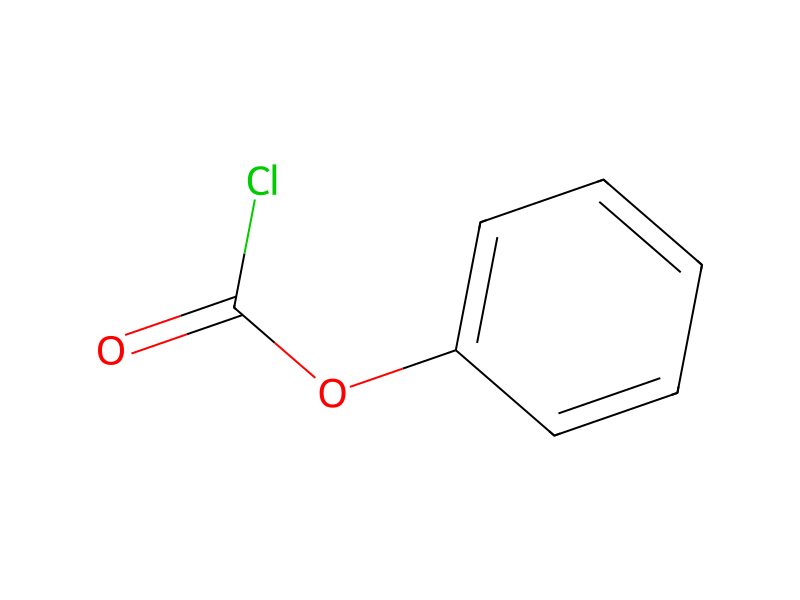
Product 1

Reagents, catalysts & solvents 1

Procedure
The intermediate is then reacted with a secondary amine in an aprotic solvent such as toluene at temperatures from room temperature or below up to the boiling point of the solvent. An example of this process is the reaction of 2,4-difluoroaniline with phenyl chloroformate to yield the intermediate phenyl N-(2,4-difluorophenyl)carbamate which is then reacted with N-(4-butylphenyl)-N-(6-hydroxyhexyl)amine to yield 1-(4-n-butylphenyl)-3-(2,4-difluorophenyl)-1-(6-hydroxyhexyl)urea.
Sources & evidence
- ORD record
- ord-52497e92dcd04dc7acd0f11e34b8a251
- Source dataset
- uspto-grants-1991_03
- Patent number
- US05003106
Reaction notes
Loading…