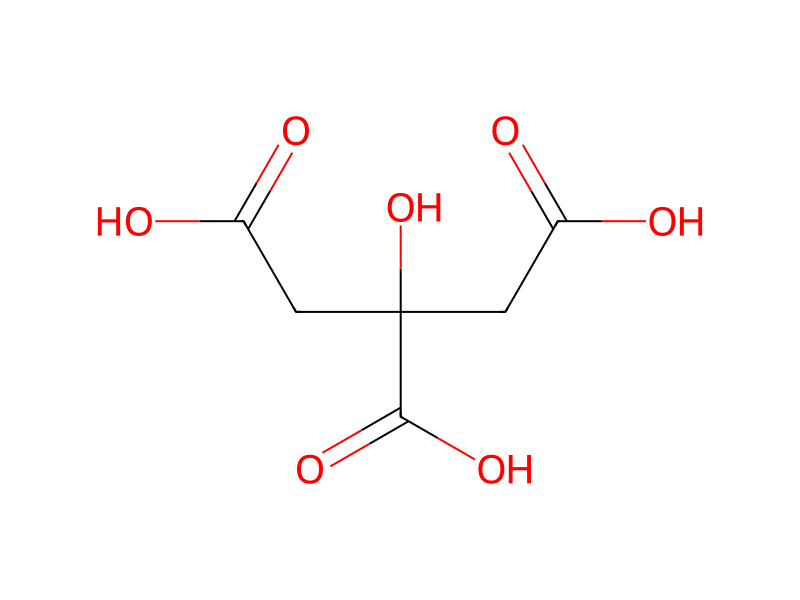
Citric Acid → Methyl 4-bromo-α,α-dimethylbenzenepropanoate
Reaction equation

C([Li])CCC.C(NC(C)C)(C)C.[C:13]([O:18][CH3:19])(=[O:17])[CH:14]([CH3:16])[CH3:15].[Br:20][C:21]1[CH:28]=[CH:27][C:24]([CH2:25]Br)=[CH:23][CH:22]=1.C(O)(=O)CC(CC(O)=O)(C(O)=O)O>CCCCCC.O1CCCC1>[Br:20][C:21]1[CH:28]=[CH:27][C:24]([CH2:25][C:14]([C:13]([O:18][CH3:19])=[O:17])([CH3:16])[CH3:15])=[CH:23][CH:22]=1Participants
Reactant 5




Product 1

Reagents, catalysts & solvents 2


Conditions
- Temperature
- -70 °C
Procedure
A 1.25M solution of n-butyl lithium in hexane (32 ml) was cooled to 0° C. under an argon atmosphere and diisopropylamine (4.05 g; 5.24 ml) was added slowly. The resulting mixture was cooled to -70° C. and stirred while methyl isobutyrate (4.08g; 4.58 ml) was added dropwise while maintaining the temperature at <-60° C. After a further 30 minutes at -70° C., a solution of 4-bromobenzyl bromide (10.0 g) in anhydrous tetrahydrofuran (20 ml) was added and the temperature was maintained at -70° C. for a further 1.5 hours. The reaction mixture was allowed to attain ambient temperature then heated to reflux for 18 hours. On cooling, the mixture was acidified with 8% aqueous citric acid and extracted with ethyl acetate (3×75 ml). Insoluble material at the interface was removed by filtration and the combined organic phase was washed with brine (20 ml), dried (Mg SO4) and evaporated. The residue was purified by vacuum flash chromatography on silica eluting with a gradient of 0-10% ethyl acetate in hexane to give 1-bromo-4-(2-methoxycarbonyl-2-methylpropyl)benzene (7.79 g); 1H NMR (d6 -DMSO): 1.13 (s, 6 H); 2.79 (s, 2 H), 3.60 (s, 3 H), 7.04 (m, 2 H), 7.46 (d of t, 2 H); mass spectrum (CI+): 272 (M+H)+.
Workup
- additionwas added dropwise
- temperaturewhile maintaining the temperature at <-60° C
- temperaturethe temperature was maintained at -70° C. for a further 1.5 hours
- customto attain ambient temperature
- temperaturethen heated
- temperatureto reflux for 18 hours
- temperatureOn cooling
- extractionextracted with ethyl acetate (3×75 ml)
- customInsoluble material at the interface was removed by filtration
- washthe combined organic phase was washed with brine (20 ml)
- dry with materialdried (Mg SO4)
- customevaporated
- customThe residue was purified by vacuum flash chromatography on silica eluting with a gradient of 0-10% ethyl acetate in hexane
Sources & evidence
- ORD record
- ord-bf1499d18ea24841ab32eb2b290f39bb
- Source dataset
- uspto-grants-1999_02
- Patent number
- US05866568
Reaction notes
Loading…