Diphenylphosphinic chloride → 4-Nitrobenzyl (1R, 5S, 6S)-2-[(2S, 4S)-2-[4-(4-nitrobenzyloxycarbonyl)-1-homopiperazinylcarbonyl]-1-methylpyrrolidin-4-ylthio]-6-[(1R)-1-hydroxyethyl]-1-methyl-1-carbapen-2-em-3-carboxylate
Reaction equation

C1(P(Cl)(C2C=CC=CC=2)=O)C=CC=CC=1.[OH:16][C@@H:17]([C@H:19]1[C:40](=[O:41])[N:21]2[CH:22]([C:27]([O:29][CH2:30][C:31]3[CH:36]=[CH:35][C:34]([N+:37]([O-:39])=[O:38])=[CH:33][CH:32]=3)=[O:28])[C:23](=O)[C@H:24]([CH3:25])[C@H:20]12)[CH3:18].FC(F)(F)S(O)(=O)=O.[SH:50][C@@H:51]1[CH2:55][N:54]([CH3:56])[C@H:53]([C:57]([N:59]2[CH2:65][CH2:64][CH2:63][N:62]([C:66]([O:68][CH2:69][C:70]3[CH:75]=[CH:74][C:73]([N+:76]([O-:78])=[O:77])=[CH:72][CH:71]=3)=[O:67])[CH2:61][CH2:60]2)=[O:58])[CH2:52]1>C(#N)C.C(N(C(C)C)CC)(C)C>[N+:76]([C:73]1[CH:74]=[CH:75][C:70]([CH2:69][O:68][C:66]([N:62]2[CH2:63][CH2:64][CH2:65][N:59]([C:57]([C@@H:53]3[CH2:52][C@H:51]([S:50][C:23]4[C@H:24]([CH3:25])[C@@H:20]5[C@@H:19]([C@H:17]([OH:16])[CH3:18])[C:40](=[O:41])[N:21]5[C:22]=4[C:27]([O:29][CH2:30][C:31]4[CH:36]=[CH:35][C:34]([N+:37]([O-:39])=[O:38])=[CH:33][CH:32]=4)=[O:28])[CH2:55][N:54]3[CH3:56])=[O:58])[CH2:60][CH2:61]2)=[O:67])=[CH:71][CH:72]=1)([O-:78])=[O:77]Participants
Reactant 3
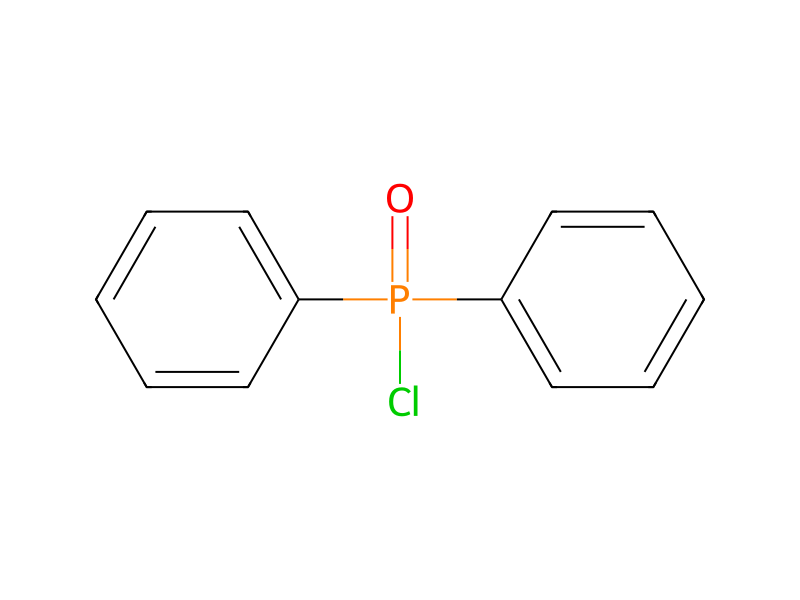 HCID 73910Diphenylphosphinic chloride
 HCID 98853021-Azabicyclo[3.2.0]heptane-2-carboxylic acid, 6-[(1R)-1-hydroxyethyl]-4-methyl-3,7-dioxo-, (4-nitrophenyl)methyl ester, (4R,5R,6S)-
 HCID 22881650(2S,4S)-4-Mercapto-1-methyl-2-[4-(4-nitrobenzyloxycarbonyl)-1-homopiperazinylcarbonyl]pyrrolidine trifluoromethanesulfonate
Product 1

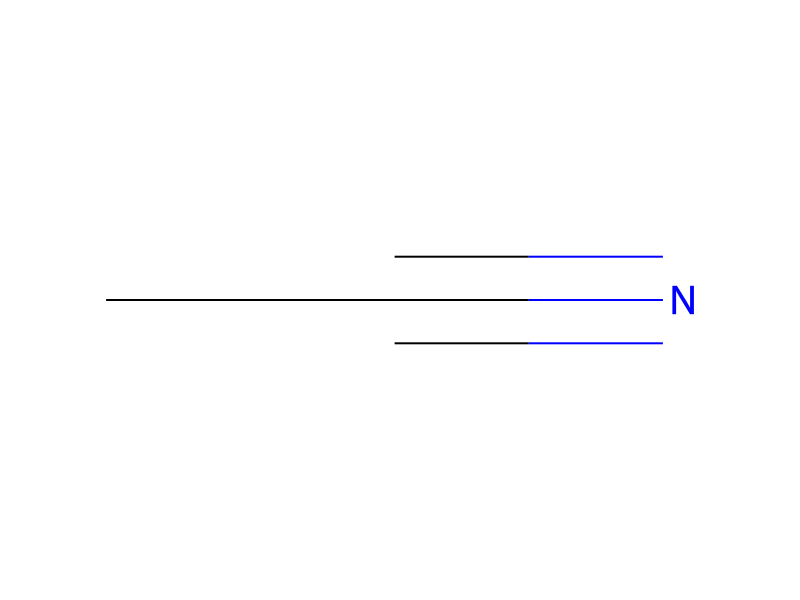
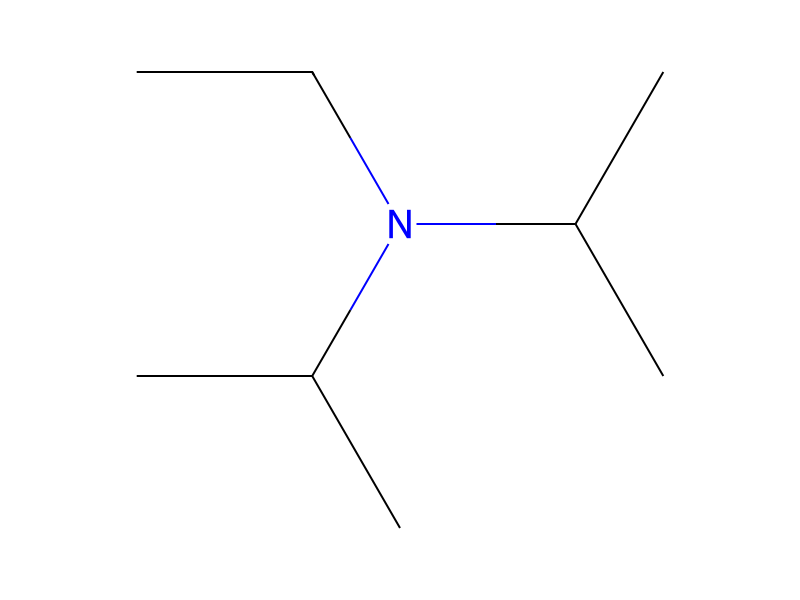
Reagents, catalysts & solvents 2
Procedure
0.89 ml of diphenylphosphoryl chloride and 0.75 ml of diisopropylethylamine were simultaneously added dropwise, whilst ice-cooling, to a solution of 1.4 g of 4-nitrobenzyl (1R, 5R, 6S)-6-[(1R)-1-hydroxyethyl]-1-methyl-2-oxo-1-carbapenam-3-carboxylate in 14 ml of dry acetonitrile, and the resulting mixture was stirred at the same temperature for 40 minutes. A solution of 2.68 g of (2S, 4S)-4-mercapto-1-methyl-2-[4-(4-nitrobenzyloxycarbonyl)-1-homopiperazinylcarbonyl]pyrrolidine trifluoromethanesulfonate (prepared as described in Preparation 49) in 14 ml of dry acetonitrile and 1.64 ml of diisopropylethylamine were then simultaneously added dropwise to the mixture, whilst ice-cooling, and the resulting mixture was stirred at the same temperature for 5 hours, after which it was allowed to stand overnight at room temperature. At the end of this time, the reaction mixture was concentrated by evaporation under reduced pressure, and the residue was diluted with ethyl acetate. The dilute solution was then washed with an aqueous solution of sodium hydrogencarbonate, with a phosphate buffer solution (pH 6.86), with water and with an aqueous solution of sodium chloride, in that order, after which it was dried over anhydrous magnesium sulfate. The solvent was then removed by distillation under reduced pressure, and the resulting residue was purified by column chromatography through silica gel (Merck Art No. 7734), using a gradient elution method with mixtures of ethyl acetate and methanol ranging from 85:15 to 80:20 by volume as the eluent, to give 1.7 of the title compound, as a powder.
Workup
- temperaturecooling
- stirringthe resulting mixture was stirred at the same temperature for 5 hours
- waitto stand overnight at room temperature
- concentrationAt the end of this time, the reaction mixture was concentrated by evaporation under reduced pressure
- additionthe residue was diluted with ethyl acetate
- washThe dilute solution was then washed with an aqueous solution of sodium hydrogencarbonate, with a phosphate buffer solution (pH 6.86), with water and with an aqueous solution of sodium chloride, in that order
- dry with materialafter which it was dried over anhydrous magnesium sulfate
- customThe solvent was then removed by distillation under reduced pressure
- customthe resulting residue was purified by column chromatography through silica gel (Merck Art No. 7734)
- washa gradient elution method with mixtures of ethyl acetate and methanol ranging from 85:15 to 80:20 by volume as the eluent
Sources & evidence
- ORD record
- ord-519a286f62b646e0aa78bca601380ca6
- Source dataset
- uspto-grants-1999_02
- Patent number
- US05866564
Reaction notes
Loading…