Triethylamine → 2-(Pivaloylamino)pyridine
Reaction equation

[C:1](Cl)(=[O:6])[C:2]([CH3:5])([CH3:4])[CH3:3].[NH2:8][C:9]1[CH:14]=[CH:13][CH:12]=[CH:11][N:10]=1.C(N(CC)CC)C>ClCCl>[N:10]1[CH:11]=[CH:12][CH:13]=[CH:14][C:9]=1[NH:8][C:1](=[O:6])[C:2]([CH3:5])([CH3:4])[CH3:3]Participants
5
Reactant 3

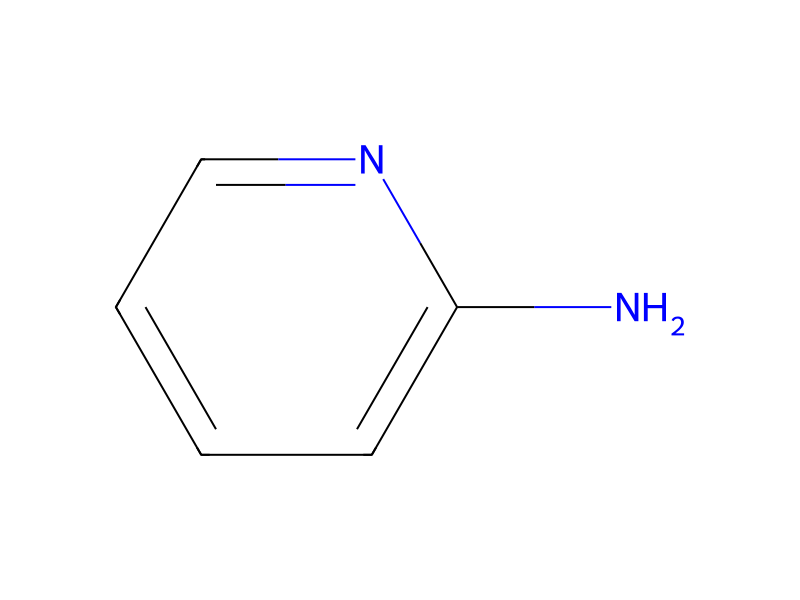

Product 1

Reagents, catalysts & solvents 1

Procedure
1.1 equivalents of pivalic acid chloride dissolved in 100 ml of dichloromethane are added dropwise at 0° C. to a solution containing one equivalent of 2-aminopyridine and 1.25 equivalents of triethylamine in 400 ml of dichloromethane. Once the addition is complete, the reaction mixture is brought to room temperature for three hours, and then the reaction mixture is washed with a saturated NaHCO3 solution. After drying of the organic phase, filtration and concentration under reduced pressure, the resulting residue is crystallised from hexane, enabling the expected product to be isolated by filtration.
Workup
- additionare added dropwise at 0° C. to a solution
- additionOnce the addition
- washthe reaction mixture is washed with a saturated NaHCO3 solution
- customAfter drying of the organic phase, filtration and concentration under reduced pressure
- customthe resulting residue is crystallised from hexane
- customto be isolated by filtration
Sources & evidence
- ORD record
- ord-fbe15bd0863943bc870ad837900d4d26
- Source dataset
- uspto-grants-2000_10
- Patent number
- US06127369
Reaction notes
Loading…