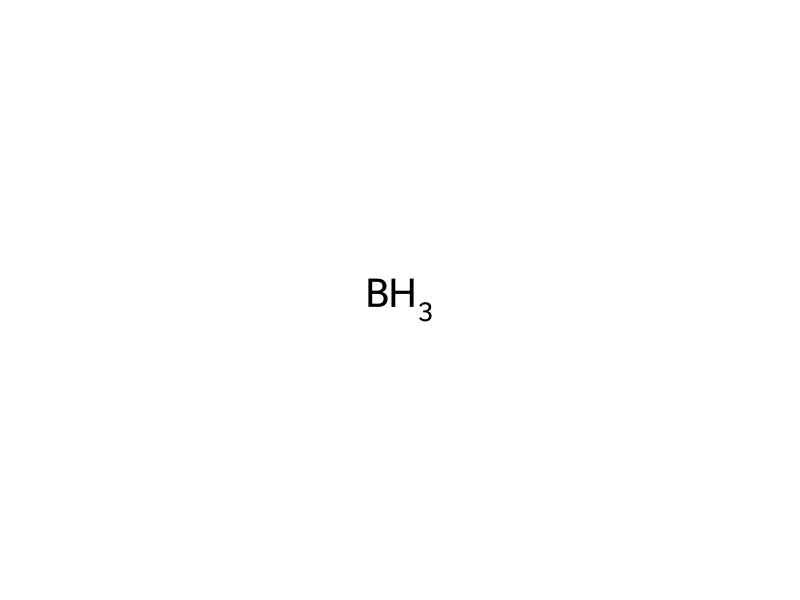
Borane → HCID 21584362, compound
Reaction equation

[N+:1]([C:4]1[CH:5]=[CH:6][C:7]2[CH2:8][CH:9]3[C:17](=O)[NH:16][CH2:15][C:14](=O)[N:10]3[CH2:11][C:12]=2[CH:13]=1)([O-:3])=[O:2].B>O1CCCC1>[N+:1]([C:4]1[CH:5]=[CH:6][C:7]2[CH2:8][CH:9]3[CH2:17][NH:16][CH2:15][CH2:14][N:10]3[CH2:11][C:12]=2[CH:13]=1)([O-:3])=[O:2]Participants
Reactant 2

Product 1

Reagents, catalysts & solvents 1

Procedure
To 8-nitro-3,6,11,11a-tetrahydro-2H-pyrazino[1,2-b]isoquinoline-1,4-dione (4.5 g, 17.2 mmol) in anhydrous tetrahydrofuran (100 ml) was added 1.0M borane in tetrahydrofuran (255 ml). The reaction mixture was heated at reflux for 6 h. After cooling to room temperature, the excess borane was quenched by the cautious addition of methanol (71 ml) and then 2.5N hydrochloric acid (71 ml). The mixture was then refluxed for 5 h. The reaction mixture was cooled to room temperature and concentrated to dryness under reduced pressure. The residue was dissolved in water, the solution basified with 2.5N sodium hydroxide and the product extracted into dichloromethane. The dark red solid (4.5 g) was purified by chromatography using silica gel and 5% methanol saturated with ammonia in dichloromethane to yield 8-nitro-2,3,4,6,11,11a-hexahydro-1H-pyrazino[1,2-b]isoquinoline (2.984 g), MS 234 (M+H)+.
Workup
- temperatureThe reaction mixture was heated
- temperatureat reflux for 6 h
- customthe excess borane was quenched by the cautious addition of methanol (71 ml)
- temperatureThe mixture was then refluxed for 5 h
- temperatureThe reaction mixture was cooled to room temperature
- concentrationconcentrated to dryness under reduced pressure
- dissolutionThe residue was dissolved in water
- extractionthe product extracted into dichloromethane
- customThe dark red solid (4.5 g) was purified by chromatography
Sources & evidence
- ORD record
- ord-5a8b53c29c92470299cbf54fc779d09e
- Source dataset
- uspto-grants-2000_10
- Patent number
- US06140322
Reaction notes
Loading…