Hydrochloric Acid → Benzenediazonium tetrafluoroborate
Reaction equation

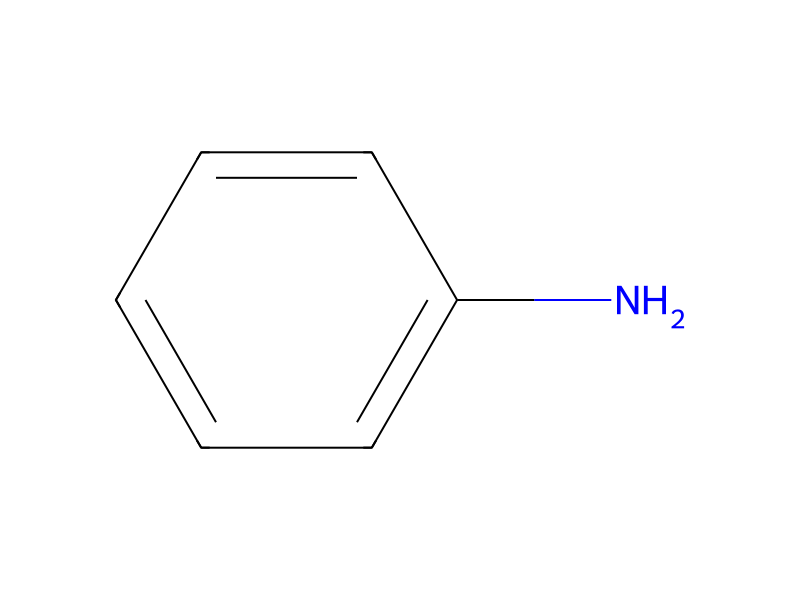
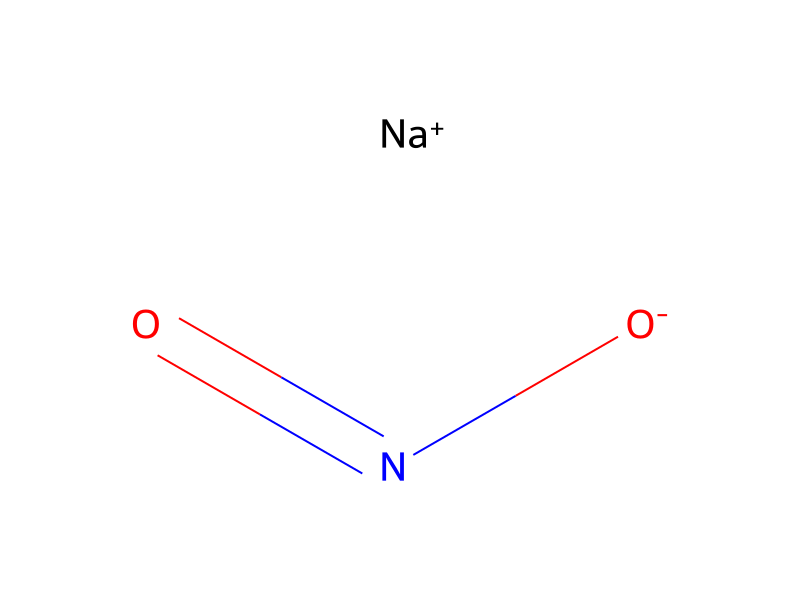
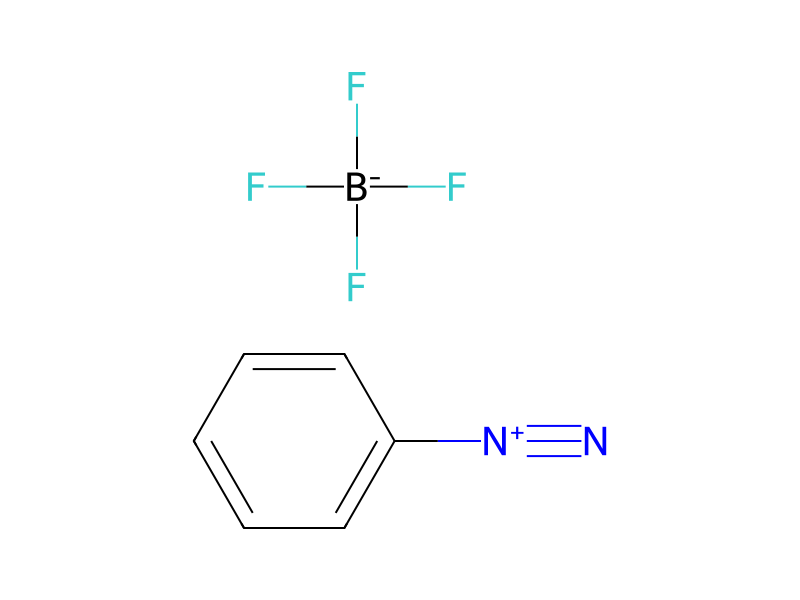
Cl.[NH2:2][C:3]1[CH:8]=[CH:7][CH:6]=[CH:5][CH:4]=1.[N:9]([O-])=O.[Na+].[F:13][B-:14]([F:17])([F:16])[F:15].[Na+]>O>[F:13][B-:14]([F:17])([F:16])[F:15].[C:3]1([N+:2]#[N:9])[CH:8]=[CH:7][CH:6]=[CH:5][CH:4]=1Participants
Reactant 4

Product 1
Reagents, catalysts & solvents 1
Conditions
- Temperature
- 0 °C
Procedure
In a 400 mL beaker containing 30 mL of concentrated hydrochloric acid and 30 mL of water was dissolved 9.2 g (0.1 mole) of aniline. The mixture was cooled to about 0° C. in an ice bath and then diazotized by the addition of a solution containing 7 g (0.1 mole) of sodium nitrite in 12 mL of water. After filtering, the solution was added slowly with stirring to 17 g (0.15 mole) of sodium fluoroborate (NaBF4) dissolved in 30 mL of water at room temperature (although lower temperatures can be used). After stirring another 5 minutes a white precipitate formed which was recovered by filtration, washed with 50 mL of cold water and 50 mL of diethyl ether and dried in vacuum. The yield of benzenediazonium tetrafluoroborate was about 75% of theory. The process (including a final thermal decomposition of the product, which is not employed in this Example), is commonly referred to as the Schiemann method. Kirk-Othmer, Encyclopedia of Chemical Technology, Second Edition, Vol. 9, page 568, Interscience (1966) describes this preparation and shows the equation including the decomposition as follows: ##STR2## A reference to this method is given in U.S. Pat. No. 3,950,444, column 1, lines 29-37, the disclosure of which is hereby incorporated by reference.
Workup
- additiondiazotized by the addition of a solution
- filtrationAfter filtering
- additionthe solution was added slowly
- customformed which
- filtrationwas recovered by filtration
- washwashed with 50 mL of cold water and 50 mL of diethyl ether
- customdried in vacuum
- customthis preparation
Sources & evidence
- ORD record
- ord-c8d700cae8d44c15a7cbee76a19b59eb
- Source dataset
- uspto-grants-1985_07
- Patent number
- US04530982
Reaction notes
Loading…