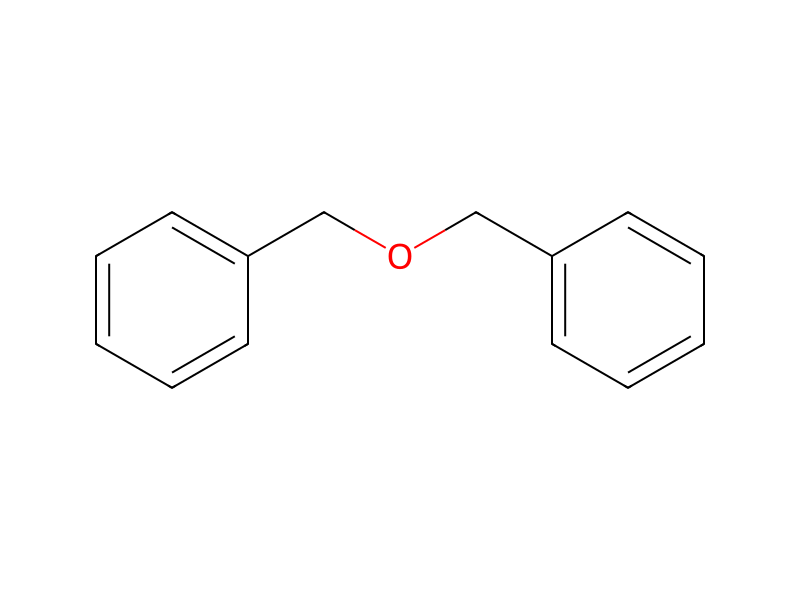
Formaldehyde → Dibenzyl ether
Reaction equation

C1(O)C=CC=CC=1.C=O.C1C=[C:18]2[C:13]([CH:14]=[C:15]([C:20]([O-:22])=O)[CH:16]=[CH:17]2)=CC=1.[CH:23]1[CH:32]=[C:31]2[C:26]([CH:27]=C(C([O-])=O)C=C2)=[CH:25][CH:24]=1.[Pb+2]>>[CH2:27]([O:22][CH2:20][C:15]1[CH:14]=[CH:13][CH:18]=[CH:17][CH:16]=1)[C:26]1[CH:31]=[CH:32][CH:23]=[CH:24][CH:25]=1Participants
4



Conditions
- Temperature
- 130 °C
Procedure
A benzyl ether-type phenolic resin was prepared in a known method by the condensation reaction of 470 kg of phenol and 479 kg of 47% formalin in the presence of lead naphthenate as the catalyst followed by the removal of the unreacted phenol and formaldehyde as well as water and the like volatile matter under reduced pressure with heating up to a maximum temperature of 130° C. The thus obtained phenolic resin was solid at room temperature and had a softening point of 60° C.
Workup
- customfollowed by the removal of the unreacted phenol and formaldehyde as well as water
- customat room temperature
- customa softening point of 60° C.
Sources & evidence
- ORD record
- ord-c3319b7dc6e4473790f0d217eb8d7bc0
- Source dataset
- uspto-grants-1985_07
- Patent number
- US04532271
Reaction notes
Loading…