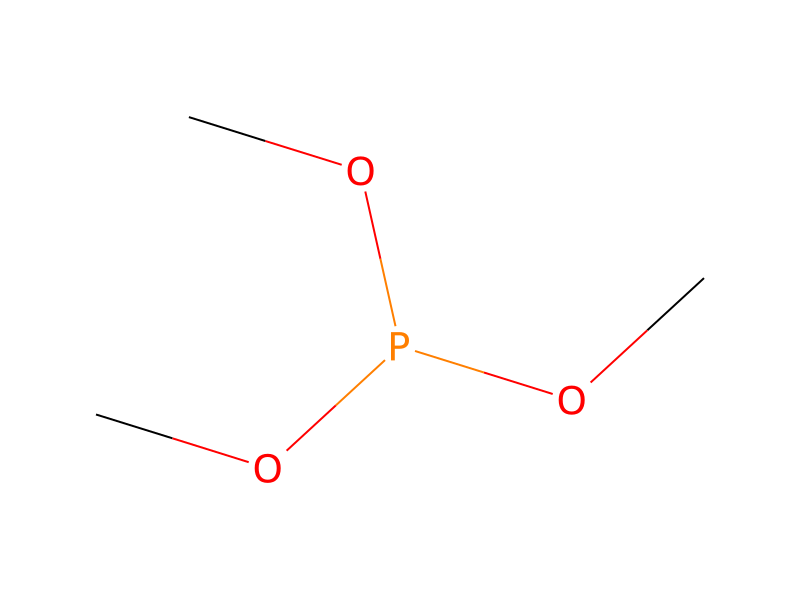
Trimethyl phosphite → HCID 53801769, compound
Reaction equation

Cl[CH2:2][C:3](=[N:13][NH:14][C:15]([NH2:17])=[O:16])[CH2:4][O:5][C:6]1[CH:11]=[CH:10][C:9]([Cl:12])=[CH:8][N:7]=1.[P:18]([O:23]C)([O:21][CH3:22])[O:19][CH3:20]>>[Cl:12][C:9]1[CH:10]=[CH:11][C:6]([O:5][CH2:4][C:3](=[N:13][NH:14][C:15]([NH2:17])=[O:16])[CH2:2][P:18](=[O:23])([O:21][CH3:22])[O:19][CH3:20])=[N:7][CH:8]=1Participants
3


Procedure
1-Chloro-3-(5-chloropyrid-2-yloxy)-2-semicarbazonopropane (322 mg.) and trimethyl phosphite (720 mg.) were mixed and heated at 70°-100° C., with stirring, for 11/2 hours. The mixture was evaporated to dryness, finally under high vacuum, to give dimethyl 3-(5-chloropyrid-2-yloxy)-2-semicarbazonopropylphosphonate, RF = 0.15 (5% v/v methanol in ethyl acetate), the required starting material. What we claim is:
Workup
- temperatureheated at 70°-100° C.
- customThe mixture was evaporated to dryness, finally under high vacuum
Sources & evidence
- ORD record
- ord-12bc3c316f3844b4bf3b5b9906f4d0f6
- Source dataset
- uspto-grants-1978_05
- Patent number
- US04092323
Reaction notes
Loading…