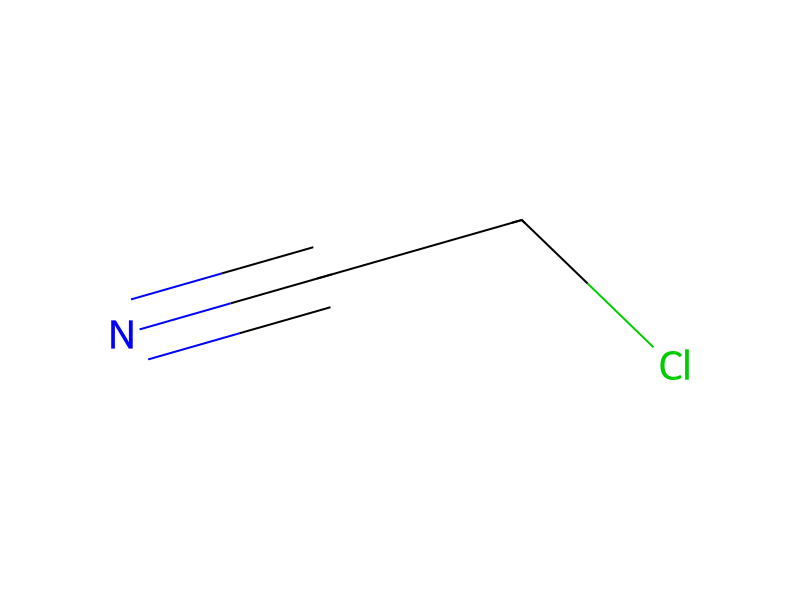
Chloroacetonitrile → 1-(Cyanomethyl)-3-methoxy-3-[3-(naphth-2-ylmethoxy)phenyl]pyrrolidine
Reaction equation

[CH3:1][O:2][C:3]1([C:8]2[CH:13]=[CH:12][CH:11]=[C:10]([O:14][CH2:15][C:16]3[CH:25]=[CH:24][C:23]4[C:18](=[CH:19][CH:20]=[CH:21][CH:22]=4)[CH:17]=3)[CH:9]=2)[CH2:7][CH2:6][NH:5][CH2:4]1.Cl[CH2:27][C:28]#[N:29]>>[C:28]([CH2:27][N:5]1[CH2:6][CH2:7][C:3]([O:2][CH3:1])([C:8]2[CH:13]=[CH:12][CH:11]=[C:10]([O:14][CH2:15][C:16]3[CH:25]=[CH:24][C:23]4[C:18](=[CH:19][CH:20]=[CH:21][CH:22]=4)[CH:17]=3)[CH:9]=2)[CH2:4]1)#[N:29]Participants
3


Procedure
Using an analogous procedure to that described in Example 3, 3-methoxy-3-[3-(naphth-2-ylmethoxy)phenyl]pyrrolidine was reacted with 2-chloroacetonitrile to give 1-(cyanomethyl)-3-methoxy-3-[3-(naphth-2-ylmethoxy)phenyl]pyrrolidine in 45% yield, m.p. 76°-77° C. (recrystallised from methanol).
Sources & evidence
- ORD record
- ord-988c8deec7924439a3156a6a3fc332c9
- Source dataset
- uspto-grants-1995_05
- Patent number
- US05420298
Reaction notes
Loading…