Triphenylphosphine → HCID 18993162, compound
Reaction equation

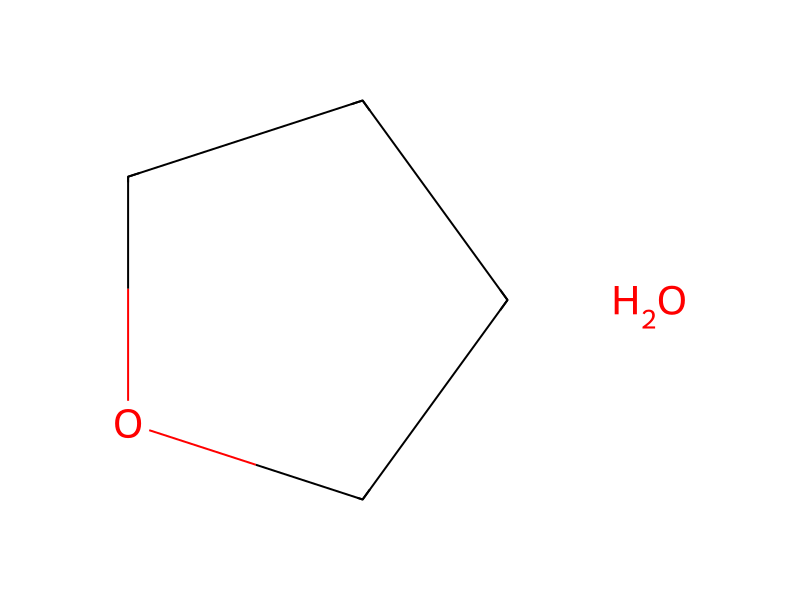
[CH3:1][N:2]1[C:10]2[C:5](=[CH:6][CH:7]=[CH:8][CH:9]=2)[C:4]([NH:11][S:12]([C:15]2[CH:20]=[CH:19][C:18]([CH2:21][N:22]=[N+]=[N-])=[CH:17][CH:16]=2)(=[O:14])=[O:13])=[CH:3]1.C1(P(C2C=CC=CC=2)C2C=CC=CC=2)C=CC=CC=1>C1COCC1.O>[CH3:1][N:2]1[C:10]2[C:5](=[CH:6][CH:7]=[CH:8][CH:9]=2)[C:4]([NH:11][S:12]([C:15]2[CH:20]=[CH:19][C:18]([CH2:21][NH2:22])=[CH:17][CH:16]=2)(=[O:14])=[O:13])=[CH:3]1Participants
4
Reactant 2


Product 1

Reagents, catalysts & solvents 1
Procedure
To a solution of 1-methyl-3-[4-(azidomethyl)phenylsulfonylamino]indole (674 mg, 1.97 mmol), prepared as in step 1, in 8:2 THF/H2O (10 mL) was added triphenylphosphine (1.03 g, 3.9 mmol) and the reaction mixture was stirred for 17 hours at ambient temperature. The reaction mixture was concentrated in vacuo and the residue was partitioned between ethyl acetate and brine. The organic phase was dried over Na2SO4, filtered, and concentrated in vacuo to give 1-methyl-3-[4-(aminomethyl)phenylsulfonylamino]indole (1.68 g) as a yellow-orange foam.
Workup
- concentrationThe reaction mixture was concentrated in vacuo
- customthe residue was partitioned between ethyl acetate and brine
- dry with materialThe organic phase was dried over Na2SO4
- filtrationfiltered
- concentrationconcentrated in vacuo
Sources & evidence
- ORD record
- ord-8a9e769c7efe47858bd2deb596f3c299
- Source dataset
- uspto-grants-1996_01
- Patent number
- US05486525
Reaction notes
Loading…