Trityl chloride → 3-(Trityloxy)-1-propanol
Reaction equation

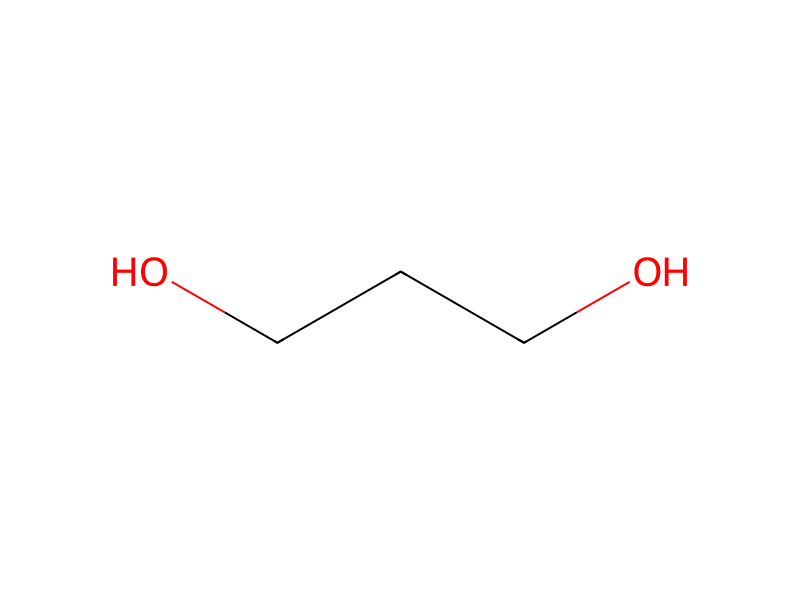
[CH2:1]([OH:5])[CH2:2][CH2:3][OH:4].[C:6](Cl)([C:19]1[CH:24]=[CH:23][CH:22]=[CH:21][CH:20]=1)([C:13]1[CH:18]=[CH:17][CH:16]=[CH:15][CH:14]=1)[C:7]1[CH:12]=[CH:11][CH:10]=[CH:9][CH:8]=1>N1C=CC=CC=1>[C:6]([O:4][CH2:3][CH2:2][CH2:1][OH:5])([C:7]1[CH:12]=[CH:11][CH:10]=[CH:9][CH:8]=1)([C:19]1[CH:20]=[CH:21][CH:22]=[CH:23][CH:24]=1)[C:13]1[CH:14]=[CH:15][CH:16]=[CH:17][CH:18]=1Participants
4
Reactant 2

Product 1

Reagents, catalysts & solvents 1

Procedure
To a solution of 76 g of 1,3-propanediol in 0.5 1 of pyridine, cooled to 0° C., were added 278 g of trityl chloride. The mixture was stirred at room temperature for 18 hours, and then the solvent was evaporated in vacuo. The residue was taken up in 600 ml of ethyl acetate. Unsoluble material was filtered off, and the filtrate was washed with 100 ml portions of 3N hydrochloric acid, water, 5% sodium bicarbonate solution and brine. The organic layer was dried over sodium sulfate and evaporated in vacuo. Crystallization of the residual material from 0.5 1 of ethyl acetate afforded 167.3 g of 3-trityloxy-1-propanol as white crystals of m.p. 117°-118° C.
Workup
- customthe solvent was evaporated in vacuo
- filtrationUnsoluble material was filtered off
- washthe filtrate was washed with 100 ml portions of 3N hydrochloric acid, water, 5% sodium bicarbonate solution and brine
- dry with materialThe organic layer was dried over sodium sulfate
- customevaporated in vacuo
- customCrystallization of the residual material from 0.5 1 of ethyl acetate
Sources & evidence
- ORD record
- ord-84b1b289f8be4e4ab589a034c3db0044
- Source dataset
- uspto-grants-1996_01
- Patent number
- US05486466
Reaction notes
Loading…