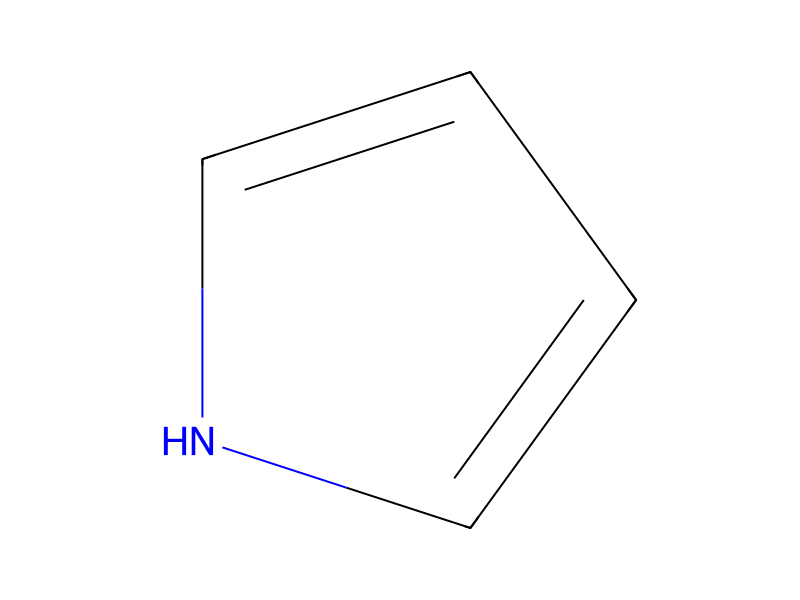
Pyrrole → HCID 17774190, compound
Reaction equation

[C:1]1(=[O:12])[C:10]2[C:5](=[CH:6][CH:7]=[CH:8][CH:9]=2)[C:4](=[O:11])[CH:3]=[CH:2]1.[NH:13]1[CH:17]=[CH:16][CH:15]=[CH:14]1>C(O)(=O)C.C([O-])(=O)C.[Cu+2].C([O-])(=O)C>[NH:13]1[CH:17]=[CH:16][CH:15]=[C:14]1[C:3]1[C:4](=[O:11])[C:5]2[C:10]([C:1](=[O:12])[CH:2]=1)=[CH:9][CH:8]=[CH:7][CH:6]=2Participants
5
Reactant 2

Product 1

Reagents, catalysts & solvents 2


Procedure
Using the procedure described in Example 1, starting with 3.16 millimol of 1,4-naphthoquinone, 25 millimol of pyrrole and 3.16 millimol of copper acetate in 50 ml of acetic acid, the product 2-(1H-pyrrol-2-yl)-[1,4]-naphthoquinone was isolated in a yield of 18% after purification by chromatography on a column of silica.
Sources & evidence
- ORD record
- ord-2ae8679acc344f2a894293f873bc0faa
- Source dataset
- uspto-grants-2000_02
- Patent number
- US06022379
Reaction notes
Loading…