Lithium hydroxide, monohydrate → 1-(4-Cyanobenzyl)-5-hydroxymethyl-1H-imidazole
Reaction equation

Br.[C:2]([C:4]1[CH:20]=[CH:19][C:7]([CH2:8][N:9]2[C:13]([CH2:14][O:15]C(=O)C)=[CH:12][N:11]=[CH:10]2)=[CH:6][CH:5]=1)#[N:3].O.[OH-].[Li+]>C1COCC1.O>[C:2]([C:4]1[CH:20]=[CH:19][C:7]([CH2:8][N:9]2[C:13]([CH2:14][OH:15])=[CH:12][N:11]=[CH:10]2)=[CH:6][CH:5]=1)#[N:3]Participants
4



Procedure
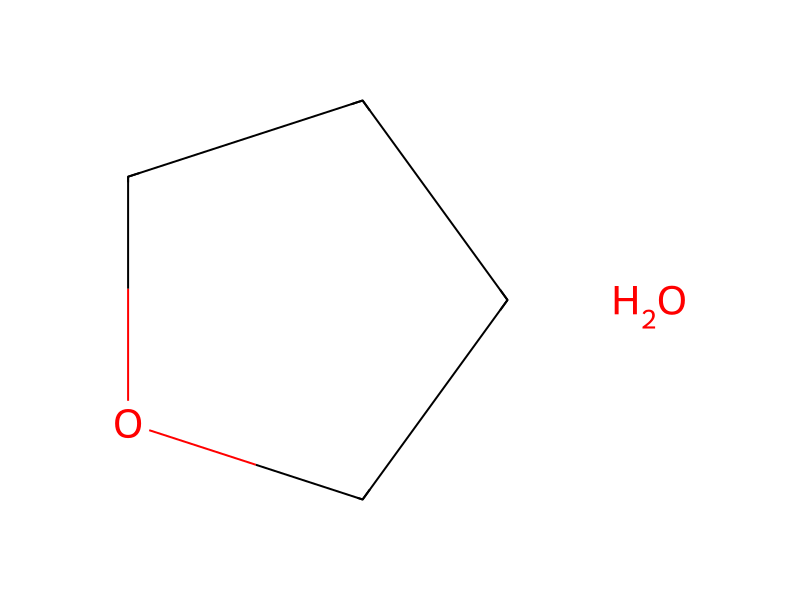
To a solution of the acetate 4 (50.4 g) in 1.5 L of 3:1 THF/water at 0° C. was added lithium hydroxide monohydrate (18.9 g). After one hour, the reaction was concentrated in vacuo, diluted with EtOAc (3 L), and washed with water, sat. aq. NaHCO3 and brine. The solution was then dried (Na2SO4), filtered, and concentrated in vacuo to provide the crude product (26.2 g) as a pale yellow fluffy solid which was sufficiently pure for use in the next step without further purification.
Workup
- concentrationthe reaction was concentrated in vacuo
- additiondiluted with EtOAc (3 L)
- washwashed with water, sat. aq. NaHCO3 and brine
- dry with materialThe solution was then dried (Na2SO4)
- filtrationfiltered
- concentrationconcentrated in vacuo
Sources & evidence
- ORD record
- ord-42e142135dec4a728f071752deae54eb
- Source dataset
- uspto-grants-2000_02
- Patent number
- US06028201
Reaction notes
Loading…