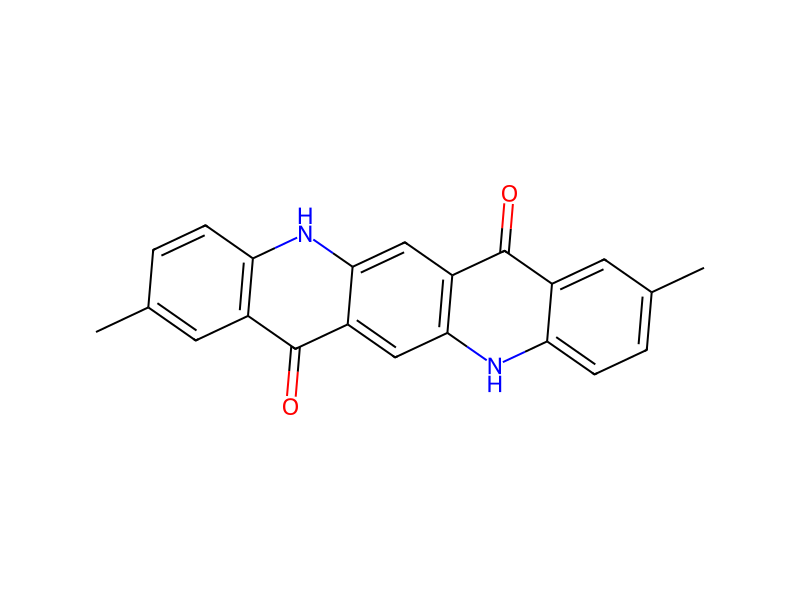
Water → 5,12-Dihydro-2,9-dimethylquino(2,3-b)acridine-7,14-dione
Reaction equation

[C:1]1([CH3:28])[CH:6]=[CH:5][C:4]([NH:7][C:8]2[CH:16]=[C:15]([C:17]([OH:19])=O)[C:14]([NH:20][C:21]3[CH:26]=[CH:25][C:24]([CH3:27])=[CH:23][CH:22]=3)=[CH:13][C:9]=2[C:10](O)=[O:11])=[CH:3][CH:2]=1.O>CO>[CH3:27][C:24]1[CH:23]=[CH:22][C:21]2[NH:20][C:14]3[C:15]([C:17](=[O:19])[C:26]=2[CH:25]=1)=[CH:16][C:8]1[NH:7][C:4]2[CH:3]=[CH:2][C:1]([CH3:28])=[CH:6][C:5]=2[C:10](=[O:11])[C:9]=1[CH:13]=3Participants
Reactant 2

Product 1
Reagents, catalysts & solvents 1
Conditions
- Temperature
- 80 °C
Procedure
To 200.0 g of polyphosphoric acid (118%) was added in portions with stirring at 80° C. 50.0 g (133 mmol) of 2,5-bis(p-toluidino)terephthalic acid. The stirred mixture was irradiated in the microwave oven for 2.0 minutes, during which time the temperature rose to 230° C. The reaction mixture was cooled to 150° C. and drowned in 400 g of methanol with vigorous stirring. The resultant methanol suspension was heated at reflux for one hour, cooled to 60° C., added to 800 g of water, and heated at 60° C. for 30 minutes. The solid component was collected by filtration, washed with 12.0 liters of water, and reslurried with water. [A sample of the crude pigment was collected at this point for X-ray analysis.] After 50.0 g of 50% aqueous sodium hydroxide was added, the alkaline slurry was heated at 90-92° C. for two hours. The solid component was collected by filtration and washed with 12.0 liters of water. The resultant presscake (280 g total, with a pigment content of 40.0 g) was reslurried with water. After adjustment of the pH to 9.0, the slurry was heated for two hours in an autoclave at 140° C., then cooled to room temperature. After adjustment of the pH to 4.5, the slurry was treated with an emulsion of 2.0 g of an anionic surfactant, 25 g of a petroleum distillate, and 40 g of water and stirred for three hours at 45° C. The solid component was collected by filtration and washed with 6.0 liters of water. The presscake was dried overnight in an oven at 60° C. to give 38.0 g of pigmentary quality 2,9-dimethylquinacridone. X-ray diffraction patterns of both the dried acid crude (collected as described above) and the finished pigment were similar to the diffraction pattern of a commercially available 2,9-dimethylquinacridone pigment (i.e., QUINDO Magenta RV-6832 from Bayer Corporation) prepared by a conventional heating method.
Workup
- customThe stirred mixture was irradiated in the microwave oven for 2.0 minutes, during which time the temperature
- customrose to 230° C
- temperatureThe reaction mixture was cooled to 150° C.
- temperatureat reflux for one hour
- temperaturecooled to 60° C.
- temperatureheated at 60° C. for 30 minutes
- filtrationThe solid component was collected by filtration
- washwashed with 12.0 liters of water
- custom[A sample of the crude pigment was collected at this point for X-ray analysis
- addition] After 50.0 g of 50% aqueous sodium hydroxide was added
- temperaturethe alkaline slurry was heated at 90-92° C. for two hours
- filtrationThe solid component was collected by filtration
- washwashed with 12.0 liters of water
- temperatureAfter adjustment of the pH to 9.0, the slurry was heated for two hours in an autoclave at 140° C.
- temperaturecooled to room temperature
- additionAfter adjustment of the pH to 4.5, the slurry was treated with an emulsion of 2.0 g of an anionic surfactant, 25 g of a petroleum distillate, and 40 g of water
- stirringstirred for three hours at 45° C
- filtrationThe solid component was collected by filtration
- washwashed with 6.0 liters of water
- customThe presscake was dried overnight in an oven at 60° C.
Sources & evidence
- ORD record
- ord-e18b7c2ccaaa4d50bf337b08d9a07c3b
- Source dataset
- uspto-grants-2000_02
- Patent number
- US06031100
Reaction notes
Loading…