Acetone → (3E)-4-(2,6-Dichlorophenyl)-3-buten-2-one
Reaction equation

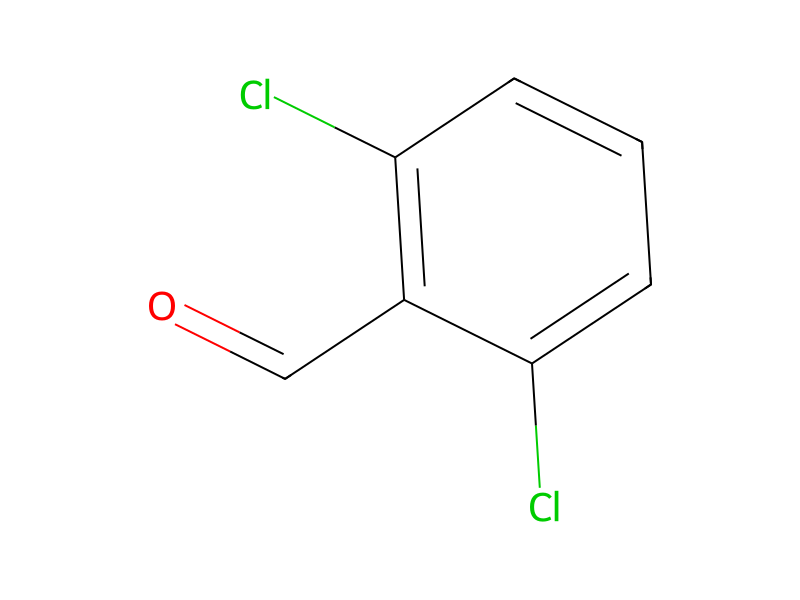
[Cl:1][C:2]1[CH:9]=[CH:8][CH:7]=[C:6]([Cl:10])[C:3]=1[CH:4]=O.[OH-].[Na+].O.C(OCC)(=O)C.[CH3:20][C:21]([CH3:23])=[O:22]>>[Cl:1][C:2]1[CH:9]=[CH:8][CH:7]=[C:6]([Cl:10])[C:3]=1/[CH:4]=[CH:20]/[C:21](=[O:22])[CH3:23]Participants
6





Procedure
In a 250 ml single neck flask was charged 10 g (57 mmoles, 1.0 eq) of 2,6-dichlorobenzaldehyde dissolved in 100 ml of acetone. To this was added 2.28 g (5.7 mmoles, 0. 10eq.) of a 10% aqueous sodium hydroxide solution, dropwise and during the course of addition, temperature was kept no higher than 25°C., while the mixture was agitated continuously for 2 h. To the mixture was added 50 ml of water, followed by 100 ml of ethyl acetate, the phases were separated and the organic phase was washed with water three times and then dried, and concentrated to afford of (E)-4-(2,6-dichlorophenyl)-3-buten-2-one as a faintly yellow oil which was used directly in the following procedure.
Workup
- additiondropwise and during the course of addition, temperature
- customwas kept no higher than 25°C., while the mixture
- customthe phases were separated
- washthe organic phase was washed with water three times
- customdried
- concentrationconcentrated
Sources & evidence
- ORD record
- ord-ff298156f0d142a1bf130e1435b717a7
- Source dataset
- uspto-grants-2001_10
- Patent number
- US06303818B1
Reaction notes
Loading…