Methyl morpholine oxide → 5-Fluoro-2-methyl-3-pyridinecarboxaldehyde
Reaction equation

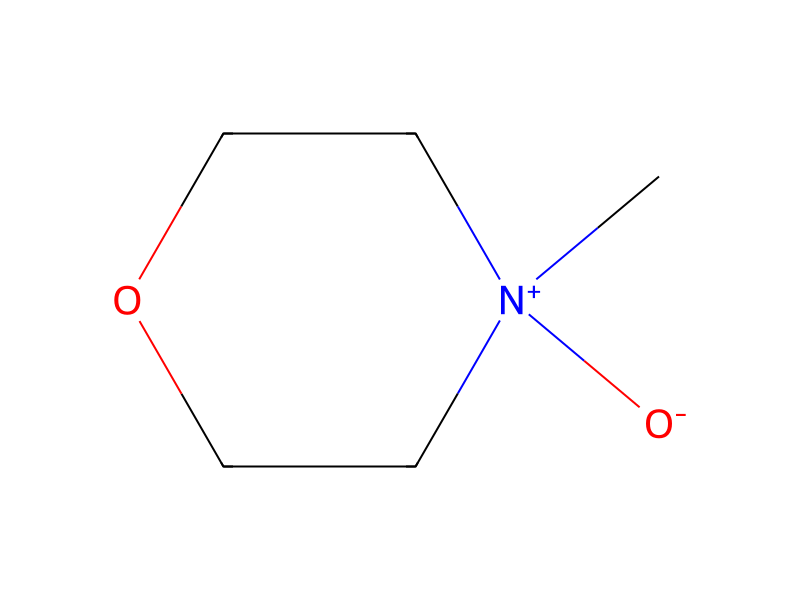
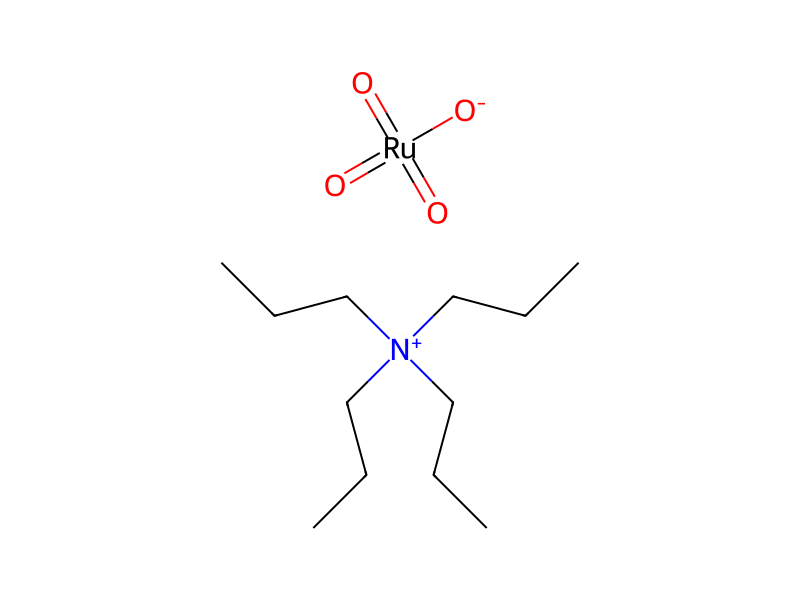
[F:1][C:2]1[CH:3]=[C:4]([CH2:9][OH:10])[C:5]([CH3:8])=[N:6][CH:7]=1.C[N+]1([O-])CCOCC1>ClCCl.[Ru]([O-])(=O)(=O)=O.C([N+](CCC)(CCC)CCC)CC>[F:1][C:2]1[CH:7]=[N:6][C:5]([CH3:8])=[C:4]([CH:3]=1)[CH:9]=[O:10]Participants
5
Reactant 2

Product 1

Reagents, catalysts & solvents 2

Procedure
To a solution of 32 mg of (5-fluoro-2-methylpyridin-3-yl)methanol in 2 mL of dichloromethane, 80 mg of molecular sieves 3 A and 40 mg of 4-methylmorpholine N-oxide were added, and the mixture was stirred at room temperature for 30 minutes. Thereto was added 6.0 mg of tetrapropyl ammonium perruthenate, and the mixture was stirred at room temperature for 1 hour 30 minutes. The insoluble substance was filtered off, and the solvent was distilled off under reduced pressure. The resultant residue was purified by silica gel column chromatography using an eluent of chloroform:methanol=100:1 to obtain 20 mg of 5-fluoro-2-methylnicotinaldehyde as a colorless oily substance.
Workup
- stirringthe mixture was stirred at room temperature for 1 hour 30 minutes
- filtrationThe insoluble substance was filtered off
- distillationthe solvent was distilled off under reduced pressure
- customThe resultant residue was purified by silica gel column chromatography
Sources & evidence
- ORD record
- ord-9d0fed34175a44cdb6e9a5b47bed1ba1
- Source dataset
- uspto-grants-2013_02
- Patent number
- US08367831B2
Reaction notes
Loading…