Ammonia → 7-cyclobutyl-5-iodo-7H-pyrrolo[2,3-d]pyrimidin-4-amine
Reaction equation

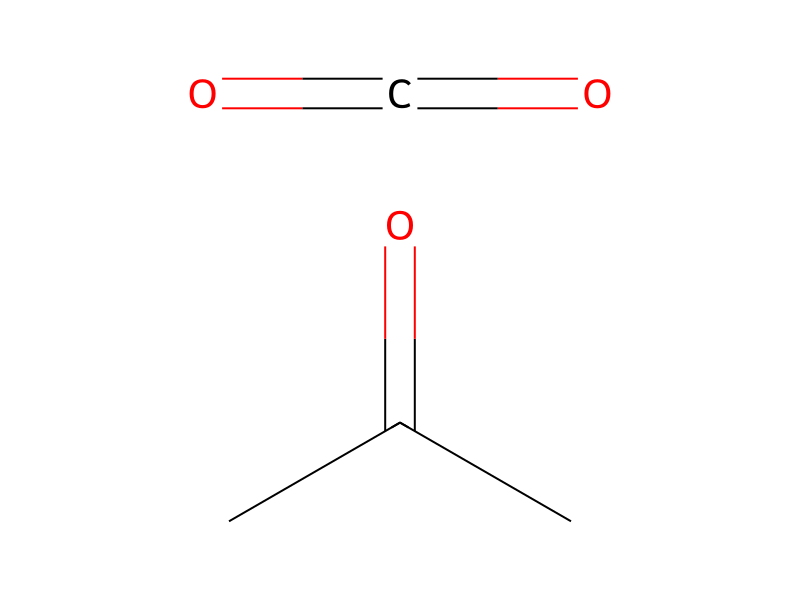
[NH3:1].Cl[C:3]1[C:4]2[C:11]([I:12])=[CH:10][N:9]([CH:13]3[CH2:16][CH2:15][CH2:14]3)[C:5]=2[N:6]=[CH:7][N:8]=1.C(=O)=O.CC(C)=O>O1CCOCC1.CC(O)C>[CH:13]1([N:9]2[C:5]3[N:6]=[CH:7][N:8]=[C:3]([NH2:1])[C:4]=3[C:11]([I:12])=[CH:10]2)[CH2:16][CH2:15][CH2:14]1Participants




Conditions
- Temperature
- 100 °C
Procedure
Gaseous ammonia (from a lecture bottle) was condensed into a suspension of 4-chloro-7-cyclobutyl-5-iodo-7H-pyrrolo[2,3-d]pyrimidine (70.7 mg, 0.8115 mmol) in dioxane (2 mL) and iPrOH (2 mL) in a sealable glass tube, cooled by dry ice/acetone, until the volume increased by ≈2 mL, then the tube was sealed and heated to 100° C. overnight. The solvents were evaporated, water was added, the mixture was extracted with CH2Cl2 (3×30 mL), and the combined CH2Cl2 extracts were washed with brine, dried over MgSO4, filtered and concentrated to give the title compound as a white solid. 1H NMR (CDCl3, 400 MHz): δ=1.83-1.95 (m, 2H), 2.34-2.47 (m, 2H), 2.48-2.58 (m, 2H), 5.22 (quint, J=8.7 Hz, 1H), 5.63 (brs, 2H), 7.26 (s, 1H), 8.26 (s, 1H). 13C NMR (CDCl3, 100.6 MHz, DEPT135): δ=14.92 (−), 31.05 (2C, −), 48.50 (+), 48.82 (Cquart), 104.11 (Cquart), 126.39 (+), 149.82 (Cquart), 152.00 (+), 156.94 (Cquart). MS (ES+): m/z 315.0 (100) [MH+]. HPLC: tR=2.4 min (OpenLynx, polar—5 min).
Workup
- customcondensed
- temperatureincreased by ≈2 mL
- customthe tube was sealed
- customThe solvents were evaporated
- additionwater was added
- extractionthe mixture was extracted with CH2Cl2 (3×30 mL)
- washthe combined CH2Cl2 extracts were washed with brine
- dry with materialdried over MgSO4
- filtrationfiltered
- concentrationconcentrated
Sources & evidence
- ORD record
- ord-5aecf1a4b7124a3fb72edac8461c5211
- Source dataset
- uspto-grants-2013_02
- Patent number
- US08367826B2
Reaction notes
Loading…