Ammonia → 3-(5,6-Dihydro-4H-pyrrolo[3,2,1-ij]quinolin-1-yl)-4-(1H-indol-3-yl)-pyrrolidine-2,5-dione
Reaction equation

C(N)C1C=CC=CC=1.[C:9]1([C@H:21]2[C@H:25]([C:26]3[C:34]4[C:29](=[CH:30][CH:31]=[CH:32][CH:33]=4)[NH:28][CH:27]=3)[C:24](=[O:35])[N:23](C3C=CC=CC=3)[C:22]2=[O:42])[C:19]2=[C:20]3[C:15](=[CH:16][CH:17]=[CH:18]2)[CH2:14][CH2:13][CH2:12][N:11]3[CH:10]=1.C1([C@H]2[C@H](C3C4C(=CC=CC=4)NC=3)C(=O)NC2=O)C2=C3C(=CC=C2)CCCN3C=1.CC(C)([O-])C.[K+].COC(=O)C(C1C2=C3C(=CC=C2)CCCN3C=1)C(C1C2C(=CC=CC=2)NC=1)C(OC)=O.N>C(O)(C)(C)C.CO.[Pd].C1COCC1>[C:9]1([CH:21]2[CH:25]([C:26]3[C:34]4[C:29](=[CH:30][CH:31]=[CH:32][CH:33]=4)[NH:28][CH:27]=3)[C:24](=[O:35])[NH:23][C:22]2=[O:42])[C:19]2=[C:20]3[C:15](=[CH:16][CH:17]=[CH:18]2)[CH2:14][CH2:13][CH2:12][N:11]3[CH:10]=1Participants
Reactant 6
 HCID 222Ammonia
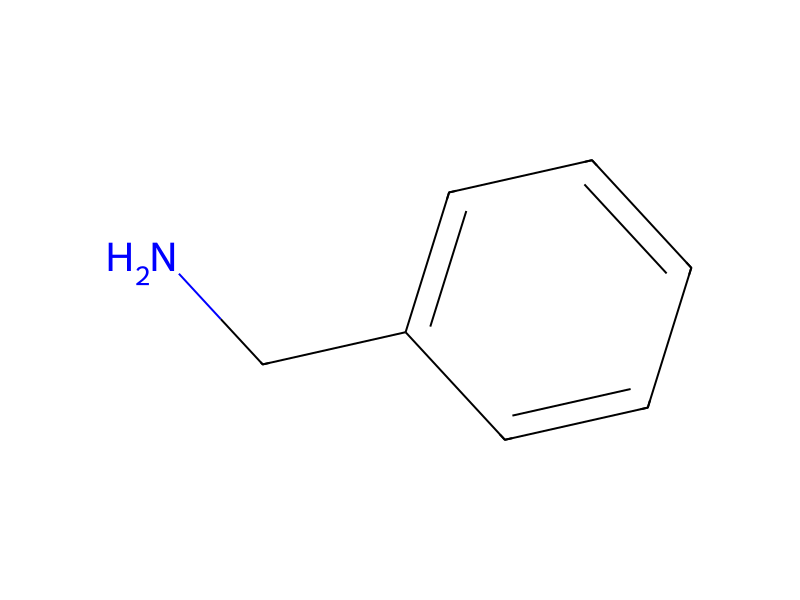 HCID 7504Benzylamine
 HCID 11494412Tivantinib
 HCID 23665647Potassium tert-butoxide
 HCID 594709652-(5,6-dihydro-4H-pyrrolo[3,2,1-ij]quinolin-1-yl)-3-(1H-indol-3-yl)-succinic acid dimethyl ester
 HCID 86608206trans 3-(5,6-dihydro-4H-pyrrolo[3,2,1-ij]quinolin-1-yl)-4-(1H-indol-3-yl)-1-phenyl-pyrrolidine-2,5-dione
Product 1

Reagents, catalysts & solvents 4




Procedure
The cis and trans isomers of 3-(5,6-dihydro-4H-pyrrolo[3,2,1-ij]quinolin-1-yl)-4(1H-indol-3-yl)pyrrolidine-2,5-dione may be prepared beginning with the reaction of (1H-indol-3-yl)-oxo-acetic acid methyl ester and (5,6-dihydro-4H-pyrrolo[3,2,1-ij]quinolin-1-yl)-acetic acid methyl ester in the presence of a base such as LDA (lithium diisopropylamide) in a polar aprotic solvent such as THF to yield 2-(5,6-dihydro-4H-pyrrolo[3,2,1-ij]quinolin-1-yl)-3-(1H-indol-3-yl)-but-2-enedioic acid dimethyl ester. Alternatively, 2-(5,6-dihydro-4H-pyrrolo[3,2,1-ij]quinolin-1-yl)-3-(1H-indol-3-yl)-but-2-enedioic acid dimethyl ester may be prepared by reaction of (1H-indol-3-yl)-acetic acid methyl ester and (5,6-dihydro-4H-pyrrolo[3,2,1-ij]quinolin-1-yl)-oxo-acetic acid methyl ester in the presence of a base (e.g., LDA) in THF. The 2-(5,6-dihydro-4H-pyrrolo[3,2,1-ij]quinolin-1-yl)-3-(1H-indol-3-yl)-but-2-enedioic acid dimethyl ester is reduced by catalytic hydrogenation over a noble metal catalyst (e.g., Pd on charcoal) to give 2-(5,6-dihydro-4H-pyrrolo[3,2,1-ij]quinolin-1-yl)-3-(1H-indol-3-yl)-succinic acid dimethyl ester, which is reacted with benzylamine (PhCH2NH2) to yield a mixture of cis and trans 3-(5,6-dihydro-4H-pyrrolo[3,2,1-ij]quinolin-1-yl)-4-(1H-indol-3-yl)-1-phenyl-pyrrolidine-2,5-dione. The mixture of cis and trans isomers may be deprotected by catalytic hydrogenation over Pd on charcoal (Pd—C) to give rise to a mixture of cis and trans 3-(5,6-dihydro-4H-pyrrolo[3,2,1-ij]quinolin-1-yl)-4-(1H-indol-3-yl)-pyrrolidine-2,5-dione. The cis and trans isomers may be separated to give all four cis and trans isomers (e.g., by chromatography as in Examples 4 and 5). The deprotected mixture of cis and trans isomers may be treated with potassium tert-butoxide in tert-butanol (as in Example 3) or a mixture of THF and tert-butanol at 50° C. to yield a mixture with a predominance of the trans isomers. Alternatively, the 2-(5,6-dihydro-4H-pyrrolo[3,2,1-ij]quinolin-1-yl)-3-(1H-indol-3-yl)-succinic acid dimethyl ester can be reacted with ammonia in methanol at elevated temperatures to yield predominantly the cis isomers of 3-(5,6-dihydro-4H-pyrrolo[3,2,1-ij]quinolin-1-yl)-4-(1H-indol-3-yl)-pyrrolidine-2,5-dione, which may be isomerized to yield predominately the trans isomers of 3-(5,6-dihydro-4H-pyrrolo[3,2,1-ij]quinolin-1-yl)-4-(1H-indol-3-yl)-pyrrolidine-2,5-dione with potassium tert-butoxide in tert-butanol (as in Example 3) or a mixture of THF and tert-butanol at 50° C.
Workup
- customto yield
- additionThe mixture of cis and trans isomers
- customto give rise
- customThe cis and trans isomers may be separated
- customto give all four cis and trans isomers (e.g., by chromatography as in Examples 4 and 5)
- additionThe deprotected mixture of cis and trans isomers
- customto yield a mixture with a predominance of the trans isomers
Sources & evidence
- ORD record
- ord-952bdf76945644a0ae3d5279ed5b474e
- Source dataset
- uspto-grants-2013_02
- Patent number
- US08377927B2
Reaction notes
Loading…