Sodium Hydroxide → 9-({5-[6-(1H-Indol-4-yl)-1H-indazol-4-yl]-1,3,4-oxadiazol-2-yl}methyl)-6-oxa-9-azaspiro[4.5]decane
Reaction equation

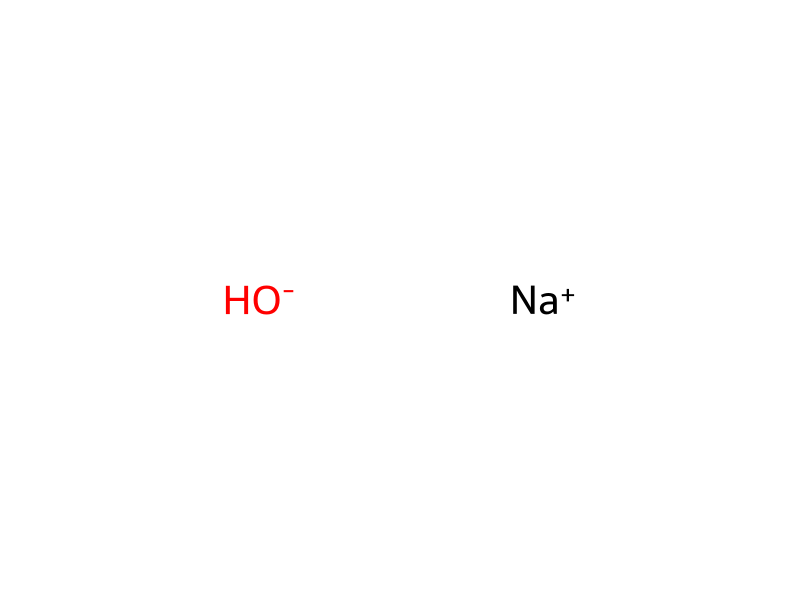
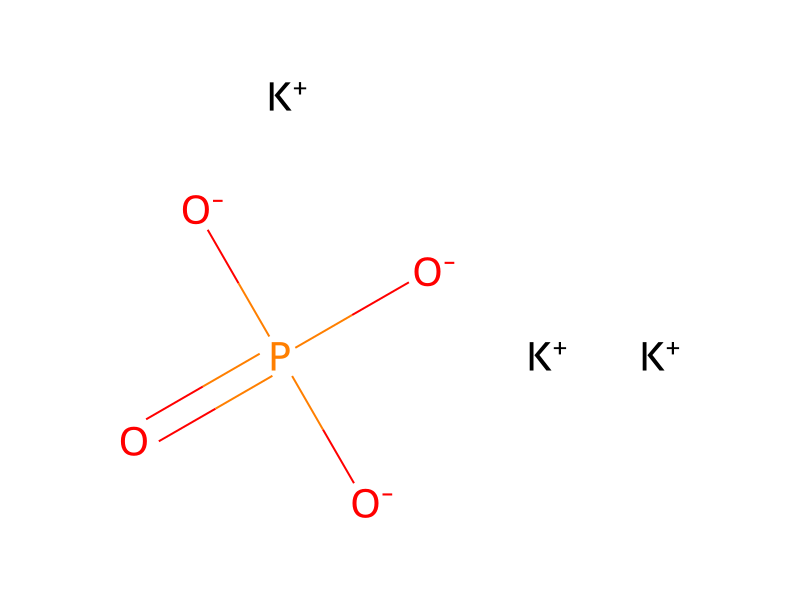
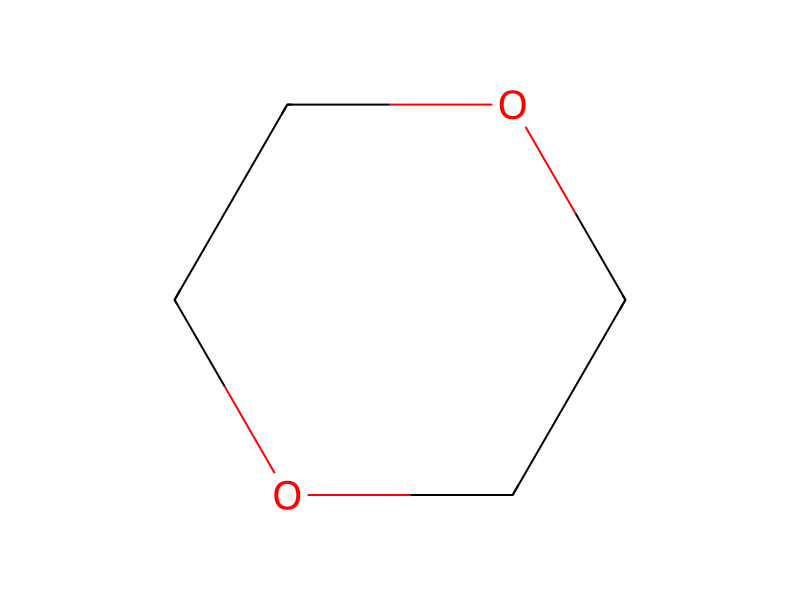
Br[C:2]1[CH:10]=[C:9]2[C:5]([CH:6]=[N:7][N:8]2S(C2C=CC=CC=2)(=O)=O)=[C:4]([C:20]2[O:24][C:23]([CH2:25][N:26]3[CH2:35][C:30]4([CH2:34][CH2:33][CH2:32][CH2:31]4)[O:29][CH2:28][CH2:27]3)=[N:22][N:21]=2)[CH:3]=1.CC1(C)C(C)(C)OB([C:44]2[CH:52]=[CH:51][CH:50]=[C:49]3[C:45]=2[CH:46]=[CH:47][NH:48]3)O1.[O-]P([O-])([O-])=O.[K+].[K+].[K+].[OH-].[Na+]>O1CCOCC1.O.[Pd](Cl)Cl.C1(P(C2C=CC=CC=2)[C-]2C=CC=C2)C=CC=CC=1.[C-]1(P(C2C=CC=CC=2)C2C=CC=CC=2)C=CC=C1.[Fe+2]>[NH:48]1[C:49]2[C:45](=[C:44]([C:2]3[CH:10]=[C:9]4[C:5]([CH:6]=[N:7][NH:8]4)=[C:4]([C:20]4[O:24][C:23]([CH2:25][N:26]5[CH2:35][C:30]6([CH2:31][CH2:32][CH2:33][CH2:34]6)[O:29][CH2:28][CH2:27]5)=[N:22][N:21]=4)[CH:3]=3)[CH:52]=[CH:51][CH:50]=2)[CH:46]=[CH:47]1Participants
Reactant 4


Product 1

Reagents, catalysts & solvents 3

Conditions
- Temperature
- 100 °C
Procedure
To a solution of 9-({5-[6-bromo-1-(phenylsulfonyl)-1H-indazol-4-yl]-1,3,4-oxadiazol-2-yl}methyl)-6-oxa-9-azaspiro[4.5]decane (100 mg, 0.179 mmol) in 1,4 dioxane (2.5 ml) and water (0.25 ml) was added 4-(4,4,5,5-tetramethyl-1,3,2-dioxaborolan-2-yl)-1H-indole (56.6 mg, 0.233 mmol, available from Frontier Scientific Europe), 1,1′-bis(diphenylphosphino)ferrocene palladium dichloride (26.2 mg, 0.036 mmol) and potassium phosphate tribasic (114 mg, 0.537 mmol). The mixture was heated under microwave irradiation at 100° C. for 20 mins. The mixture was passed through a 1 g silica SPE cartridge, washing with MeOH. The solvent was removed under a stream of nitrogen and the residue was partitioned between DCM (10 ml) and water (10 ml), separated with a hydrophobic frit and the solvent again removed under a stream of nitrogen. The residue was dissolved in DMSO (2 ml) and purified by Mass Directed Automated Preparative HPLC. The appropriate fractions were blown down under a stream of nitrogen to give a yellow solid. The solid was dissolved in 1,4-dioxane (1 ml) and sodium hydroxide (1 ml, 2.000 mmol) and stirred at room temperature for 3 h. The mixture was evaporated to dryness under a stream of nitrogen. The residue was partitioned between ethyl acetate (5 ml) and saturated ammonium chloride (2 ml) and separated with a hydrophilic frit. The solvent was removed under a stream of nitrogen and the residue was freeze dried from 1,4-dioxane/water (1:1, 2 ml) overnight to give the title compound as a cream solid (21 mg).
Workup
- washwashing with MeOH
- customThe solvent was removed under a stream of nitrogen
- customthe residue was partitioned between DCM (10 ml) and water (10 ml)
- customseparated with a hydrophobic frit
- customthe solvent again removed under a stream of nitrogen
- dissolutionThe residue was dissolved in DMSO (2 ml)
- custompurified by Mass Directed Automated Preparative HPLC
- customto give a yellow solid
- customThe mixture was evaporated to dryness under a stream of nitrogen
- customThe residue was partitioned between ethyl acetate (5 ml) and saturated ammonium chloride (2 ml)
- customseparated with a hydrophilic frit
- customThe solvent was removed under a stream of nitrogen
- dry with materialdried from 1,4-dioxane/water (1:1, 2 ml) overnight
Sources & evidence
- ORD record
- ord-fc37579a74f44c24a5b2d012e0e9d358
- Source dataset
- uspto-grants-2013_09
- Patent number
- US08524751B2
Reaction notes
Loading…