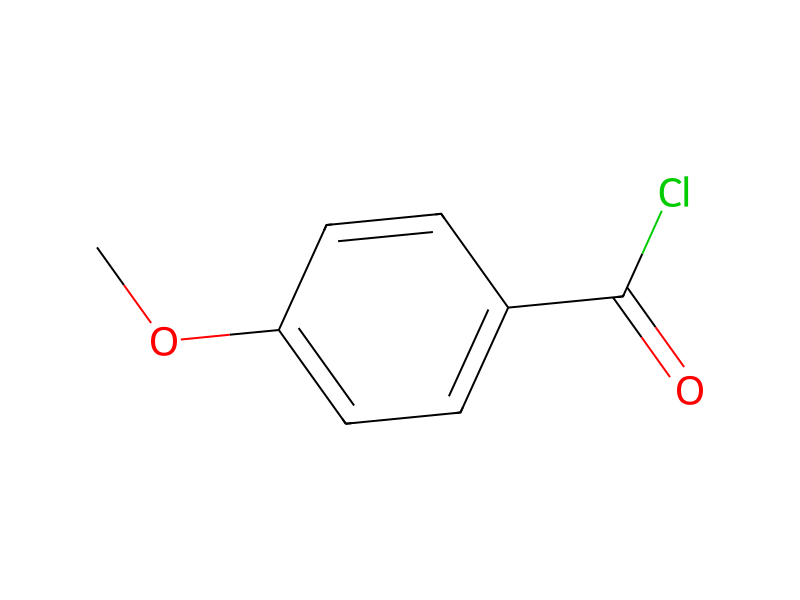
p-Anisoyl chloride → HCID 12521848, compound
Reaction equation

[C:1]([CH:6]=[P:7]([C:20]1[CH:25]=[CH:24][CH:23]=[CH:22][CH:21]=1)([C:14]1[CH:19]=[CH:18][CH:17]=[CH:16][CH:15]=1)[C:8]1[CH:13]=[CH:12][CH:11]=[CH:10][CH:9]=1)([O:3][CH2:4][CH3:5])=[O:2].C/C(/O[Si](C)(C)C)=N\[Si](C)(C)C.[C:38](Cl)(=[O:47])[C:39]1[CH:44]=[CH:43][C:42]([O:45][CH3:46])=[CH:41][CH:40]=1>C(Cl)Cl>[CH3:46][O:45][C:42]1[CH:43]=[CH:44][C:39]([C:38](=[O:47])[C:6](=[P:7]([C:20]2[CH:25]=[CH:24][CH:23]=[CH:22][CH:21]=2)([C:8]2[CH:13]=[CH:12][CH:11]=[CH:10][CH:9]=2)[C:14]2[CH:15]=[CH:16][CH:17]=[CH:18][CH:19]=2)[C:1]([O:3][CH2:4][CH3:5])=[O:2])=[CH:40][CH:41]=1Participants



Conditions
- Temperature
- 0 °C
Procedure
To a stirred solution of (carbethoxymethylene)triphenylphosphorane (0.500 g, 1.44 mmol) in DCM (7 ml) under an N2 atmosphere was added N,O-bis(trimethylsilyl)acetamide (0.42 ml, 1.7 mmol). The solution was then cooled to 0° C. and p-anisoylchloride (0.250 g, 1.47 mmol) was added. The reaction mixture was then gradually warmed to room temperature and stirred overnight. The reaction was quenched by the addition of H2O (3 ml) and the aqueous phase was extracted with DCM. The combined organic phases were dried over MgSO4 and the solvent removed in vacuo to afford ethyl 3-(4-methoxyphenyl)-3-oxo-2-(triphenylphosphoranylidene)propionate. (0.637 g, 1.32 mmol, 92%) as an off white solid which was used without further purification. 1H NMR (CDCl3) δ 0.62 (3H, t), 3.69 (2H, q), 3.82 (3H, s), 6.86 (2H, d), 7.43-7.55 (9H, m), 7.71-7.80 (8H, m). LCMS (2) Rt: 3.65 min; m/z 483.
Workup
- temperatureThe reaction mixture was then gradually warmed to room temperature
- customThe reaction was quenched by the addition of H2O (3 ml)
- extractionthe aqueous phase was extracted with DCM
- dry with materialThe combined organic phases were dried over MgSO4
- customthe solvent removed in vacuo
Sources & evidence
- ORD record
- ord-439f634e964d4af89a18f245f46e4682
- Source dataset
- uspto-grants-2013_02
- Patent number
- US08378095B2
Reaction notes
Loading…